Aflac Just Extended Its Dividend Growth Streak to 44 Years. Is It a Buy?
Aflac posted a quarter that missed estimates for the fourth time in a row, yet the dividend sailed on untouched. Behind the ugly headline sits a payout cushion and one overseas risk that income investors cannot ignore.

This post may contain links from our sponsors and affiliates, and Flywheel Publishing may receive compensation for actions taken through them.
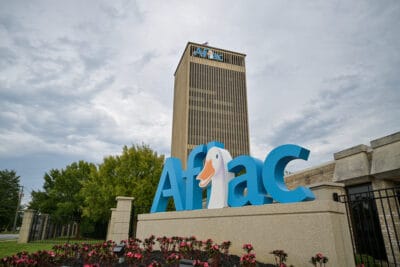
Aflac (NYSE:AFL | AFL Price Prediction) declared a fourth-quarter dividend of $0.61 per share last night alongside third-quarter results. The dividend is payable on December 1, 2026, to shareholders registered on November 18. The quarter itself looked rough, but the numbers behind the payout held up.
Ugly Quarter, Untouched Dividend
Adjusted EPS came in at $0.02, Aflac’s fourth consecutive quarter of missing expectations. Most of that hole was self-inflicted. Aflac booked $1.10 billion ($2.15 per share) in net investment losses from planned portfolio adjustments, plus a $51 million tax valuation allowance. GAAP diluted EPS was $0.61.
The stock’s longer trend tells a steadier story. Shares sat at $125.30 premarket, up 15.44% year to date and 11.5% over the past month. In the release, the chief executive pointed straight at the run:
“We remain focused on more profitable growth and the tactical, opportunistic deployment of capital. We treasure our 2026 milestone of 44 consecutive years of dividend increases.”
Coverage Leaves Plenty of Cushion
The annualized forward dividend of $2.44 works out to a yield of about 1.9%. Against fiscal 2025 EPS of $7.49, that is a payout ratio near 33%. Each $0.61 quarterly check also uses about 35% of Q2’s $1.75 adjusted EPS.
Buybacks give Aflac a second line of defense. Third-quarter capital returns hit $1.1 billion: $804 million in repurchases and $305 million in dividends. Because repurchases are discretionary, they give Aflac flexibility to protect the dividend. The payout history shows steady growth, from $0.42 a quarter in 2023 to $0.50 in 2024, $0.58 in 2025, and $0.61 in 2026.
The balance sheet supports it too. On the August call, Aflac reported $3.3 billion of free liquidity, adjusted leverage of 21.8% and a combined RBC ratio slightly above 600%. The CFO said:
“These are strong capital ratios, which we actively monitor, stress, and manage to withstand both market volatility and credit cycles as well as external shocks.”
How MetLife and Prudential Stack Up
MetLife (NYSE:MET) brings stronger earnings momentum. Its Q2 adjusted EPS of $2.43 beat estimates, and it had bought back about $1.7 billion of stock year to date. Its chief executive said “adjusted return on equity at 17 percent year-to-date” showed the strategy was working.
Prudential Financial (NYSE:PRU) pays a $1.40 quarterly dividend, a yield on adjusted book value of over 5%. Its Q2 capital return of $743 million included only $250 million in buybacks, so more went to dividends than at Aflac. Prudential is also still dealing with a sales suspension at Prudential of Japan, where international sales fell 33% in constant dollars.
Verdict: Still Among the Safest, With a Yen-Sized Risk
Aflac’s dividend still ranks among the safest in insurance. Its payout ratio is near one-third of earnings, buybacks run at more than double the dividend, and its capital ratios are strong. Prudential pays a larger quarterly dividend per share but leans less on buybacks, leaving a thinner discretionary buffer.

The one risk income investors should watch is Japan. The yen averaged 158.49 per dollar, 6.8% weaker than a year ago. Japan revenue fell 7.7%, persistency slipped to 92.9%, and net unrealized losses widened to $5.0 billion. Last year’s first-quarter increase was 5.2%. Watch whether Aflac’s next increase matches that pace.
Contact [email protected] for any questions or corrections.
Chris Lange is a financial and geopolitical writer with more than a decade of experience covering a myriad of topics. He has published thousands of articles for 24/7 Wall St., with past coverage focused heavily on stocks, IPOs, healthcare, defense, global affairs, and technology.
His work has been quoted, or referenced by a number of outlets including Business Insider, USA Today, Yahoo Finance, MSN, The Motley Fool, and many other publications. A graduate of Southwestern University, he studied business with a focus on investments and has previous experience in banking and startups.
When not reading or writing the news, he is following his passion for Lacrosse, playing chess, or building solar projects with his dad.