Meta Has a Capex Guardrail That Few Talk About
Meta is pouring well over $100B into AI, absorbing a massive legal charge, and watching its stock slide. One overlooked commitment from management gives this investor the nerve to keep buying while others fixate on the spending.

This post may contain links from our sponsors and affiliates, and Flywheel Publishing may receive compensation for actions taken through them.
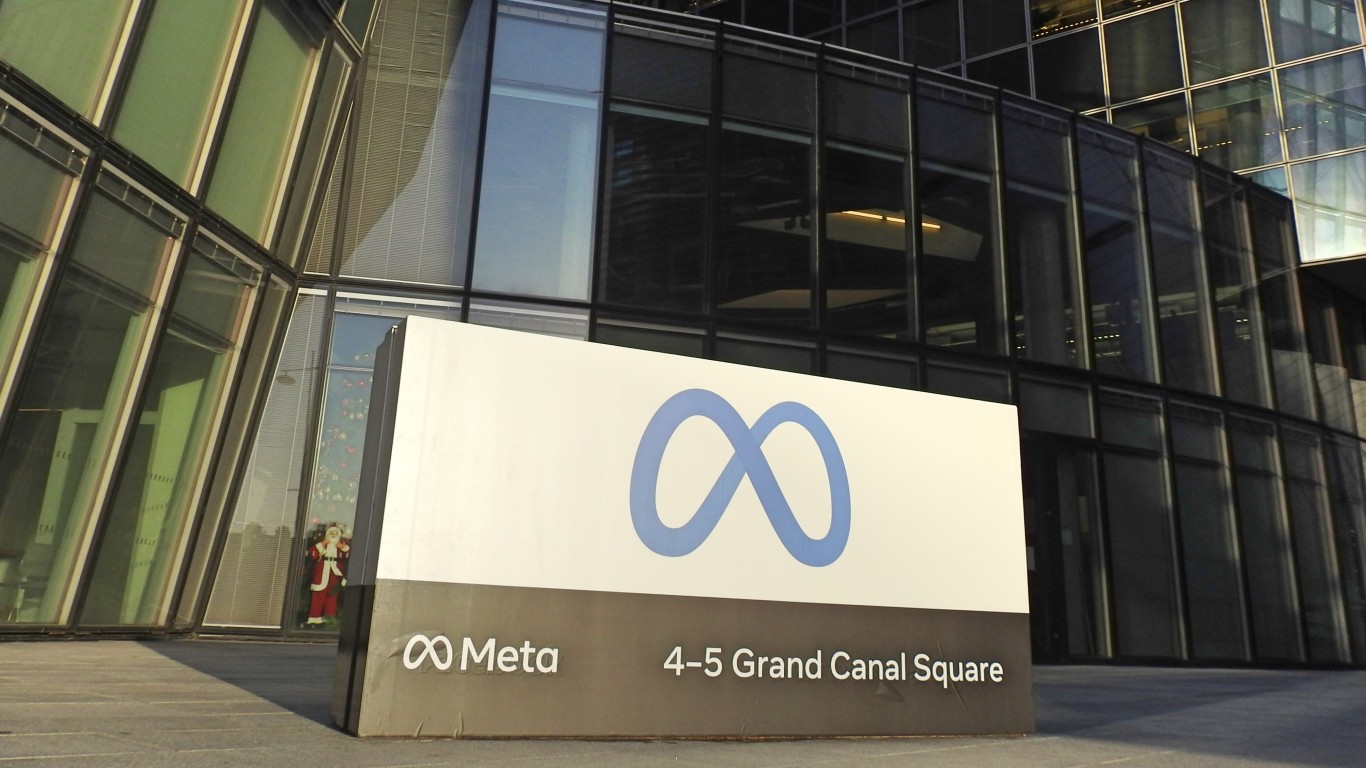
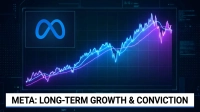
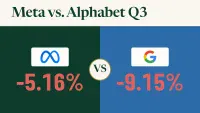
This week I increased my Meta Platforms (NASDAQ:META | META Price Prediction) position again. The stock fell 15.08% over the past month, and that made the decision easier. Shares sit at $630. Most people want to talk about the capex bill. I keep buying because of a promise that most of them skip past.
A Profit Promise Built Into the Guidance
Meta plans to spend $135B to $145B on capex in 2026. It also just took a $9.89B charge to settle teen mental health litigation with state attorneys general. Through all of that, management keeps repeating one line: excluding the legal charge, 2026 operating income will be above 2025 operating income. The 2025 figure it has to beat is $83.28B. When a company commits to growing profit in the same year it increases spending this hard, it is putting a floor under that spending.
All of that capex has to be powered, cooled and networked by someone, which is the whole idea behind a free report we put together on seven AI infrastructure suppliers that aren’t the chipmakers: you can grab it here.
The dividend is the second safeguard, and almost nobody describes it that way. Meta has paid $0.525 every quarter since March 2025, up from $0.50 in 2024. In Q3 it paid out $1.361B in dividends even though free cash flow turned negative at -$2.12B. A fixed commitment of $2.10 per share a year means the payout gets funded before any new server does, and so far the payout has held. The yield is only 0.38%, so I read it mainly as a sign of discipline. The income is a bonus.
Three Numbers That Keep Pulling Me Back
First is the core business. Q3 revenue rose 26.1% to $64.60B. Ad impressions grew 10% and the average price per ad climbed 14%. When prices rise along with volume, I take it as evidence that AI is already making the ads work better. Q4 guidance of $73B to $76B says that pace continues.
Second is underlying earnings. Without the charge, diluted EPS would have been $7.40 instead of the reported $3.83. Chief Financial Officer Susan Li said that excluding the legal charges, operating income “would have increased 11% year over year.”
Third is quality at a fair price. Meta runs a 41.4% operating margin, an 82% gross margin and earns 30.24% on every dollar of equity. It still trades at a P/E of 23, with interest coverage of 71.5x.
Why My Money Skips Microsoft and Alphabet
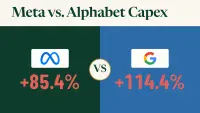
In my view, Microsoft (NASDAQ:MSFT) is an excellent company. Holding it means paying a P/E of 31 and a price-to-free-cash-flow ratio of 61.62. Meta’s price-to-free-cash-flow ratio is 30.26. On the earnings side, Alphabet (NASDAQ:GOOGL) looks cheaper at a P/E of 13. But its Q3 free cash flow fell to -$9.065B, and it sold 12 million Class A and 24 million Class C shares through an at-the-market program. I want my AI exposure without that dilution. Meta has announced a nonvoting share class, but management said, “We do not have any specific financing plans to announce at this time.”
Litigation Risk I Take Seriously
The suits worry me. Meta flagged $18.59B in total teen mental health litigation exposure, and more youth-related trials are scheduled in the United States over the coming months. Another charge could hit earnings again. Debt was at $83.7B at quarter-end. I still hold because Meta produced $32.79B of operating cash flow in a single quarter. It took the first charge, kept paying the dividend and kept its operating-income promise intact.
What Keeps the Buy Button Active
Management expects Reality Labs losses to narrow to about $15B in 2027 and strong revenue growth to continue throughout 2027. It also expects Muse to open new revenue lines. Meta keeps paying me while it builds and keeps growing profit while it spends. I keep buying while both remain true.
Contact [email protected] for any questions or corrections.
Alex Sirois is a financial writer with experience spanning both retail and institutional investing. He has written for InvestorPlace and held roles at BNY Mellon and Bernstein, giving him a perspective that bridges Main Street portfolios and Wall Street analysis.
Alex holds an MBA from George Washington University and has built his career across multiple industries, including e-commerce, education, and translation — a breadth of experience that informs how he breaks down complex financial topics for everyday investors. His writing is conversational, actionable, and grounded in long-term, buy-and-hold investing principles.
At 247 Wall St., Alex focuses on delivering analysis that is both accessible and useful, with a clear emphasis on helping readers make more informed decisions with their money.