Home Prices Just Fell for the First Time in 3 Years, but Mortgage Payments Are Near Record Highs
Sellers are finally cutting prices, yet buyers are staying away. A bond market shock is squeezing both sides of the deal, and Zillow's executives admit they can't see how things improve. What would it take to break the freeze?

This post may contain links from our sponsors and affiliates, and Flywheel Publishing may receive compensation for actions taken through them.

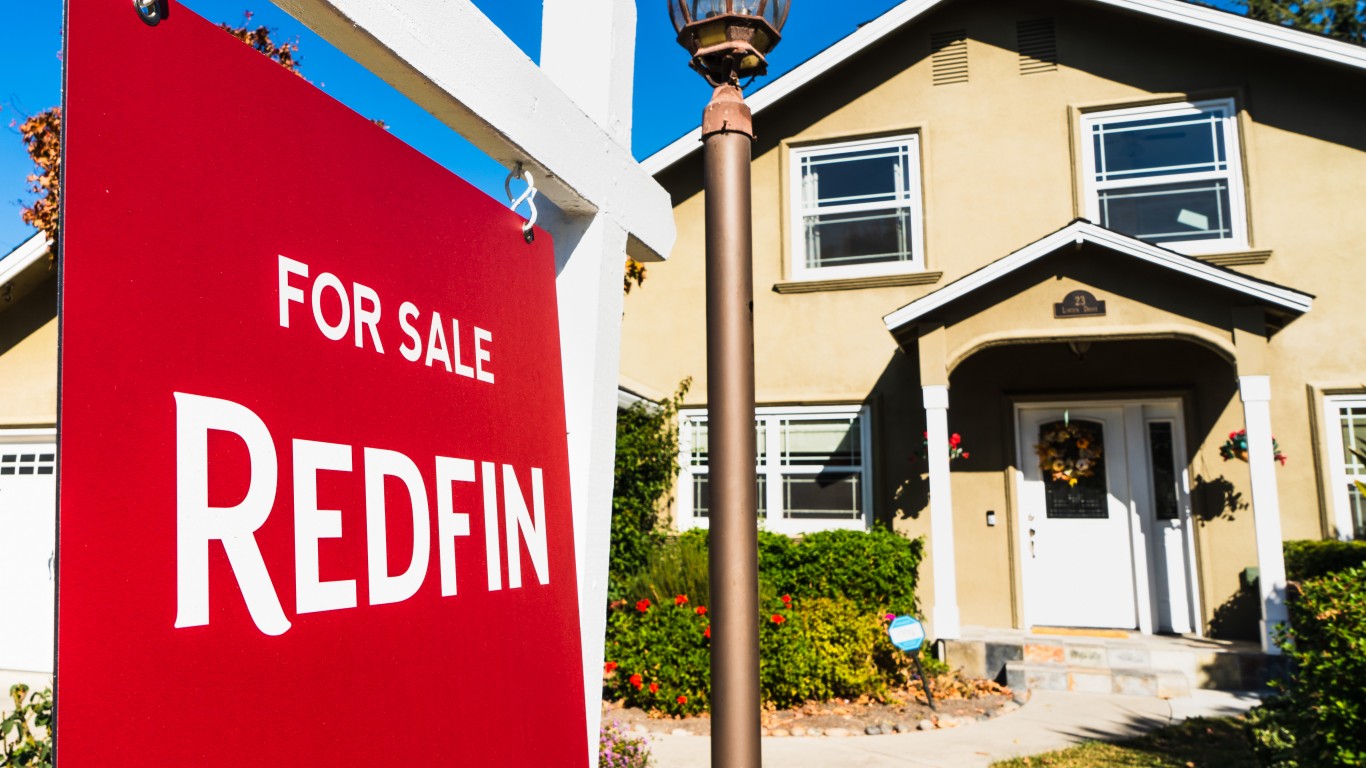
For the first time in more than three years, American home prices are going backward. Redfin reported that the median U.S. home-sale price fell 0.1% year over year in the four weeks ending October 25, after a 0.2% decline the week before. The median sale price now stands at $389,601.
Buyers will barely feel it. Redfin’s typical monthly mortgage payment reached $2,786, the second-highest in its records and 10.7% above a year earlier. Pending home sales fell 15.9% from a year ago to the lowest level in Redfin’s weekly data, which begins in 2021.
Slower-moving indicators show the same turn. The S&P CoreLogic Case-Shiller National Home Price Index fell 0.2% in August, its first monthly drop after peaking in July.
Price Cuts Buyers Can’t Feel
The cost of money explains the gap. Freddie Mac’s 30-year fixed rate averaged 7.18% on November 5, up from 6.22% a year earlier and far above the 5.98% low of late February. Zillow Group (NASDAQ:Z | Z Price Prediction) management called the jump from mid-6% in June to mid-7% by early October among the steepest three-month rate increases since the 1980s.
Take a single loan. Borrowing $350,000 at 6% costs about $2,098 a month in principal and interest. At 7.3%, the same loan runs about $2,400, roughly $300 more for an identical house. A slight dip in the sale price barely dents that.
Bond markets drove the move. The 10-year Treasury yield touched 5.31% on October 5 and was still 4.90% this week. The Federal Reserve offered no relief, lifting its upper bound back to 4.00% in September and holding there at its October 28 meeting. Owners locked into cheap loans stay put, and builders are retreating: housing starts fell 5.2% in September to a 1.22 million annualized pace.
Zillow Shows Where the Squeeze Lands
Zillow offers a clear view of the freeze. Third-quarter revenue rose 7.1% to $724 million, missing the $754.98 million consensus. Residential revenue, tied to home sales, fell 4%, while Rentals climbed 26% as rental demand rose nearly 20%.

CEO Jeremy Wacksman pinned the decline on speed: “The shock is probably what caused the drop more than the fact that rates are actually at a 7 handle.” Zillow expects industry purchase-mortgage volume to drop 10% to 15% in the fourth quarter. CFO Jeremy Hofmann was blunter: “It’s not obvious to us how things necessarily improve.” The stock trades at $29.83, down 56.27% this year.

This correction is running through volume first. Existing home sales sit at a 3.99 million annualized pace, and falling prices reflect a buyer strike. Sellers lose equity while buyers gain almost nothing. That combination weighs on households whose largest asset is their house.
What to Watch Before the Spring Market
Lower prices only help buyers if rates fall. Watch Freddie Mac’s weekly survey: a move back toward 6.43%, where rates stood in early July, would cut payments far more than any likely price drop. Next, watch whether Case-Shiller’s annual reading turns negative as fall data arrives. Then check Zillow’s next earnings report against its guidance for a 9% to 15% Residential revenue decline. A result at the low end would mean buyers are drifting back. A miss would point to prices falling further in 2027, with payments still stuck near records.
Contact [email protected] for any questions or corrections.
After two decades of patrolling the dark corners of suburbia as a police officer, Rich Duprey hung up his badge and gun to begin writing full time about stocks and investing. For the past 20 years, he’s been cruising the markets looking for companies to lock up as long-term holdings in a portfolio while writing extensively on the broad sectors of consumer goods, technology, and industrials. Because his experience isn’t from the typical financial analyst track, Rich is able to break down complex topics into understandable and useful action points for the average investor. His writings have appeared on The Motley Fool, InvestorPlace, Yahoo! Finance, Money Morning, and, of course, 24/7 Wall St. He has been featured in both U.S. and international publications, including MarketWatch, Financial Times, Forbes, Fast Company, and USA Today.