If Meta Reaches $700, Your $1,000 Investment Would Be Worth This Much
Meta stock sits nearly $100 below its recent peak, and the gap between a modest recovery and a five-year windfall is wider than most investors expect. Here is exactly what a $1,000 stake could look like across six distinct scenarios.

This post may contain links from our sponsors and affiliates, and Flywheel Publishing may receive compensation for actions taken through them.
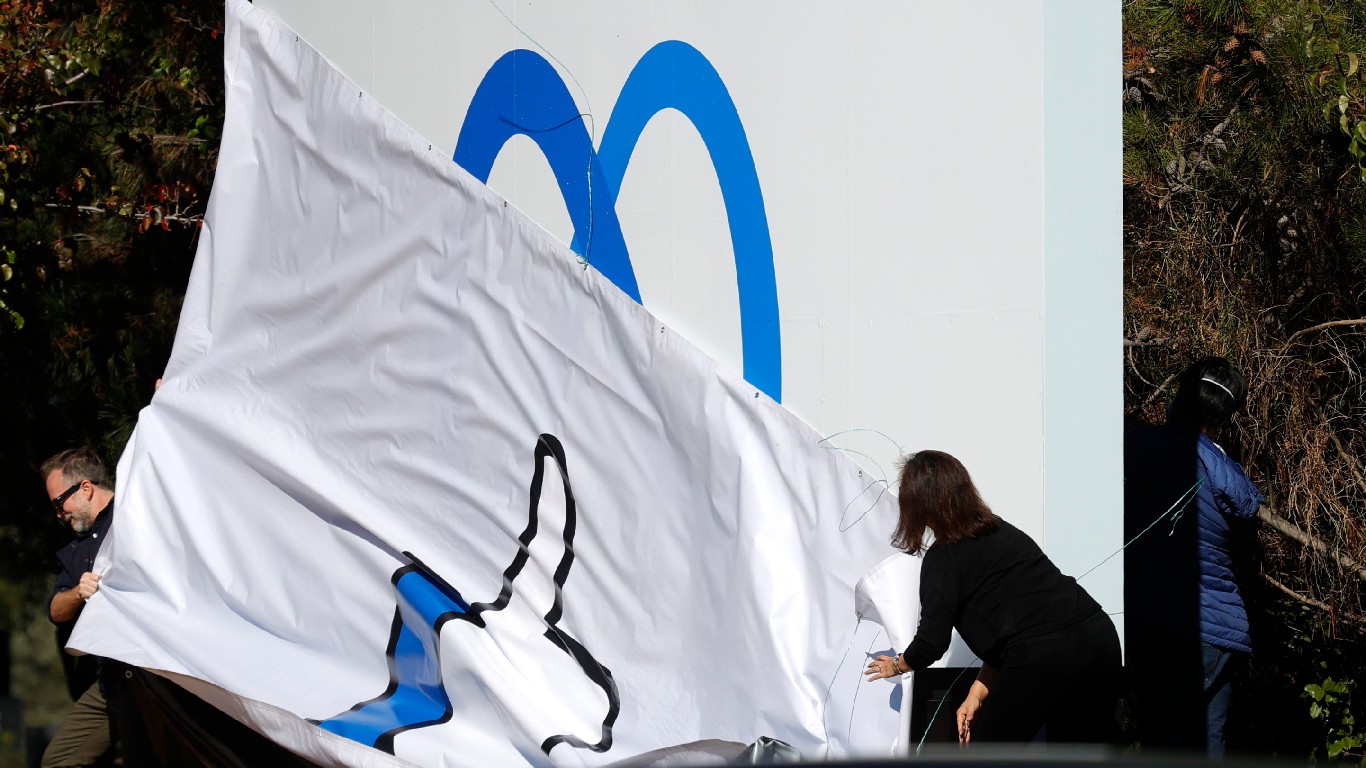
Meta Platforms (NASDAQ:META | META Price Prediction) traded at $608.72 in premarket action. That is well below the $709.33 it fetched on October 16. For anyone with $1,000 to put to work, two questions matter: what the investment is worth if Meta gets back to $700, and how far it could go from there.
Our forecast horizons run 1 year (to 2027) and 5 years (to 2031). The $700 figure matches the 1-year window, so that is where the specific numbers below are based.

What $700 Would Mean for a $1,000 Stake
The model’s starting price is $614.99. From that level, a move to $700 turns $1,000 into about $1,138.23, for a return of 13.82%. Starting from the live premarket quote, the same $1,000 would grow to about $1,149.95, a gain of roughly 15%.
$700 sits just above the 1-year bear-case target of $688.46. In other words, the model treats $700 as roughly the floor of its outlook.
Base Case: $1,000 Could Become $1,273.50 by 2027
In the base scenario, $1,000 invested could grow to about $1,273.50 by November 2, 2027, a total return of 27.35%. That assumes a per-share target of $783.19. Its confidence rating is 0.9. Here is the full range across both horizons:
| Scenario | Target Price | Total Return | Value of $1,000 |
|---|---|---|---|
| 1-Year Bull (2027) | $848.33 | 37.94% | $1,379.40 |
| 1-Year Base (2027) | $783.19 | 27.35% | $1,273.50 |
| 1-Year Bear (2027) | $688.46 | 11.95% | $1,119.50 |
| 5-Year Bull (2031) | $1,315.73 | 113.94% | $2,139.40 |
| 5-Year Base (2031) | $1,242.31 | 102% | $2,020.00 |
| 5-Year Bear (2031) | $866.28 | 40.86% | $1,408.60 |
The 5-year base case works out to an annualized return of 15.1%. The 5-year bear case annualizes at 7.09%. The projection is not investment advice.

Three Drivers Behind the Upside
Ad Engine Still Accelerating
Third-quarter revenue reached $64.60B, up 26.1%, beating the $63.39B consensus. Average price per ad rose 14% and impressions grew 10%, across 3.64B daily active people. Fourth-quarter revenue guidance of $73-76B suggests that momentum is carrying into year-end.
Muse Opens New Revenue Lines
Within about six weeks of launch, more than 10 million people in the U.S. and Canada had set up Muse personal agents. CFO Susan Li said new AI businesses “can begin contributing incremental revenue in 2027, but more importantly can scale meaningfully over time.” Management also expects Muse compute efficiency to improve by “more than 10x” over the next year.
Wall Street Sees More Room
The consensus analyst target of $848.38 roughly matches the 1-year bull case. Ratings include 8 Strong Buys, 47 Buys, 7 Holds and 1 Sell. Shares trade at about 22 times trailing earnings and 18 times forward earnings. The multiple is modest for a business with a 41.44% operating margin over the trailing period.

Risks That Could Keep Meta Below $700
- Spending pressure: 2026 capex guidance is $135-145B, and free cash flow came in at -$2.12 billion in the third quarter. Operating margin fell to 20% from 40% a year earlier.
- Litigation: A $9.89B settlement charge cut GAAP EPS to $3.83, missing the $5.6986 consensus. More youth-related trials are scheduled in the coming months.
- Reality Labs: Losses are expected to total $18-19B in 2026 before narrowing to about $15B in 2027.
- Volatility: With a beta of 1.185, the stock has fallen 16.39% over the past month. Its 52-week range runs from $519.37 to $779.82.
There is also a technical change ahead. Shareholders will receive one new nonvoting share for each share they own, which works out to an effective 2-for-1 split. Trading in the new class is expected to start in late January 2027.
The per-share targets above are based on today’s share count, so once the new shares arrive, the dollar value of your investment is the number to follow.
What It Could Mean for Your Money
If Meta climbs back to $700, a $1,000 investment would be worth about $1,138.23. Over one year, the same $1,000 lands between $1,119.50 and $1,379.40 across scenarios.
Over five years, the range runs from $1,408.60 to $2,139.40. These are scenarios, not guarantees. The figures to track are spending discipline, litigation results and early Muse revenue.
Contact [email protected] for any questions or corrections.
Vandita Jadeja is a financial publisher with over a decade of experience writing about financial topics, including investment, savings, retirement, insurance and banking. Vandita is a Chartered Accountant who loves to debunk financial concepts for readers.
Her work has appeared on sites that include The Motley Fool, InvestorPlace, and Benzinga. She covers investing and focuses on stock picks and price prediction for 24/7 Wall St.
When not looking for the next stock investment opportunity, she can be found traveling, reading, chasing sunsets and enjoying her iced latte.