IonQ Is Down 33% in a Month. What Will It Take to Get IONQ Stock Back to $30?

This post may contain links from our sponsors and affiliates, and Flywheel Publishing may receive compensation for actions taken through them.
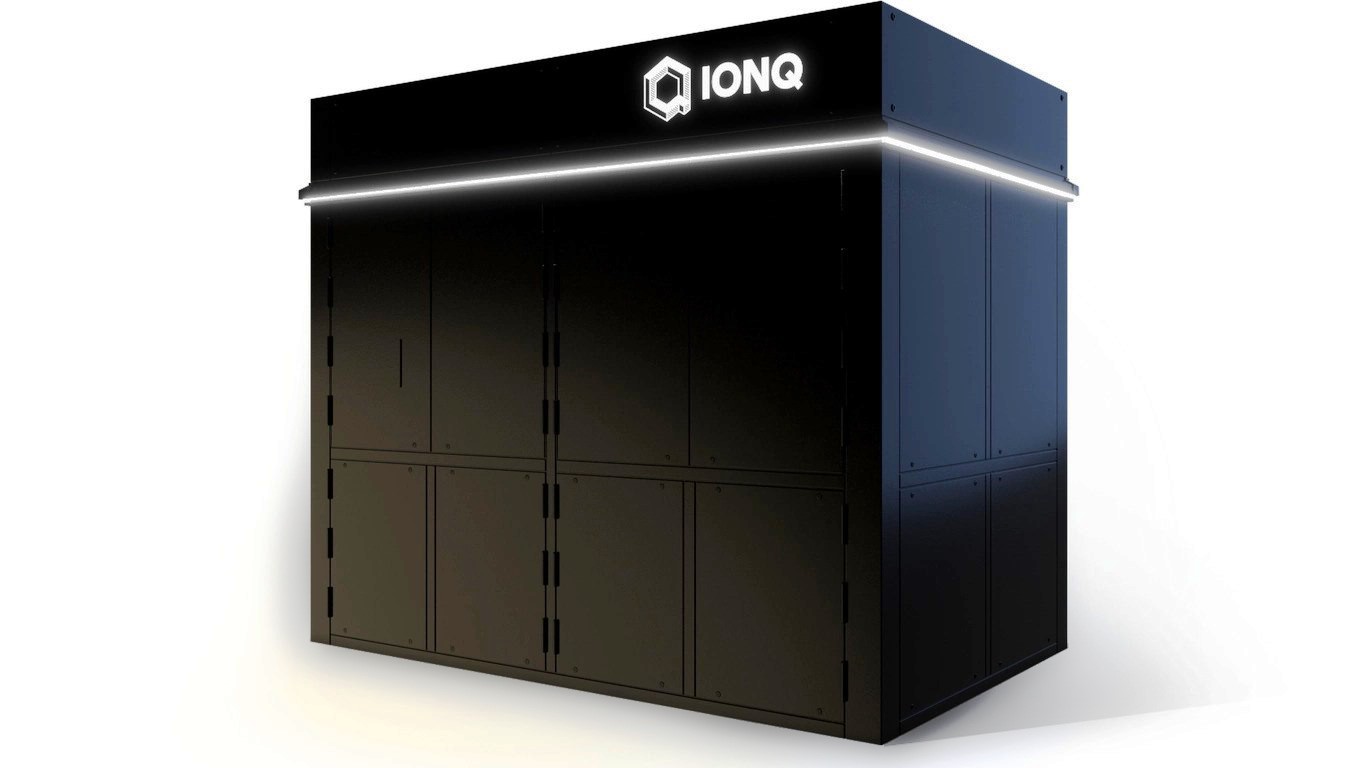
Quantum computing stocks have spent the past month in retreat, and IonQ (NYSE:IONQ | IONQ Price Prediction) has been one of the most closely followed casualties. IonQ stock is down 33% over the past month to $21.09 in afternoon trading. That slide came after the company posted record quarterly revenue and raised its full-year outlook, leaving a wide gap between business results and share price.
The $30 level in the title is recent history for IonQ. Shares started the past-month window at $31.26 on October 20 and still traded at $30.86 on November 12. The question now is: What would need to go right for IonQ stock to regain that lost ground?

Speculative Tech Selloff Drags Quantum Names Lower
A broad retreat from speculative artificial intelligence (AI) and growth names has swept up quantum computing stocks, and IonQ has slid along with them. IonQ stock is down 7% from the prior close, adding to the month’s losses. Sector-wide pressure like this tends to hit hardest at companies whose valuations rest on profits that are still years away.
Elisity adds another layer for IonQ shareholders to weigh. The company disclosed in November that it’s buying the Zero Trust security firm for $1.15 billion[1] in stock plus up to $150 million in earnout payments. All-stock deals expand the share count, spreading any future profits across more shares. Management also cited a pro forma cash position of $3.7 billion[2], which the company’s chief financial officer said gives IonQ “some years of runway.”
What It Would Take for IonQ to Climb Back to $30

Growth execution comes first. IonQ’s platform revenue grew 127%[1] year over year in Q3 2026, while the company’s total revenue reached $173.8 million[2]. Guidance moved up too, with IonQ lifting its full-year 2026 revenue forecast to $505 million to $515 million[1] and reporting $1.2 billion in remaining performance obligations.

Integration is the second condition. SkyWater’s foundry business, acquired in 2026, now reports as its own SkyWater Foundry Services segment and contributed $83.5 million[1] in Q3. Both SkyWater and Elisity broaden IonQ into chipmaking and cybersecurity. But combining together a foundry, a software firm and a quantum hardware maker could weigh on margins. IonQ’s adjusted earnings before interest, taxes, depreciation and amortization (EBITDA) loss widened to $133.61 million[1] from $48.91 million a year earlier.
A firmer market for speculative tech is the third piece. Shares of IonQ likely need the broader AI and quantum trade to steady before company-level progress shows up in the price. That view came up on IonQ’s Q3 earnings call. There, chief financial officer Inder Singh stated, “The path to profitability is what any responsible company would pursue, and we are doing it because we are reaching scale.”[2]

Rigetti and D-Wave Fall Even Harder Than IonQ
IonQ’s quantum peers have fared worse over the same stretch. Rigetti Computing (NASDAQ:RGTI) stock is down 37% over the past month to $7.38. D-Wave Quantum (NASDAQ:QBTS) stock is down 44% over the past month to $6.61. Those deeper drops point to pressure across the whole group, with IonQ holding up better than either Rigetti or D-Wave.
Each company takes a different path to a useful quantum computer, and trapped-ion systems are IonQ’s core, though the company now also owns a chip foundry and a security software business. Superconducting gate-model machines built from chiplets are Rigetti’s focus, with a customer base tilted toward government and research labs, while quantum annealing anchors D-Wave’s commercial business, with gate-model systems on a longer development timeline.
Bull and Bear Case for IonQ’s Road Back to $30
Demand, the bulls could argue, is outpacing supply. According to IonQ, the company has sold out all of its Superion 256 capacity in 2027[2] and is filling order books into 2028. Should that backlog turn into revenue on schedule, IonQ’s growth story could win back the market’s attention.
Losses and dilution are what worry the bears. IonQ’s operating loss reached $433.1 million[1] in Q3. IonQ reported net income leaned on an $896.2 million[3] non-cash warrant gain that the company’s finance chief noted doesn’t reflect operating performance. Integrating two large acquisitions at the same time adds execution risk.
IonQ’s next hurdle is whether Q4 2026 shows the narrower adjusted EBITDA loss management expects alongside continued revenue growth. A return to $30 likely depends on that progress arriving while the broader speculative tech trade steadies. For investors, caution could make sense until the quantum selloff resolves.
Contact [email protected] for any questions or corrections.
David Moadel is financial writer specializing in stocks, ETFs, options, precious metals, and Bitcoin. David has written well over 1,000 articles for leading online publications, helping investors understand markets, income strategies, and risk. His work has appeared in 24/7 Wall St., The Motley Fool, InvestorPlace, U.S. News & World Report, TipRanks, ValueWalk, Benzinga, Market Realist, MarketScreener, TalkMarkets, Finmasters, and others. With a master’s degree in education, David has taught at the elementary, high school, and college levels. That teaching background shapes his writing style: clear, educational, and practical. David has also built a loyal social-media audience by providing trustworthy financial content on YouTube, X/Twitter, and StockTwits.