Michael Burry Sold 25% of His Chip Puts and Says He’s Still Very Bearish
Chips cratered right on schedule for Michael Burry, yet he cashed out only part of his bet. What he kept, what he left unsaid, and the one price level that could prove him wrong or right all matter for anyone…

This post may contain links from our sponsors and affiliates, and Flywheel Publishing may receive compensation for actions taken through them.
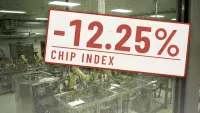
Michael Burry spent October preparing for a chip selloff, and on November 5, 2026, he got one. The VanEck Semiconductor ETF (NASDAQ:SMH) fell 11.21% to $447.73 that day, and Burry used the drop to sell 25% of his puts on the fund.
A put rises in value as the underlying asset falls, so the slide paid him well. He took partial profits, but he also wrote that the SMH puts he kept have become very large positions even after the sale.
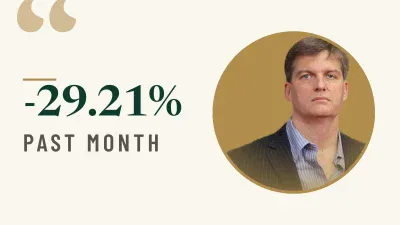
SMH is down 29.21% over the past month yet still up 24.32% year to date, and the investor who prepared for this slide still holds a very large bearish position on chips. Buyers showed up after the close, lifting the fund 1.78% to $455.70 at 7:59 p.m. ET.
What Burry Disclosed and What He Left Out
The disclosure came in his paid Cassandra Unchained post titled Trading Post November 5, 2026, whose subtitle names MercadoLibre (NASDAQ:MELI | MELI Price Prediction) and semiconductors. Because the post is paywalled, the 25% sale and his profit-taking reason come from accounts of it.
No SEC filing confirms the sale, so this is a stated position rather than a filed one. He disclosed no dollar profit and no strike price. In October, he said nearly all his bearish exposure sat in puts on the Nasdaq 100 and SMH, with the SMH puts expiring in June 2027, and he saw a possible major market top within nine months.
In the free portion, he says he had been waiting for MercadoLibre to trade below $1,500 and puts his adjusted value at $1,433 after earnings. He reportedly added to that stake, which shows where some of his cash is going instead.
SMH holds roughly $58 billion to $59 billion, and Nvidia (NASDAQ:NVDA) makes up 20.57% of it. No other holding comes close to that weight, so owning SMH means owning a large Nvidia position.
Nvidia fell 9.26% to $181.60 on November 5, and that single weight is why the fund dropped almost as hard as one stock.
Political Risk Versus Demand That Has Held Up
The slide deepened after the midterm elections, as expectations grew that congressional Democrats will clamp down on the AI industry. A key gauge of chip giants fell 12%, and the Nasdaq 100 dropped 6.4%, its worst session since March 2020.
Two large chip designers also fell on underwhelming outlooks. Still, expectations about regulation have no bill text behind them yet, and the available data has not yet shown cracks in AI chip demand.
SMH now sits about 33% below its 52-week high of $671.83, and it lost 20.29% from its $561.67 close on October 29, so its timing has already paid.
What Burry’s Trade Signals for SMH Holders Now
Holders weighing whether to trim have two factors to consider: the fund is still up for the year, so investors near retirement have gains at stake, and its heavy Nvidia weight turns a political scare into a concentrated hit.
An alternative approach to chip exposure is the SPDR S&P Semiconductor ETF (NYSEARCA:XSD), which weights its holdings roughly equally. That spreads risk across many smaller chipmakers, although those names can swing hard on their own.
All of this fits the uncomfortable question every AI-era investor is starting to ask: how do you ride a mania without being the one left holding it? We put both parts, the participation and the exit plan, in a free handbook here: The Bubble Survivor’s Handbook.
Burry kept most of his puts because he thinks the decline has further to run. Political pressure on AI could last beyond one or two sessions.
If SMH closes back above $504.27 on November 4, the selloff was likely a panic, and Burry’s bearish view is in doubt; if it closes below $447.73, Burry’s remaining puts are working, and his June 2027 expiry is the final test.
Contact [email protected] for any questions or corrections.
Omor Ibne Ehsan is a writer at 24/7 Wall St. He is a self-taught investor with a focus on growth, cyclical, and dividend equities that have strong fundamentals, value, and long-term potential. He also has an interest in high-risk, high-reward investments such as penny stocks.