Berkshire Hathaway’s New CEO Warns Energy Will Be the Biggest Constraint on AI Data Centers
Greg Abel just revealed the single physical constraint he believes will determine which AI data center projects actually get built, and it has nothing to do with chips or capital.

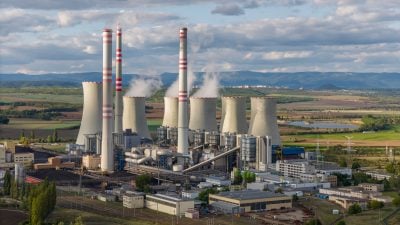
Berkshire Hathaway’s new CEO Greg Abel shared in a CNBC interview on September 2 that he believes the biggest constraint on the AI boom will be the power grid: “I’ve sort of always had a strong view that energy would be the constraint. We can produce the energy. It’s how long it would take to get the sites prepared and be in a position where they could serve the data centers. And I continue to see that as a big constraint,” he said.
Why Site Readiness Is the Energy Bottleneck
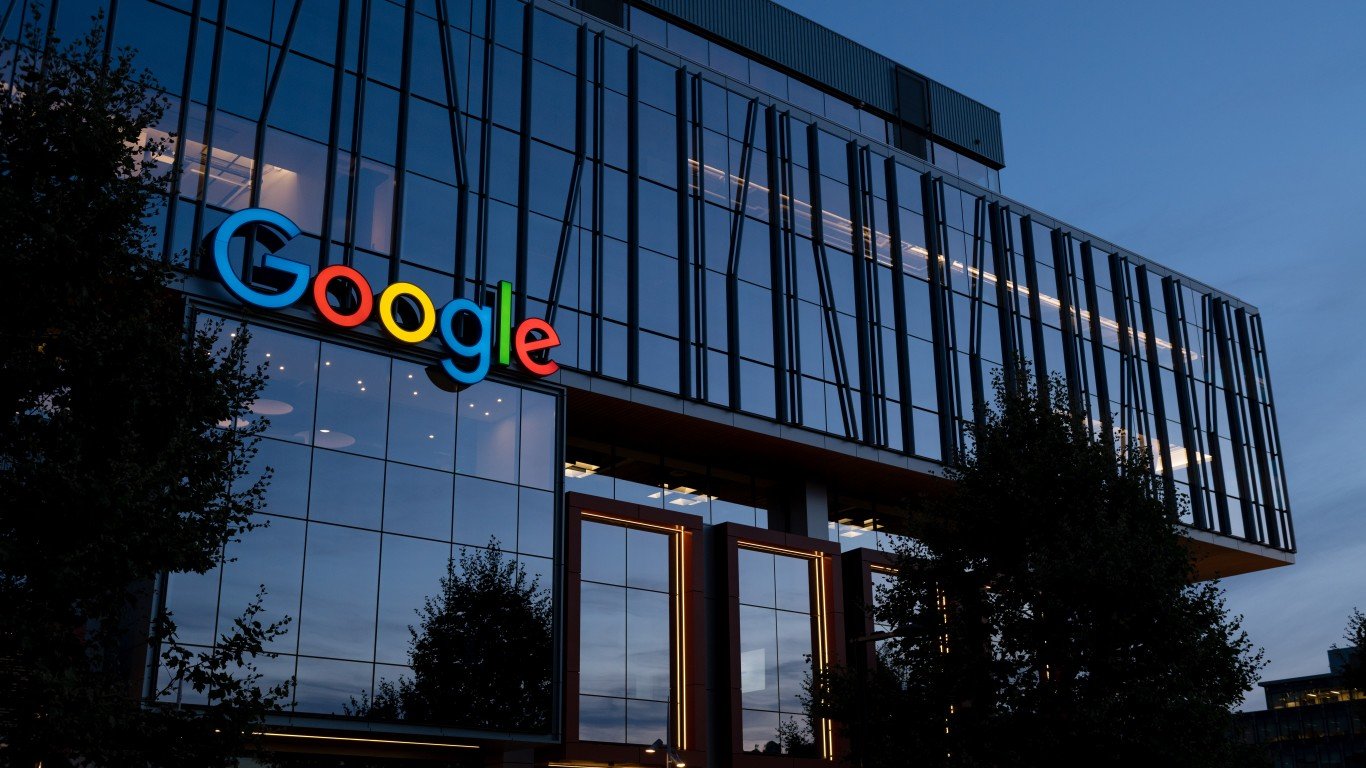
Greg Abel reported that data centers already represent roughly 8% of Berkshire Energy’s load in Iowa, with incremental load expected. On the demand side, Berkshire Hathaway (NYSE:BRK-B | BRK-B Price Prediction) is looking at a customer set that includes Alphabet itself, which reported Q2 FY2026 capex of $44.92B and has guided to $175B to $185B of 2026 capex to build out AI infrastructure.
Independent research shows that data centers are the largest driver of U.S. electricity demand growth, according to the Grid Strategies 2025 load growth report. However, site readiness, permitting, and interconnection timelines remain major bottlenecks to adding more electricity supply.
Why Berkshire Added Billions More to Alphabet
Greg Abel walked through how Berkshire’s latest addition to its Alphabet (NASDAQ:GOOGL) position actually happened. Warren Buffett initiated the original purchases roughly 15 months ago, so the recent trade added to the position. “In late May, I received a call on a Sunday morning to see if we wanted to participate in their upcoming equity offering. I called Warren, and I said we had a significant opportunity to continue to invest in Google, but with a significant block. We discussed the size and the 6.5% discount. And we were comfortable with that,” Abel said.
Berkshire invested $6.5 billion at a 6.5% discount, alongside an additional $10 billion block bought on the open market. Berkshire’s Q2 filing described a broader deployment of roughly $23.5 billion into equities, with roughly $19.8 billion in net equity purchases after accounting for $3.7 billion in stock sales.
Abel’s rationale behind the Alphabet investment was straightforward: “We all are seeing and feeling the impact of AI. So we knew it was going to have a significant impact on America and businesses. We saw Google as a significant player.“

Key Takeaways
Abel was explicit about how Berkshire Energy plans to underwrite hyperscaler load. “We are interested in serving these hyperscalers, if there was no impact to the rates of our other customers. And in fact, we’ve pretty much taken the approach that there has to be a net benefit to our customers,” he said. Given the rising political friction around data center-driven utility bills, that is a notable public commitment.
Abel’s message is that AI infrastructure is increasingly constrained by the physical grid rather than computing demand itself. For investors, that pushes the opportunity beyond chipmakers and toward the utilities, grid equipment, and power infrastructure needed to actually connect the next generation of data centers.
Contact [email protected] for any questions or corrections.
Thomas Richmond is a financial writer and content strategist with 5+ years of experience covering stocks and financial markets. He has published over 500 articles focused on individual stock analysis, helping investors better understand business fundamentals, stock valuations, and long-term opportunities.
Thomas previously served as a Content Lead at TIKR, a stock research platform, where he helped scale the company’s blog to hundreds of articles per month and contributed to a weekly newsletter reaching more than 100,000 investors.
Outside of work, Thomas enjoys weight lifting and soccer.