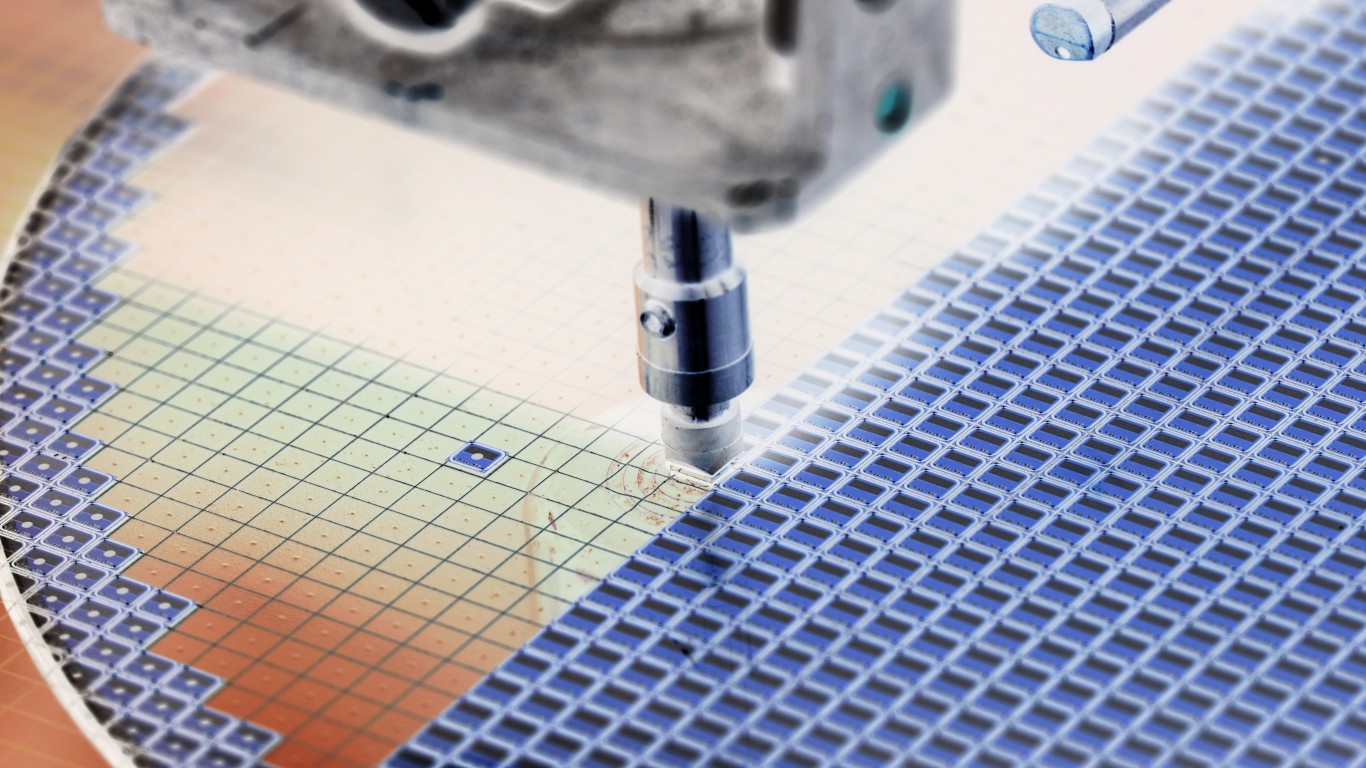
Taiwan Semiconductor Wants to Enter Into Advanced Memory Production
NVIDIA reportedly asked its biggest chip supplier to build something it has never made, and TSMC's public answer may not match what's happening behind closed doors. The stakes: the most profitable corner of the AI supply chain.

This post may contain links from our sponsors and affiliates, and Flywheel Publishing may receive compensation for actions taken through them.
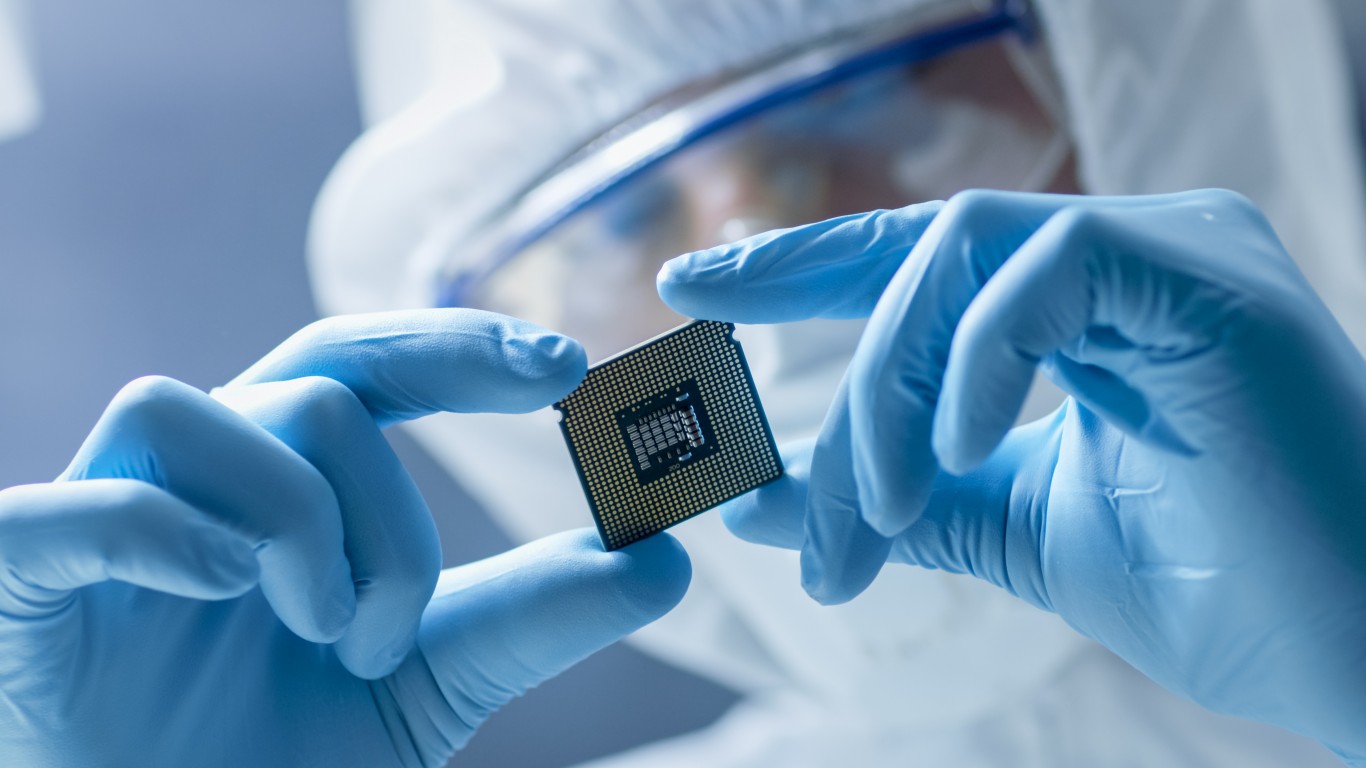
Taiwan Semiconductor Manufacturing (NYSE:TSM | TSM Price Prediction) built its empire on logic chips. A new report suggests it may start making memory for NVIDIA (NASDAQ:NVDA). The Information reported that TSMC is evaluating a push into advanced memory production, including vertically stacked 3D DRAM for NVIDIA. Citing two sources, the outlet said TSMC recently began planning production of the chips in response to a request from NVIDIA, its largest customer.
The report lands during a volatile stretch. TSM shares trade at $385.30. They are down 18.4% over the past month but still up 27.77% year to date.

NVIDIA’s Memory Bill Explains the Request
NVIDIA needs more memory than incumbents can easily supply. Its supply obligations rose to $279.00 billion, largely tied to memory procurement for Vera Rubin production. The company also signed a multiyear technology partnership with SK hynix for next-generation memory. Data Center revenue reached $89.02 billion last quarter. NVIDIA’s Jensen Huang described the demand background:
“The AI infrastructure buildout is at full steam. Vera Rubin, now in full production, was built to power exactly this moment.”
Conventional DRAM places cells in a single layer, while 3D DRAM stacks them vertically to raise capacity. Samsung, SK Hynix and Micron dominate memory manufacturing and are developing 3D DRAM themselves, and an AI-driven shortage has pushed memory prices higher.
TSMC Already Controls the Packaging Chokepoint
TSMC packages AI accelerators with high-bandwidth memory through CoWoS, which gives it a natural fit. On the October call, Chairman and CEO C.C. Wei said:
“CoWoS is still the number-one choice for our customers.”
That call included no memory announcement. HBM surfaced only in a Citi analyst question about supply bottlenecks. Posts on X relaying TSMC’s response said the company rejected reports that it is exploring 3D DRAM production at Nvidia’s request, reiterating its commitment to logic chip manufacturing. Still, the boundary between the two is blurring. At TSMC’s own symposium in April, SK hynix titled its presentation “Overcoming Technological Limits Requires the Integration of Memory and Logic.”
Micron’s Margins Reveal the Prize
Micron Technology (NASDAQ:MU), the only U.S.-listed pure-play memory maker, shows why the market is tempting. Fiscal 2026 revenue reached $133.188 billion, and fiscal Q4 non-GAAP gross margin hit 87.0%. TSMC posted a 66.4% gross margin in Q3. Micron is already shipping HBM4, with HBM4E volume production expected in calendar 2027. CEO Sanjay Mehrotra said:
“In the AI era, memory has become a strategic asset for our customers, and we are investing in our global manufacturing footprint to support their growing demand.”
A serious TSMC entry would challenge that pricing power, though years of DRAM process know-how remain the incumbents’ edge. The broader setup, where the biggest AI winners share traits that showed up long before the headlines, is the whole basis of our free Next Nvidia playbook.
Cash Firepower Meets Capacity Limits
TSMC has the resources. Q3 revenue was $46.72 billion, EPS of $4.60 beat the $4.46 consensus, and Q4 guidance calls for $52.3 billion to $54.3 billion. 2026 capex is expected at $60 billion to $64 billion. Wei indicated plans:
“We have no intention of leaving food on the table for others.”
The constraint is capacity. Wei also said “Demand is still far above our capability to supply today,” and management expects overseas-fab margin dilution to extend to 3%–4%. Diverting fabs to memory would compete with the N2 ramp and A14, which is scheduled for volume production in 2028.
Investors should look for a formal TSMC statement or capex reallocation. Until then, 3D DRAM remains an option in planning, and Micron and SK hynix keep their lead in the most profitable corner of the AI supply chain.
Contact [email protected] for any questions or corrections.
After two decades of patrolling the dark corners of suburbia as a police officer, Rich Duprey hung up his badge and gun to begin writing full time about stocks and investing. For the past 20 years, he’s been cruising the markets looking for companies to lock up as long-term holdings in a portfolio while writing extensively on the broad sectors of consumer goods, technology, and industrials. Because his experience isn’t from the typical financial analyst track, Rich is able to break down complex topics into understandable and useful action points for the average investor. His writings have appeared on The Motley Fool, InvestorPlace, Yahoo! Finance, Money Morning, and, of course, 24/7 Wall St. He has been featured in both U.S. and international publications, including MarketWatch, Financial Times, Forbes, Fast Company, and USA Today.