TSMC’s Winbond DRAM Deal Isn’t Domination, It’s Insurance. Here’s What It Actually Means for Chip ETFs
The supply chain shortage in Dynamic Random Access Memory (DRAM), and more specifically, in High Bandwidth Memory (HBM) chips is a big reason why the memory chip “Big 3”: SK Hynix, Samsung, and Micron Technology – have all been…

This post may contain links from our sponsors and affiliates, and Flywheel Publishing may receive compensation for actions taken through them.
The supply chain shortage in Dynamic Random Access Memory (DRAM), and more specifically, in High Bandwidth Memory (HBM) chips is a big reason why the memory chip “Big 3”: SK Hynix, Samsung, and Micron Technology – have all been soaring with triple digit 1-year returns in 2026. The fact that these three companies have a virtual monopoly on the HBM sector, which is integral for A.I. development, has created a bottleneck in the supply chain. Although the South Korean government recently announced a $590 billion investment towards HBM and A.I. related production expansion, the results are not expected to become manifest for another five years in the future, which does nothing to ease supply chain woes in the present day.
Enter Taiwan Semiconductor. TSMC is the 800 lb. gorilla of semiconductor manufacturing, being the sole foundry for Nvidia, and AMD, as well as a major supplier for Apple and other technology titans. TSMC just announced a collaboration with Taichung headquartered Winbond to supply DRAM chips and other HBM memory chips for A.I. applications to address the supply bottleneck. ETFs with large positions in TSMC, such as VanEck Semiconductor ETF (NASDAQ: SMH), iShares MSCI Taiwan ETF (NYSE: EWT), and Roundhill Memory ETF (CBOE: DRAM), which holds one of the largest stakes in Winbond among US ETFs, may all be worth watching as further news unfolds.
“If You Build It, They Will Come”

The dramatic escalation in HBM demand spurred by A.I. is unprecedented in the industry. S.K. Hynix, which is the world’s largest HBM supplier at the time of this writing (60% of the global market), recently filed for a $29 billion NASDAQ listing to help it expand to accommodate the backlog on orders, not to help its balance sheet. The TSMC and Winbond collaboration not only offers the market a potential alternative new supplier, but one with an unquestionable pedigree from the A.I. processing side of the fence.
As reported in various news outlets, the pertinent details are as follows:
- Winbond is expected to provide DRAM wafers utilizing its proprietary CUBE (Customized Ultra-Bandwidth Elements) architecture. CUBE is a 3DCaaS (3D Caching-as-a-Service) design engineered explicitly for WoW integration. Its memory densities scale from 256Mb to 8Gb per die.
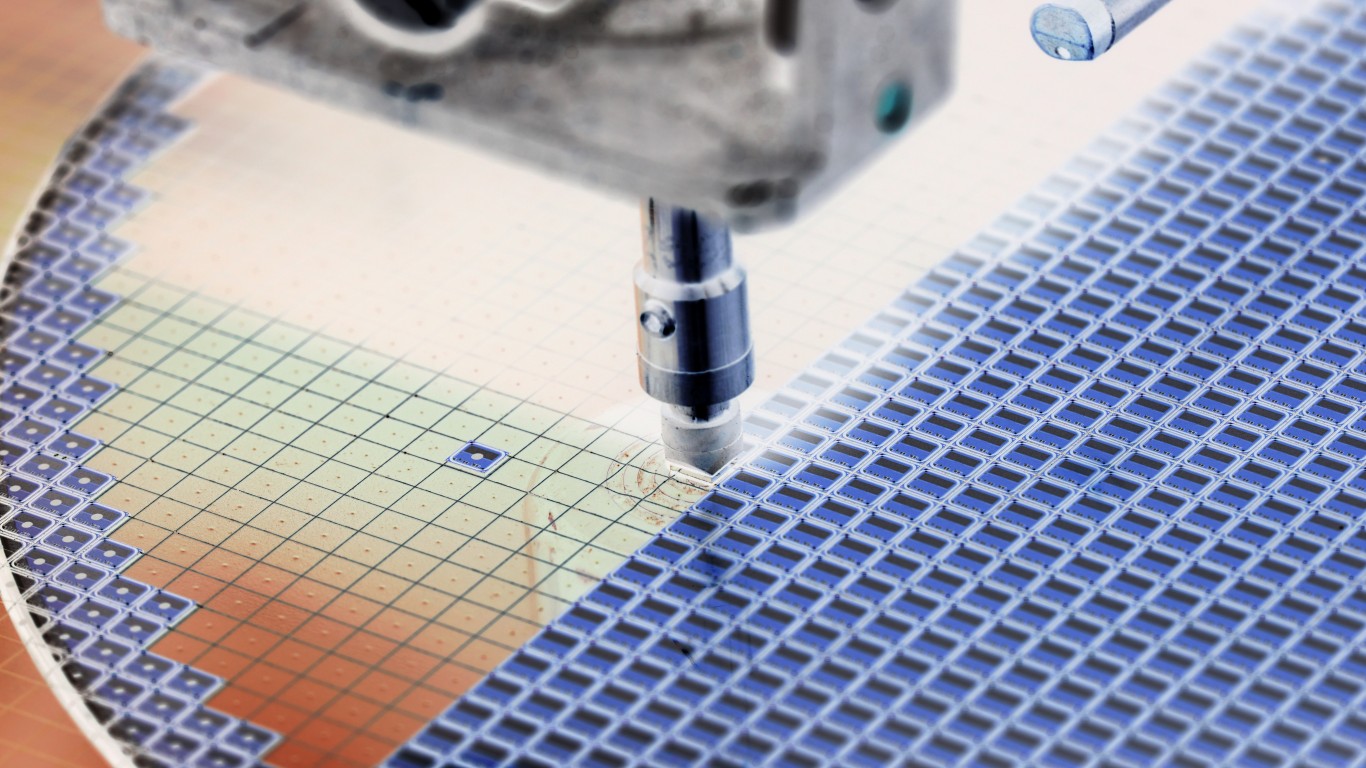
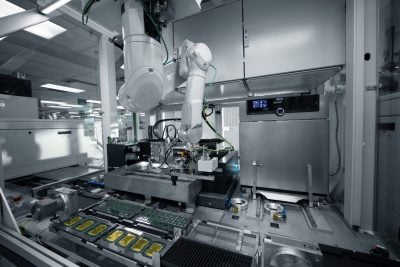
- TSMC will incorporate these wafers into its next-generation WoW (Wafer-on-Wafer) and SoIC 3D-stacking technologies.WoW 3D packaging merges logic chips and memory wafers using hybrid bonding. WoW thus creates millions of micro-copper interconnects which drastically shorten data transmission paths, lower latency, improve bandwidth, and boost power efficiency.
The announcement had yet to indicate projected production amounts and timelines. Given that the South Korean announcement doesn’t manifest results for five years, any earlier timeline confirmation from the TSMC and Winbond alliance will likely be met with overwhelming enthusiasm.
Insurance For Supply Chain and a Bigger Strategic Position
Analysts have noted that TSMC has extremely high requirements for partners in the WoW arena. Suppliers must not only have mature 12-inch wafer mass-production capability, but also high yields, specialized processes and wafer-integration experience. Winbond has a long history in specialty DRAM and coded memory, including NOR flash, and has accumulated strong capabilities in specialty memory processes, wafer manufacturing and quality control management. These strengths are key for its selection as TSMC’s AI memory supply-chain strategy collaborator.
TSMC’s previous memory technology suppliers for A.I.-related foundry work have been: SK Hynix, Samsung and Micron. By Winbond’s entry into TSMC’s key AI memory supply chain and its cooperation in WoW technology, it shows that TSMC is strengthening the self-sufficiency of its AI chip supply capabilities by supporting outside supply-chain partners.
While a new, legitimate player in the DRAM and HBM arena is certainly welcome, SK Hynix (60%), Samsung (30%) and Micron Technology (10%) are unlikely to suffer any, since the pie is still so large – there’s more than enough demand to accommodate all of them and more. Even with the smallest HBM sector share, Micron’s earnings have been in the stratosphere, and Seeking Alpha is forecasting a $1,725 price in 12-months, up from Micron’s current $975.00.
Insurance For Taiwan
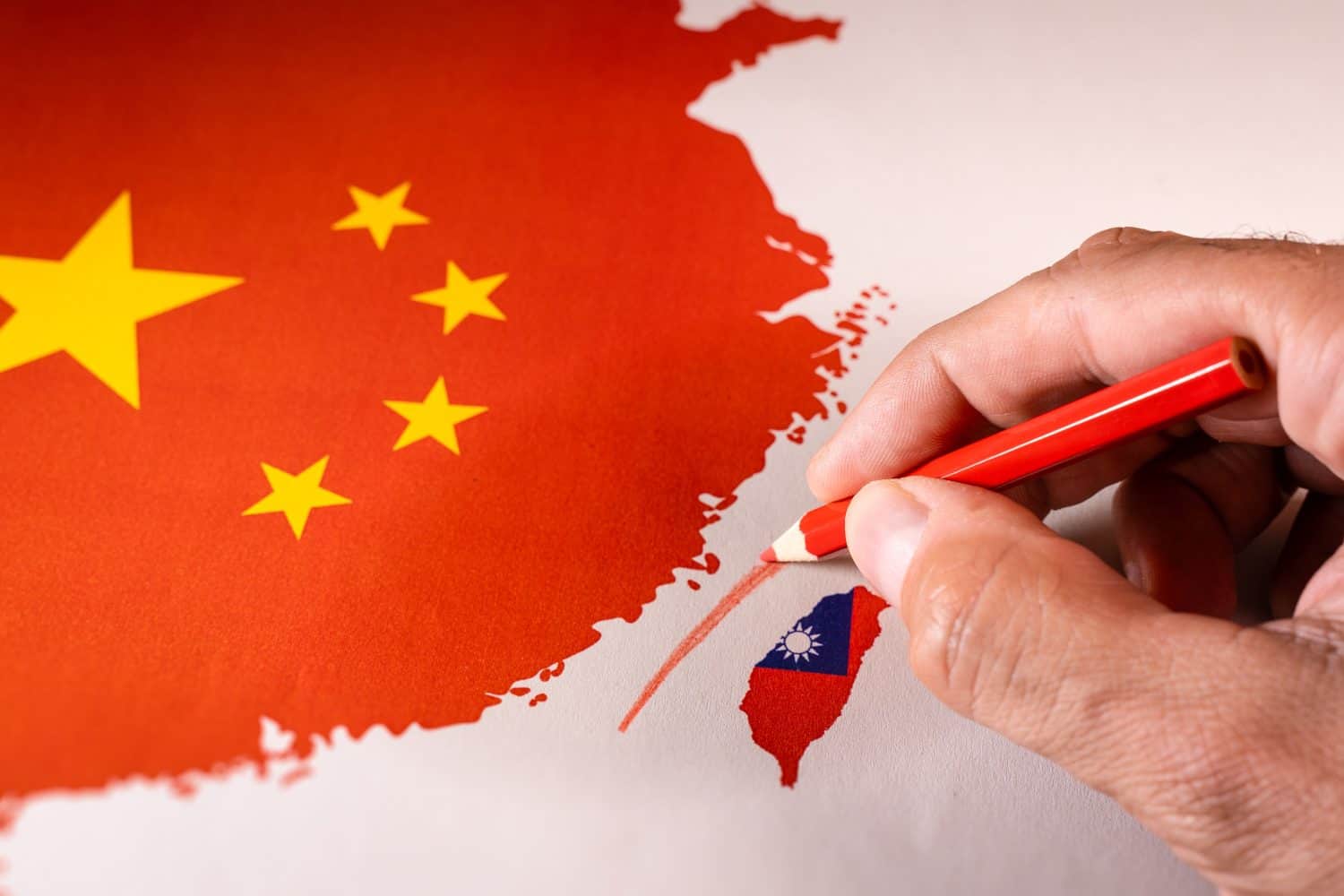
With TSMC leading the adoption of local suppliers, Taiwan’s memory industry is moving from a supporting position in AI to a more central role in the global AI supply chain.
From a geopolitical perspective, this is a strategic imperative. Some political analysts have surmised that President Trump’s recent tariff waiver incentives to Taiwan, which led to TSMC’s (4) factory developments in Arizona, may be part of a broader strategy: to solidify US control over the Western Hemisphere by China’s withdrawal from the Panama Canal and Venezuela, the US will reciprocally withdraw from defending Taiwan from a China takeover.
One of the key strategic defenses of Taiwan has been the world’s reliance on TSMC for its semiconductor production, which accounts for over 68% of global chip foundry market, and 90% of the highest performing logic chips. While the TSMC factories in the US will allow for US chip self-sufficiency, it also removes the imperative to defend Taiwan proper. Creating a Taiwanese memory production industry that is also crucial to the A.I. industry helps to reinforce the defense justification.
Contact [email protected] for any questions or corrections.
After 15 years on Wall Street with 7 of them as Director of Corporate and Municipal Bond Trading for a NYSE member firm, I started my own project and corporate finance consultancy. Much of the work involves writing business plans, presentations, white papers and marketing materials for companies seeking budgetary allocations for spinoffs and new initiatives or for raising capital for expansion or startup companies and entrepreneurs. On financial topics, I have been published under my own byline at The Motley Fool, 247wallst.com, DealFlow Events’ Healthcare Services Investment Newsletter and The Microcap Newsletter, among others. Additionally, I have done freelance ghostwriting writing and editing for several financial websites, such as Seeking Alpha and Shmoop Financial. I have also written and been published on a variety of other topics from music, audiophile sound and film to musical instrument history, martial arts, and current events. Publications include Copper Magazine, Fidelity (Germany), Blasting News, Inside Kung-Fu, and other periodicals.