AST SpaceMobile Is Now Down 55% in 2026: Is ASTS Stock Hopeless or Ready for a Rebound?

This post may contain links from our sponsors and affiliates, and Flywheel Publishing may receive compensation for actions taken through them.

Few satellite stocks have had a tougher 2026 than AST SpaceMobile (NASDAQ:ASTS), and its latest quarterly report added to the pressure. AST SpaceMobile stock is down 55% year to date (YTD) to $32.35 as of the afternoon session. Much of the damage is recent, with the stock down 12% following the company’s Q3 2026 report on November 9. The company’s 52-week high is $133.86.
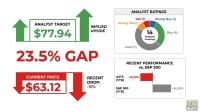
Bank of America (NYSE:BAC | BAC Price Prediction) cut its price target on AST SpaceMobile after the report. It was part of a broader round of target cuts for ASTS stock; the average analyst price target on the company stands at $74.68. That leaves shareholders weighing whether AST SpaceMobile is in real trouble after the stock’s 2026 drop or ready for a rebound.
What Drove AST SpaceMobile’s 2026 Slide
AST SpaceMobile’s Q2 2026 report on August 10 set the tone for the second half. The company booked a $125.9 million loss tied to losing BB7 in a launch incident, and its quarterly revenue of $31.52 million missed the $34.4 million consensus estimate.
On November 9, AST SpaceMobile reported Q3 revenue of $42.3 million, missing the $46 million consensus estimate. According to the company’s quarterly disclosure, its net loss reached $132.4 million.

Iridium and Globalstar Climb While AST SpaceMobile Sinks
Iridium Communications (NASDAQ:IRDM) stock is up 166% YTD to $45.72, beating AST SpaceMobile. In a deal announced June 28, Iridium agreed to be acquired, and its stockholders approved the sale on September 24, with closing expected by mid-2027.
Meanwhile, Globalstar (NASDAQ:GSAT) stock is up 41% YTD to $86.14. A pending sale to Amazon (NASDAQ:AMZN) has supported Globalstar this year, and the Federal Communications Commission’s Space Bureau approved the license transfer in October.
Both Iridium and Globalstar sell established services. These include satellite voice, data and Internet of Things, and their pending deals give each stock an acquisition price to trade around. AST SpaceMobile hasn’t launched commercial service yet, and it’s funding a constellation built to connect directly to standard smartphones through carrier partners on its own.
AST SpaceMobile’s Bull Case Rests on Cash, Partners and Service Activation
CFO Andy Johnson said AST SpaceMobile held over $3.2 billion in cash, cash equivalents and restricted cash as of September 30, and he repeated the company’s full-year 2026 revenue guidance of $150 million to $200 million with possible upside. CEO Abel Avellan cited about $1 billion in non-dilutive Japanese J-LEO funding with Rakuten and a pipeline of about $1.2 billion in U.S. quasi-governmental financing.
AST SpaceMobile counts more than 60 mobile network operator partners covering over 3 billion subscribers. Contracted launches cover more than 100 BlueBird satellites for 2027 to 2028, with about 45 targeted in orbit by mid-2027. Avellan said on the earnings call, “We’re on track for nationwide intermittent service activation in the United States and other key markets before year-end 2026.”
Government work adds a U.S. Space Force sensing contract worth about $100 million for AST SpaceMobile. Blacklift, the company’s planned 20-ton reusable rocket, aims to cut launch costs starting in late 2028.
AST SpaceMobile’s Bear Case Centers on Spending and Execution
Heavy spending sits ahead for AST SpaceMobile. Andy Johnson guided Q4 2026 capital expenditures to $400 million to $500 million, and Blacklift adds several hundred million dollars of incremental 2027 spending. In July, the company also sold $1.15 billion of convertible senior notes, Andy Johnson noted.
Launch timing for AST SpaceMobile depends on outside providers. BlueBirds 14, 15 and 16 are shipped and awaiting a launch date, while a Blue Origin launch is expected in early Q1 2027. Building a rocket adds execution risk for a company that already lost a satellite in a launch incident.
The valuation is stretched, with AST SpaceMobile trading at a trailing price-to-sales ratio of 125 on trailing 12-month revenue of $115.3 million. A beta of 2.847 signals the stock tends to make oversized moves relative to the market.
What Decides Whether AST SpaceMobile Rebounds
AST SpaceMobile now faces the question of whether its Blacklift unveiling on November 12 and the nationwide service activation it targets before year-end land as planned. Launch pace and Q4 revenue against the company’s guidance range could shape sentiment into 2027. A confirmed launch date on the next BlueBird batch would offer an early read on pace.
The bulls see a well-funded AST SpaceMobile close to commercial service, with carrier partners and government contracts already in hand. For the bears, the company is a heavy spender whose revenue remains small next to its market value and whose rocket plan adds risk. A smaller position size might make sense as ASTS could continue to be volatile in the near term.
Contact [email protected] for any questions or corrections.
David Moadel is financial writer specializing in stocks, ETFs, options, precious metals, and Bitcoin. David has written well over 1,000 articles for leading online publications, helping investors understand markets, income strategies, and risk. His work has appeared in 24/7 Wall St., The Motley Fool, InvestorPlace, U.S. News & World Report, TipRanks, ValueWalk, Benzinga, Market Realist, MarketScreener, TalkMarkets, Finmasters, and others. With a master’s degree in education, David has taught at the elementary, high school, and college levels. That teaching background shapes his writing style: clear, educational, and practical. David has also built a loyal social-media audience by providing trustworthy financial content on YouTube, X/Twitter, and StockTwits.