AST SpaceMobile Is Down 37% in a Month. Can B. Riley’s Upgrade Get ASTS Stock Back to $48?

This post may contain links from our sponsors and affiliates, and Flywheel Publishing may receive compensation for actions taken through them.
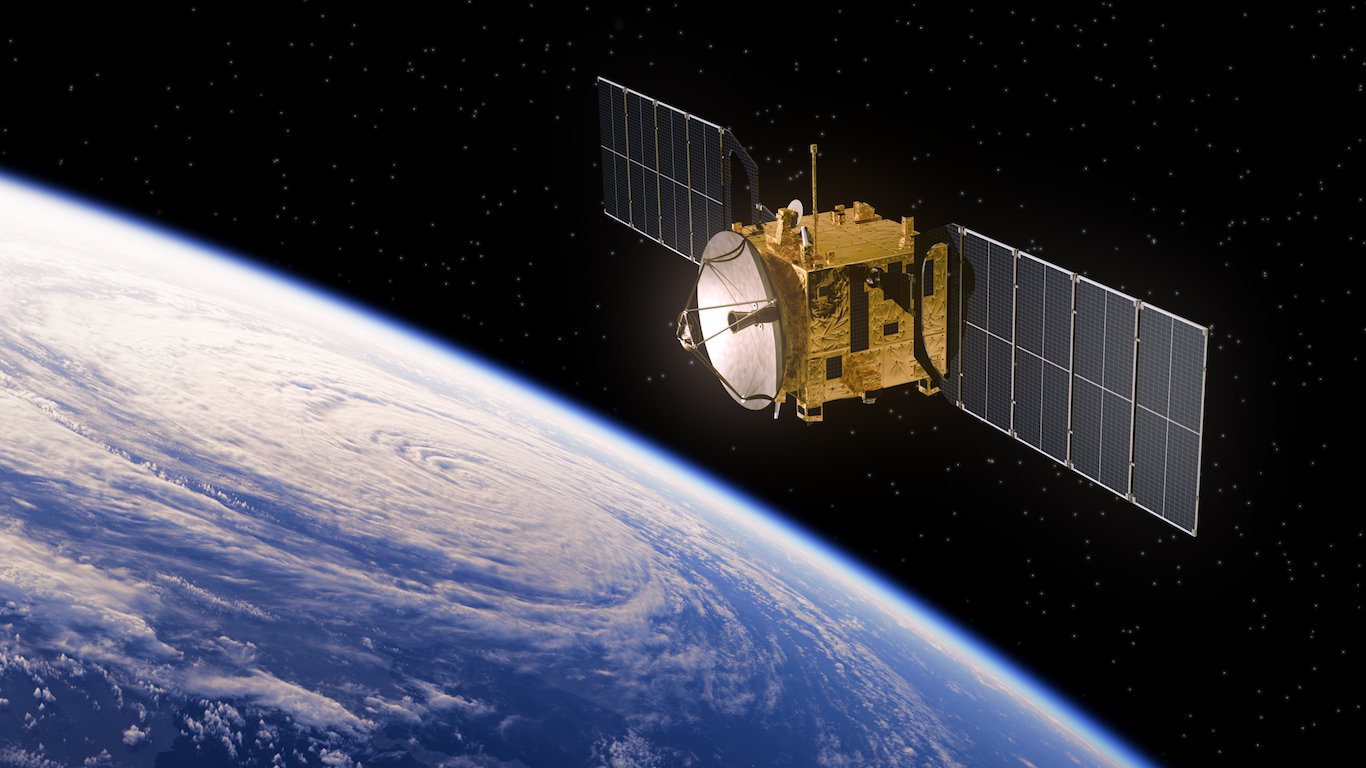
Few space names have taken a harder hit than AST SpaceMobile (NASDAQ:ASTS) over the past month, as a new rocket program, fresh share issuance and launch delays piled up at once. AST SpaceMobile stock is down 37% over the past month to $26.51. However, ASTS shares are bouncing 4% midday on Thursday.
B. Riley upgraded AST SpaceMobile stock to Buy from Neutral on November 18[1] while keeping its $48 price target. At the end of 2025, AST SpaceMobile shares closed at $72.63, above where that target sits now. Whether the stock can climb back there depends on launches, funding and dilution.
What Pushed AST SpaceMobile Lower
AST SpaceMobile disclosed this week that it issued 10 million shares[2] to Firefly Aerospace (NASDAQ:FLY | FLY Price Prediction) under a license to build engines for Blacklift, its reusable rocket targeted to start flying in late 2028[3]. Under that license, AST SpaceMobile owes $400 million[2] in cash plus an estimated 10 million to 14 million shares in total. Firefly Aerospace can sell 2.4 million[2] of the shares it received immediately, according to AST SpaceMobile.
A separate placement of 780,052 shares[2] to Ligado Networks and One Dot Six covers AST SpaceMobile’s spectrum fees, estimated at $6.1 million for the rest of 2026 and $18.1 million for 2027. That saves cash, though it adds to a share count stockholders already worry about.
Launch timing has added to the pressure on AST SpaceMobile. Three BlueBirds shipped to Cape Canaveral in September[3] and are still waiting on a launch date from SpaceX (NASDAQ:SPCX).
Why B. Riley Turned Bullish on AST SpaceMobile
B. Riley argues that many of the capital commitment and constellation deployment fears behind its prior downgrade of AST SpaceMobile are already priced in, along with newer worries about the Firefly Aerospace partnership. According to the firm, the risk-reward is much improved, and investors are missing the potential fruits of successful rocket development and other positive catalysts.
Koyfin’s 12-month consensus price target on AST SpaceMobile is $63.35[1]. William Blair struck a more cautious tone on November 18, repeating its Market Perform rating on the company.
One possible turn came from United Launch Alliance, which said its November 15[1] Vulcan failure destroyed 40 Amazon (NASDAQ:AMZN) Leo satellites and preliminary findings pointed to inadequate fuel supply, a finding that spares the Blue Origin engine New Glenn also uses. That matters because AST SpaceMobile expects three BlueBirds to fly on New Glenn in early 2027. Federal regulators are still investigating, and AST SpaceMobile aims to have about 45 BlueBirds[2] in orbit by mid-2027.
How Rocket Lab, SpaceX and Firefly Aerospace Compare
Rocket Lab (NASDAQ:RKLB) stock is up 2% over the past month to $52.50, a gain that cuts against AST SpaceMobile’s slide. Electron, Rocket Lab’s small-lift rocket, reached 100[4] launches about a year faster than SpaceX’s workhorse rocket hit that mark.
SpaceX stock is down 6% over the past month to $139.81, a smaller decline than AST SpaceMobile’s. Firefly Aerospace stock is up 24% over the past month to $20.64, even as AST SpaceMobile, its new engine customer, sold off.
How AST SpaceMobile’s Business Model Differs From Its Peers
AST SpaceMobile is building a satellite network that connects directly to ordinary, standard smartphones, and it sells that capacity wholesale through mobile network operators. That leaves the company dependent on launch partners and outside funding until commercial service ramps up.
Rocket Lab pairs launch services with spacecraft and components for government and commercial customers. SpaceX combines launch with Starlink connectivity and an artificial intelligence computing arm. Firefly Aerospace covers launch, lunar landers and national-security software, and it now counts AST SpaceMobile as a customer.
What AST SpaceMobile Needs to Reclaim B. Riley’s Target
A path back is visible if AST SpaceMobile launches BlueBirds on a steady pace, switches on intermittent service before year-end and avoids heavy dilution. Japan’s J-LEO program adds $1 billion[3] in non-dilutive subsidies, and management cited a $1.2 billion quasi-governmental financing pipeline for 2027.
The bears also have a strong case. AST SpaceMobile carries $4.08 billion in long-term debt, keeps posting net losses and expects several hundred million dollars of Blacklift spending in 2027. Another launch slip or more share issuance could keep pressure on the stock.
AST SpaceMobile’s coming challenge is getting the three BlueBirds at Cape Canaveral into orbit and intermittent service live on schedule. Investors may want to stay cautious while AST SpaceMobile’s launch schedule resolves.
Contact [email protected] for any questions or corrections.
David Moadel is financial writer specializing in stocks, ETFs, options, precious metals, and Bitcoin. David has written well over 1,000 articles for leading online publications, helping investors understand markets, income strategies, and risk. His work has appeared in 24/7 Wall St., The Motley Fool, InvestorPlace, U.S. News & World Report, TipRanks, ValueWalk, Benzinga, Market Realist, MarketScreener, TalkMarkets, Finmasters, and others. With a master’s degree in education, David has taught at the elementary, high school, and college levels. That teaching background shapes his writing style: clear, educational, and practical. David has also built a loyal social-media audience by providing trustworthy financial content on YouTube, X/Twitter, and StockTwits.