SGOV Yields 3.63%. Can Johnson & Johnson or Verizon Pay Retirees More?

This post may contain links from our sponsors and affiliates, and Flywheel Publishing may receive compensation for actions taken through them.

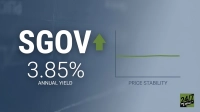
As of November 11, 2026, the iShares 0-3 Month Treasury Bond ETF (NYSEARCA:SGOV) trades at $100.52 and paid its latest monthly distribution of $0.328581 per share on November 5, 2026. Its distributions over the trailing 12 months total $3.646492 per share, a trailing distribution yield of about 3.63% at that price. Treasury bill yields for November 10, 2026 put the 4-week bill at 3.95%, and the 13-week bill at 4.19%, and those rates set SGOV’s income from here. This edition of The Income Desk sets that floating payout against two classic retiree dividend stocks, Johnson & Johnson (NYSE:JNJ | JNJ Price Prediction) and Verizon (NYSE:VZ).
What a Short-Term Treasury Fund Holds and Why Its Payout Never Sits Still
A short-duration bond fund pools investor money and buys a ladder of short-term bonds. SGOV holds only U.S. Treasury bills with three months or less left until maturity. Its most recent portfolio filing, dated August 31, 2026, showed net assets of about $106.0 billion, with the largest single Treasury bill making up 10.18% of net assets. The rest is more bills plus small positions in a BlackRock short-term cash vehicle (0.66% and 0.11% of net assets).
Those bills mature every few weeks. The fund reinvests the cash in new bills at whatever the going rate is, and that is how the yield moves. When the Federal Reserve raises rates, new bills pay more, and the monthly distribution climbs within weeks. When the Fed cuts, payouts fall just as quickly. The upper bound of the fed funds target stands at 4.00% as of November 11, 2026, after reading 3.75% as recently as September 16, 2026. Nothing about SGOV’s current yield is locked.
SGOV’s own history shows the trend. Its monthly distribution was $0.45325 in August 2024, fell to $0.2724 in March 2026, and recovered to $0.328581 in November 2026. That is reinvestment risk: the income resets lower every time bills roll over into a falling-rate market.
How a Fund Differs From Owning the Bills
Buy a single Treasury bill, hold it until it matures, and receive the face value on a known date. A fund has no maturity date. It turns over its holdings forever, so you never reach a day when par is promised to you. You sell shares at the market price on the day you sell. With holdings this short, rate-driven price swings tend to be small, but a fund can lose value when rates rise sharply, and exchange-traded shares can trade below the value of the underlying bills in a disorderly market. Funds holding longer bonds carry much more of this price risk than SGOV does.
Know where the support stops. The bills inside SGOV carry the full faith and credit of the U.S. government, which covers payment of the bills themselves. That support does not extend to the ETF’s share price or to the size of its distributions. ETFs carry no FDIC insurance, and FDIC coverage applies only to bank deposits up to its per-depositor limits in any case.
Dividend Safety First: Johnson & Johnson and Verizon Against SGOV
The three income streams look like this on the same day.
| Metric (as of Nov. 11, 2026) | SGOV | Johnson & Johnson | Verizon |
|---|---|---|---|
| Share price | $100.52 | $277.70 | $46.15 |
| Latest payout | $0.328581 monthly | $1.34 quarterly | $0.7075 quarterly |
| Trailing 12-month payout per share | $3.646492 | $5.28 | $2.8125 |
| Trailing yield | 3.63% | 1.87% | 6.11% |
| Who sets the payout | Treasury bill rates | Board of directors | Board of directors |
Each yield is a snapshot of income relative to today’s price. Total return also depends on what each share price does next.
Johnson & Johnson: Low Starting Yield, Long Record of Raises
Johnson & Johnson’s board raised the quarterly dividend 3.1% to $1.34 per share in April 2026, the company’s 64th consecutive year of increases. The next payment is due December 8, 2026, to holders of record on November 24, 2026. The payout climbed from $1.19 per quarter in late 2023 to $1.24, then $1.30, then the current rate.
Its underlying business is broad. Second-quarter revenue rose 6.6% to $25.31 billion, and adjusted EPS of $2.90 beat the $2.85 consensus. Innovative Medicine grew 7.8%, and MedTech grew 4.5%. The weak spots are real: Stelara sales fell 55.2% as the drug loses ground, and the company plans to separate its Orthopedics business. The price risk is real too. The stock has ranged from $189.19 to $283.25 over 52 weeks, a swing SGOV shareholders never see.
Verizon: High Yield Covered by Cash, Carried by Debt
Verizon pays $0.7075 per share each quarter, up from $0.69 before its early 2026 raise and $0.6775 through most of 2025. Growth is slow, but steady. Coverage looks solid for now. Third-quarter free cash flow rose 13.9% to $7.80 billion, while the dividend costs about $2.93 billion a quarter based on shares outstanding. Management raised 2026 adjusted EPS guidance to $5.04 to $5.06 in late October and still plans buybacks of up to $4.5 billion this year.
The balance sheet is the pressure point. Verizon carries about $166.2 billion of debt, interest expense rose 17.2% year over year, and net unsecured debt to adjusted EBITDA was at 2.5x in the second quarter versus 2.2x at year-end 2025. A 6% yield is only worth having if the payment keeps coming, and debt is the first place a squeeze would show up.
Both Halves of the Trade
A board can cut a dividend at any meeting, and no law or contract requires either company to keep paying. SGOV’s payout shrinks automatically whenever bill rates fall, as its 2024-2026 decline showed. Meanwhile, a dividend can grow year after year regardless of what the Fed does, and Johnson & Johnson has raised its payout for 64 straight years. SGOV’s income can rise only when short-term rates rise.
Over a long retirement, inflation eats a payout that only follows rates. Over a short horizon, a stock price that can drop when you need to sell is the bigger threat. Most retirees end up combining the two, which is the exercise we walked through in a free guide on turning a lump sum into a monthly paycheck, covering the mix, the payment calendar, and the order in which you tap each source.
Taxes Can Flip the Answer
SGOV: Distributions come from Treasury interest, so they are taxed federally at ordinary income rates and do not count as qualified dividends. Interest on U.S. Treasury obligations avoids state and local income tax, and many states let funds pass that break through to shareholders. Some states attach conditions. California, for example, lets a fund pay state-exempt dividends only if at least 50% of the value of its total assets consists of state-exempt obligations at the close of each quarter (Cal. Rev. & Tax. Code § 17145(a)). SGOV’s holdings are almost entirely Treasury bills, but check your state’s rules and the fund’s year-end tax letter.
Johnson & Johnson and Verizon: Dividends from domestic corporations count as qualified dividend income and are taxed at the lower long-term capital gains rates (26 U.S.C. § 1(h)(11)(B)(i)), provided you satisfy the holding-period requirement. You must hold the shares for more than 60 days during the 121 days around the ex-dividend date (26 U.S.C. § 1(h)(11)(B)(iii)(I)). States with an income tax generally tax these dividends in full.
The result: a retiree in a high-tax state who sits in a middling federal bracket may keep more of SGOV’s interest than the headline yield suggests. A retiree in a higher federal bracket in a no-income-tax state gets more out of the qualified-dividend rate. Inside an IRA, all of this goes away until withdrawal, when everything comes out taxed as ordinary income.
Who Each Option Suits
SGOV fits a retiree parking money they will need within a year or two, who wants minimal price swings and can live with monthly income that rises and falls with Fed policy. Johnson & Johnson fits a retiree with a long horizon who will accept a lower starting yield and a volatile share price in exchange for a payout with a 64-year record of increases. Verizon fits a retiree who wants the highest current cash per dollar invested, accepts slow dividend growth, and will watch the company’s debt and free cash flow every quarter.
Contact [email protected] for any questions or corrections.
Chris Lange is a financial and geopolitical writer with more than a decade of experience covering a myriad of topics. He has published thousands of articles for 24/7 Wall St., with past coverage focused heavily on stocks, IPOs, healthcare, defense, global affairs, and technology.
His work has been quoted, or referenced by a number of outlets including Business Insider, USA Today, Yahoo Finance, MSN, The Motley Fool, and many other publications. A graduate of Southwestern University, he studied business with a focus on investments and has previous experience in banking and startups.
When not reading or writing the news, he is following his passion for Lacrosse, playing chess, or building solar projects with his dad.