BND and SGOV Are Both “Safe” Bond ETFs, Yet Only One Has Never Had a Losing Year
Both ETFs carry the "safe" label, but they behave like completely different animals when interest rates move. Understanding why one has sailed through every calendar year without a loss while the other carries wounds from 2022 changes how you think…

This post may contain links from our sponsors and affiliates, and Flywheel Publishing may receive compensation for actions taken through them.

Both Vanguard Total Bond Market ETF (NASDAQ:BND) and iShares 0-3 Month Treasury Bond ETF (NYSEARCA:SGOV) get filed under “safe” in most investor spreadsheets. That label hides the choice you are actually making. BND owns the entire investment-grade bond market, which means it carries real interest-rate risk. SGOV owns Treasury bills that mature in weeks, which means it barely moves at all. One is a bond investment. The other is a parking spot for cash that pays.
Duration Is the Whole Story
Duration measures how much a bond fund’s price falls when interest rates rise. BND tracks the Bloomberg U.S. Aggregate index and holds Treasuries, agency mortgages, and investment-grade corporates with an average maturity in the intermediate range. Its price swings when the 10-year Treasury yield moves, and that yield sat at 5.00% on September 15, 2026.
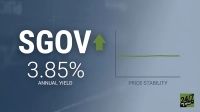
SGOV holds Treasury bills with roughly one to two months left to maturity. The bills mature, the manager buys new ones, and the fund’s income resets at whatever short rates are paying. On the same day, the 1-month bill yielded 3.93% and the 3-month bill yielded 4.11%. When the federal funds upper bound moves, SGOV’s payout follows within weeks. BND’s price gets marked down or up on the same news.
Why One Fund Can Lose Money and the Other Structurally Cannot
BND launched in April 2007. SGOV launched in June 2020, so its clean run of positive calendar years spans a short window. Still, the mechanic is real. A bill maturing in 30 days can only lose a trivial amount even if rates jump, because you get face value back almost immediately. An intermediate bond fund can lose a lot, and BND did in 2022 when the Fed hiked aggressively.
The scars have not fully healed. BND’s five-year price change is -2.71% through September 16, 2026, and its year-to-date price change is -1.28%. SGOV compounded quietly the other way, gaining 20.19% over the same five-year window and 2.57% year to date. Dividends offset some of BND’s price drop, but the divergence in shareholder experience is the whole point.
Practical Side by Side
| Factor | BND | SGOV |
|---|---|---|
| Strategy | Total U.S. investment-grade bond market | Ultra-short Treasury bills |
| Rate sensitivity | Intermediate duration | Near zero |
| Expense ratio | 0.04% | 0.09% |
| Inception | April 2007 | June 2020 |
| Trailing 12-month distributions | $2.93 | $3.71 |
SGOV’s payout swings with policy. In February 2022 it paid $0.0018 per share; by December 2023 that had climbed to $0.4545. When cuts arrive, the income falls just as fast. BND’s monthly checks move slower and smaller because the underlying bonds lock in coupons for years.
Verdict
SGOV fits investors treating this money as cash: emergency reserves, a down-payment fund, or dry powder waiting on a decision. It will not lose value in a rate shock, but it also will not rally when the Fed cuts. BND fits investors who want bond-market beta inside a long-term portfolio and who accept mark-to-market pain in exchange for eventual price appreciation when yields fall. The calculus flips if you believe the Fed will cut aggressively from the current 3.75% upper bound. That is the environment BND was built for, and the one that would finally punish SGOV holders for staying short.
Contact [email protected] for any questions or corrections.
Jake has been been working in financial media for almost 15 years. He focuses on all things personal finance for 24/7 Wall St. with high hopes to educate and entertain. Most recently, Jake spent 12 years working various roles at The Motley Fool. He started copy editing fool.com content, worked on premium and marketing campaigns, and helped launch The Ascent, a personal finance brand.
His work has been featured on platforms like MSN, Yahoo Finance, USA Today, and more. He's written about credit cards, social security, ETFs, savings accounts, and just about anything else you can imagine when thinking about money. Jake love to cook, play golf, and tell people he's never had a cavity. (It's true!)