3 Legacy Industrial Dividend Stocks That Never Go Out of Style

This post may contain links from our sponsors and affiliates, and Flywheel Publishing may receive compensation for actions taken through them.
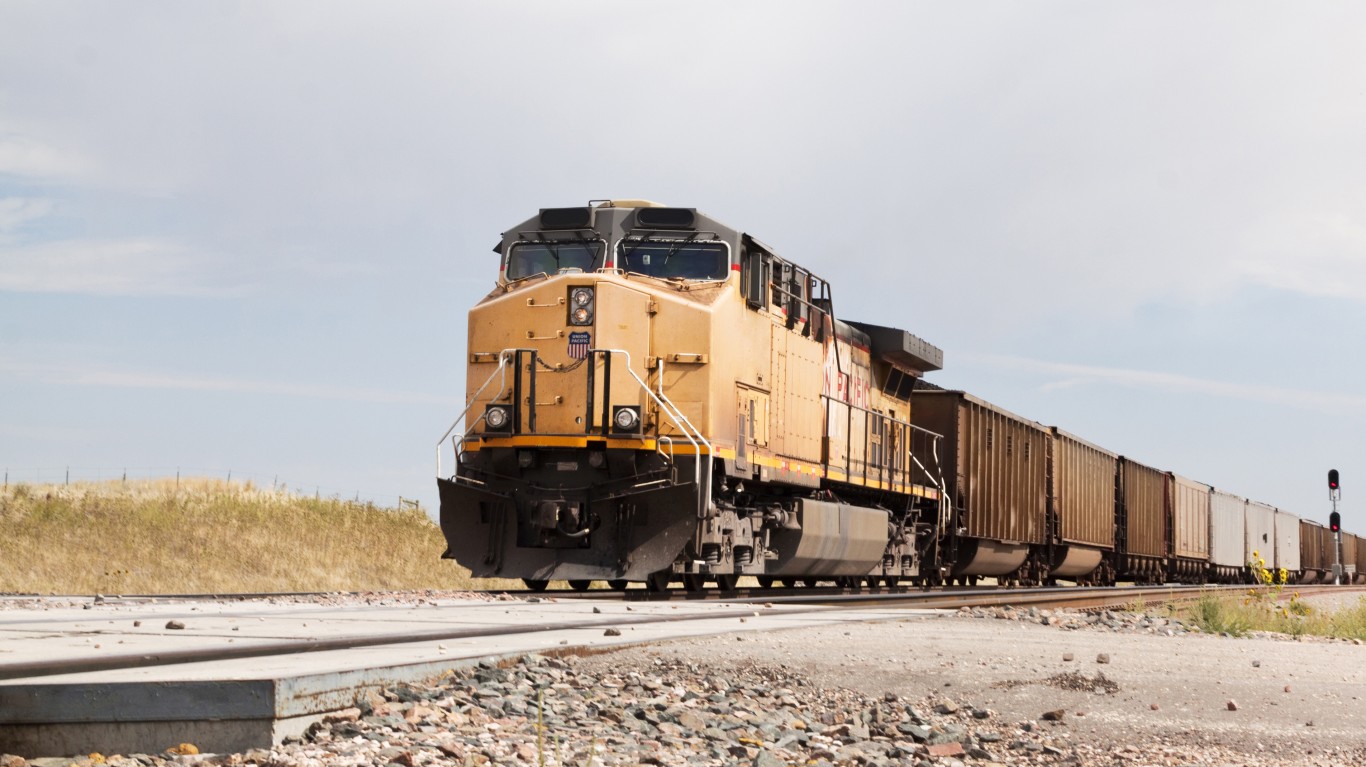
Railroads, factory automation and heavy equipment keep the economy moving, and the companies that lead those industries have spent generations turning that work into shareholder income. The youngest of the three names below traces its roots to 1925, and each one kept its quarterly dividend flowing through the last two recessions. If you’re a retiree who wants a income that grows over time, these legacy industrials pair long payout records with balance sheets built to keep that income coming.
Emerson Electric: 71 Years of Raises and Still Climbing
Emerson Electric (NYSE:EMR | EMR Price Prediction) was founded in 1890 in St. Louis. It has grown from its manufacturing roots into a global industrial automation technology company that sells software, control systems, test and measurement equipment and intelligent field devices to manufacturers. It also now owns AspenTech fully, which strengthens its industrial software portfolio.
The board just raised the quarterly dividend 7% to $0.595 per share, up from $0.555. Annualized against a share price of $167.20, that works out to a forward yield of about 1.42%. The starting yield is modest, and the payout has a long record of reliable growth.
Dividend Safety Check
Coverage is wide. Emerson generated $3.535B of free cash flow in fiscal 2026, up 32.55%. Fiscal 2027 guidance calls for $3.8B to $3.9B of free cash flow and about $1.3B of dividends, so dividends would use roughly 34.2% of free cash flow even at the low end of that range. The new annual rate also is about 32.8% of the $7.25 in adjusted EPS management expects. The company ended the year with $1.806B in cash and $20.740B of shareholders’ equity.
Chief financial officer Mike Baughman told analysts, "We are entering our 71st consecutive year of increased dividends." That streak comfortably tops the 50-year bar for a Dividend King. The payout history also shows the quarterly dividend rising from $0.30 in 2008 to $0.33 in 2009, and from $0.49 to $0.50 in 2020. In both downturns, the raises kept coming.
Bull Case for Income Investors
Demand gives the next raise solid ground. Fourth-quarter underlying orders grew 14%, and backlog reached $8.2 billion, up 11% year over year. Chief executive Lal Karsanbhai said "customers are investing in automation at a rapid pace, and our orders reflect it." On top of the dividend, Emerson plans $2.5 billion of buybacks, which reduce the share count and make each future raise cheaper to fund.
Risk to Watch
Two regions remain weak. Karsanbhai called the European and Chinese markets "concerning" and said they "will be headwinds to underlying growth throughout the year."
Union Pacific: 20 Straight Annual Raises on America’s Rail Backbone
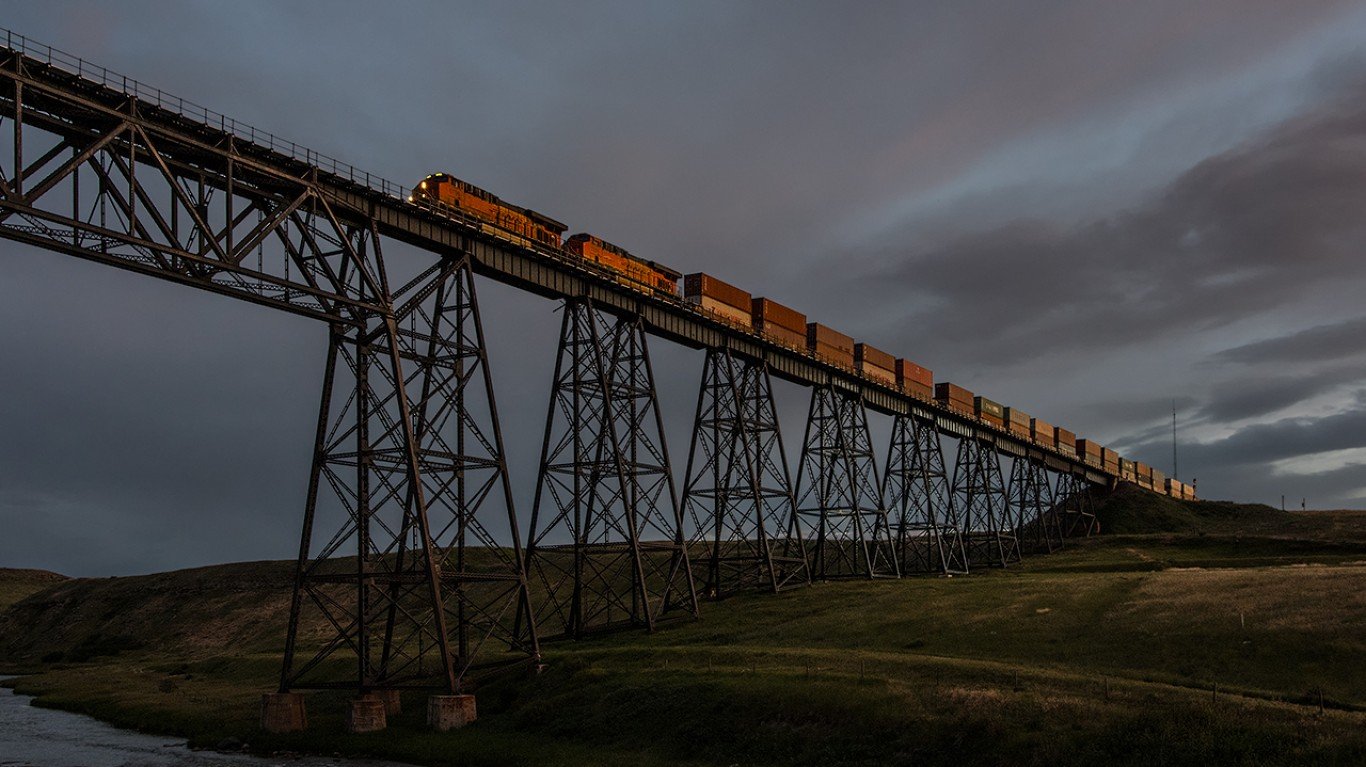
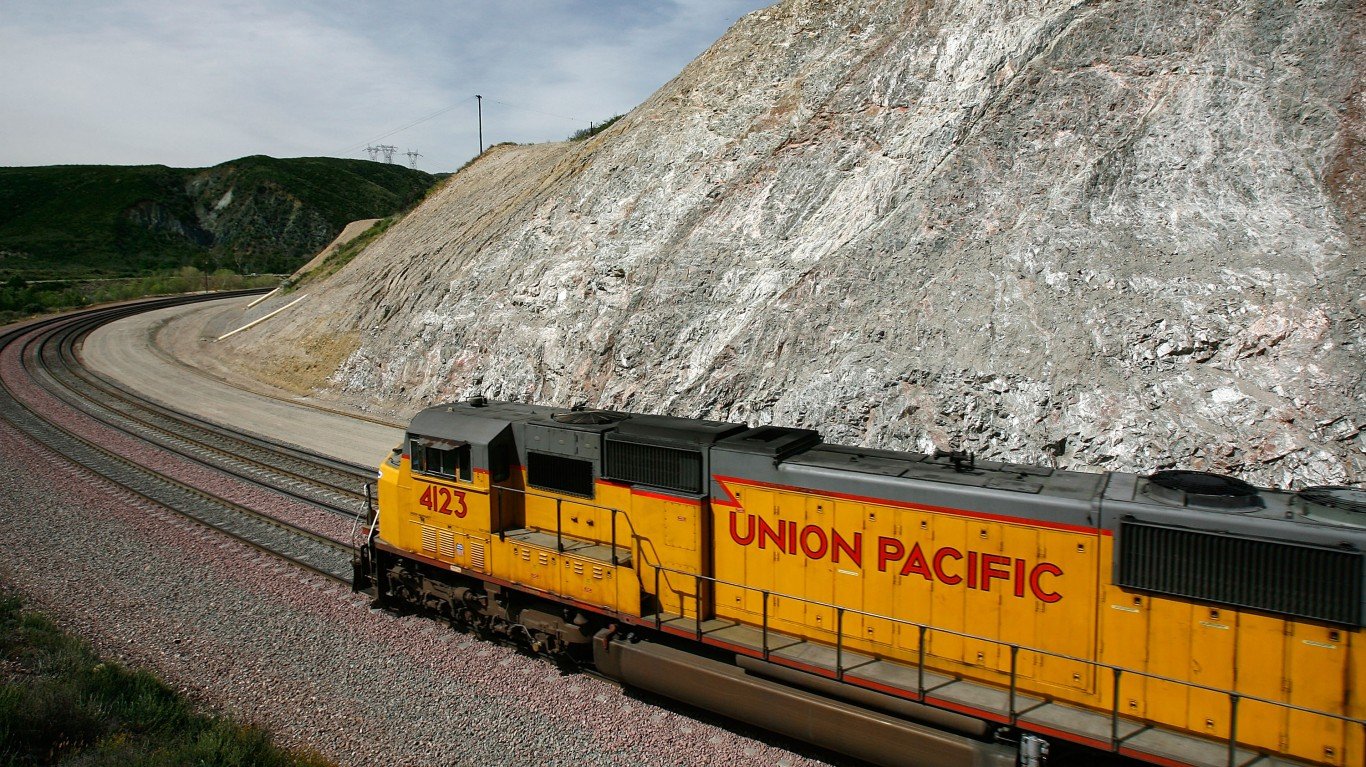
Union Pacific (NYSE:UNP) dates to the Pacific Railroad Act of 1862, which chartered the original Union Pacific to help build the transcontinental railroad. The current holding company was incorporated in Utah in 1969 and is headquartered in Omaha. Its tracks carry a steady stream of intermodal containers, industrial goods, grain and bulk freight across the western U.S.
The stock yields 1.87% on an annual dividend of $5.56 per share. The most recent quarterly payment rose to $1.42 from $1.38.
Dividend Safety Check
The dividend takes about 42.8% of trailing EPS of $12.98, so the payout has ample buffer. Chief financial officer Jennifer Hamann reported $8.3 billion in cash from operations and said "free cash flow totaled $2.4 billion after we reinvested in our network and increased our third quarter dividend 3%, the 20th consecutive year providing our shareholders with an annual dividend raise." The railroad holds $3.1 billion in cash and short-term investments at an adjusted debt-to-EBITDA ratio of 2.4x. Share buybacks dropped to $26M in the first nine months from $2.679B a year earlier, which keeps more cash on hand.
Union Pacific held up in past downturns, too. The quarterly payment stayed at $0.27 throughout 2009 and at $0.97 throughout 2020, and raises resumed once each storm passed.
Bull Case for Income Investors
The core railroad is running at full speed. Third-quarter revenue rose 15.26% to $7.197B, and adjusted EPS of $3.53 topped the $3.4713 consensus. Management reaffirmed its commitment to "consistent annual dividend increases." High fuel prices may even help the business. Chief executive Jim Vena noted that "when fuel prices go up, it is naturally an advantage" because rail moves freight more cheaply per ton than trucks.
Risk to Watch
The pending Norfolk Southern (NYSE:NSC) merger brings regulatory approval risk, integration risk and possible credit downgrade risk from increased indebtedness. Hamann expects the deal to close in the second half of 2027.
Caterpillar: 33 Years of Bigger Payouts From the Heavy Equipment Giant
Caterpillar (NYSE:CAT) was formed when Holt Manufacturing and C.L. Best Tractor merged in 1925. Today it designs and sells machinery, engines, financial products and insurance through a worldwide dealer network. Its equipment works in mines, quarries, construction sites and, more and more, the power plants behind data centers.
Caterpillar yields 1.05% on an annual dividend of $6.28. The quarterly payment recently rose to $1.63 from $1.51. Management said "this year will mark 33 consecutive years of paying higher annual dividends to our shareholders," and this was the sixth consecutive year of a high-single-digit quarterly dividend increase.
Dividend Safety Check
This is the most conservatively covered payout of the three. The dividend takes about 24.6% of trailing EPS of $25.48. In the third quarter alone, machinery, power and energy free cash flow came to $3.8 billion, while the quarterly dividend cost nearly $750 million. Caterpillar holds $7.9 billion in enterprise cash plus $1.6 billion in liquid marketable securities. Management has committed to "maintain a strong balance sheet and continue to return substantially all of our MP&E free cash flow to our shareholders."
The streak held through downturns. The quarterly payment held at $0.42 throughout 2009 and at $1.03 throughout 2020.
Bull Case for Income Investors
Caterpillar has years of work lined up. Backlog reached $78 billion, up 96% from a year earlier. Power generation sales to users jumped 75% on demand for turbines and engines used at data centers. Third-quarter revenue of $20.682B rose 17.26%, and adjusted EPS of $7.20 beat the $7.0335 consensus. The stock trades at 19x forward earnings, below its trailing multiple of 23x, which means analysts expect earnings to keep growing.
Risk to Watch
Caterpillar is the most cyclical stock in this group, with a beta of 1.64. Shares fell 24.16% over the past month to $604.81, so expect a bumpier ride than the dividend record alone suggests.
Three Industrial Paychecks Built to Last
Emerson, Union Pacific and Caterpillar have paid their way through recessions and a pandemic, and each one still covers its dividend with plenty of cash to spare. Emerson’s 71-year streak of raises, Union Pacific’s 20 straight annual increases and Caterpillar’s 33 years of higher payouts give retirees three different routes to growing income. Factories, freight and heavy equipment will be needed in every cycle ahead, and these three companies plan to keep sharing what they earn.
Contact [email protected] for any questions or corrections.
Lee Jackson has covered Wall Street analysts' equity and debt research and equity strategy daily for 24/7 Wall St. since 2012. His broad, diverse career, including a stint as creative services director at an NBC affiliate in Austin, Texas, gives him unique insight into the financial industry.
Lee Jackson's journey in the financial industry spans more than 30 years, including nearly two decades as an institutional equity salesperson at Bear Stearns, Lehman Brothers, and Morgan Stanley. His career spanned pivotal sell-side Wall Street events, from the dot-com rise and bubble to the Long-Term Capital Management debacle, 9/11, and the Great Recession of 2008. This reflects his resilience and adaptability amid market volatility.
Lee Jackson’s practical financial industry experience, gained through a career at some of the biggest banks and brokerage firms, is complemented by a lifetime of writing across various platforms. This unique combination allows him to shed light on the intricacies of Wall Street in a way only someone with deep insider experience and knowledge can. Moreover, his extensive network across Wall Street continues to provide direct access for him and 24/7 Wall St., a privilege few firms enjoy.
Since 2012, Jackson’s work for 24/7 Wall St. has been featured in Barron’s, Yahoo Finance, MarketWatch, Business Insider, TradingView, Real Money, The Street, Seeking Alpha, Benzinga, and other media outlets. He attended the prestigious Cranbrook Schools in Bloomfield Hills, Michigan, and has a degree in broadcasting from the Specs Howard School of Media Arts.