Alibaba Sinks 8% on Report U.S. Is Finalizing Curbs on China’s Remote AI Chip Access; Baidu Falls 4%, PDD Slides 3%

This post may contain links from our sponsors and affiliates, and Flywheel Publishing may receive compensation for actions taken through them.
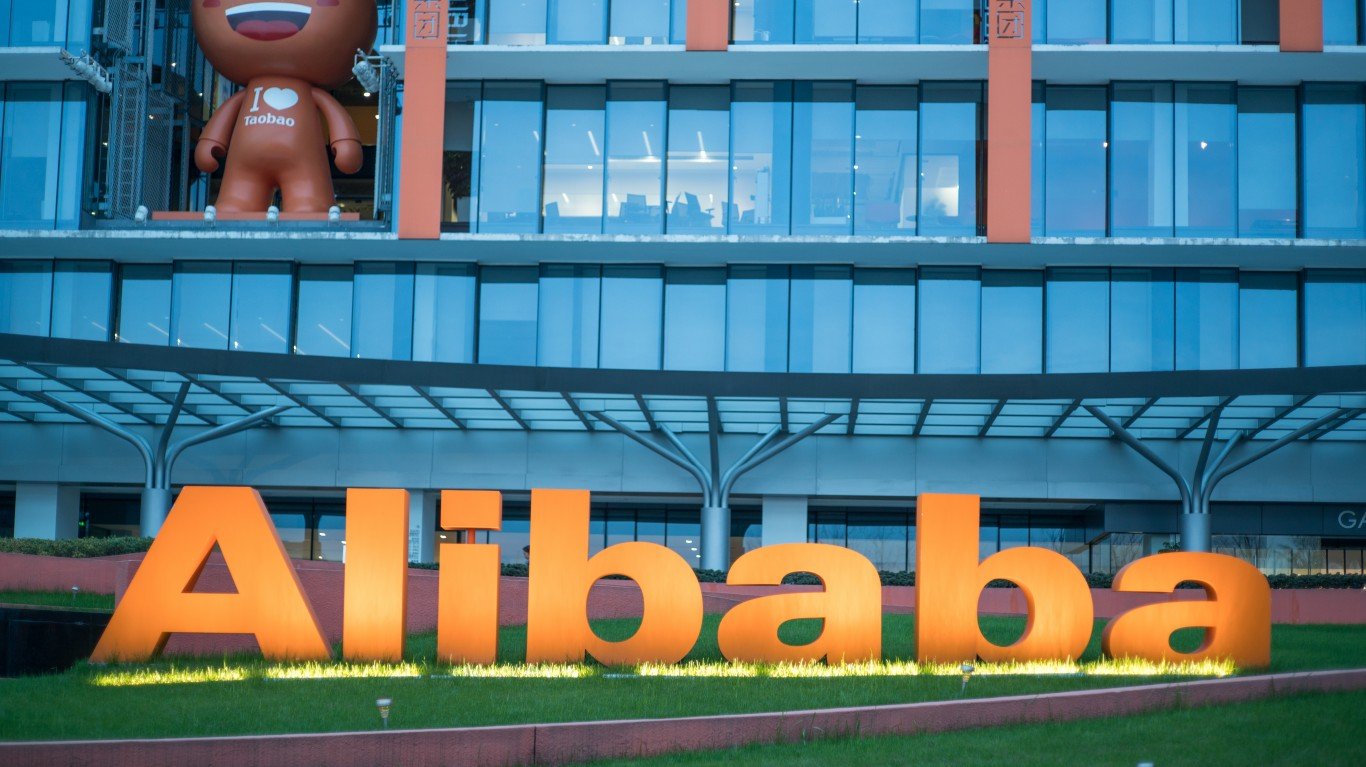
U.S.-listed Chinese tech stocks are under pressure as Washington moves closer to closing a key path to advanced AI chips. Alibaba (NYSE:BABA | BABA Price Prediction) stock is at $93.44 in early trading Thursday, down 8%. The selloff hits Alibaba hardest among its U.S.-listed peers because the company’s cloud and AI plans lean heavily on top-end chips.

Broader tech sentiment isn’t helping. Jensen Huang is stepping down as CEO of NVIDIA (NASDAQ:NVDA), according to CNBC and The New York Times, and technology stocks are lagging the overall market. With an earnings report coming up soon, Alibaba faces a brighter spotlight on its AI spending plans.
What The Information Reported About AI Chip Access
The Information reported that the U.S. Commerce Department is finalizing a long-awaited rule to block Chinese companies’ remote access to advanced AI chips. Remote access refers to tapping those chips through overseas cloud data centers, a path that avoids buying them directly. The rule hasn’t been published yet. Tencent shares fell in Hong Kong trading on November 12 after the report, along with Alibaba’s Hong Kong listing.
That matters for Alibaba because its AI and cloud ambitions depend on access to top-end chips. Reuters reported in October that ByteDance, Alibaba and Tencent had placed over $35 billion worth of NVIDIA chip orders. In Q1 FY2027, Alibaba’s AI Cloud and Compute Services revenue grew 45% year over year (YoY) to $7.14 billion, while the company’s capital expenditures rose 75% YoY to $9.97 billion. Research firm Omdia ranks Alibaba Cloud first in China’s AI cloud market with a 38.1% share.
How Baidu and PDD Stack Up Against Alibaba
Baidu (NASDAQ:BIDU) stock is at $76.80, down 4%. Running its own AI models and cloud services makes Baidu the most directly exposed of Alibaba’s U.S.-listed peers to chip curbs. Baidu’s GPU Cloud revenue grew 283% YoY in Q2 2026. The service provides cloud access to graphics processing units (GPUs), and the company’s AI Cloud Infra revenue rose 50% to $1.08 billion. Even with that exposure, Baidu’s decline is smaller than Alibaba’s.
PDD Holdings (NASDAQ:PDD) stock is at $76.74, down 3%. PDD runs a discount e-commerce business. With Pinduoduo in China and Temu overseas, it has limited direct AI chip exposure, and its drop fits a broader risk-off move in Chinese tech. JD.com (NASDAQ:JD) is another e-commerce rival in the same China tech group. The steepest decline in the group belongs to Alibaba.
Why Alibaba Carries More Chip Risk Than Its Rivals
Online shopping, cloud computing, Qwen AI models and in-house chips from the T-Head unit all sit under one roof at Alibaba. That scope gives the company a bigger AI infrastructure presence than any of its e-commerce rivals, and it ties more of Alibaba’s growth story to computing capacity. Alibaba’s AI Cloud and Compute Services segment pairs Alibaba Cloud with T-Head, reflecting that full-stack push. Proprietary Zhenwu processors designed by T-Head already run on Alibaba Cloud, which could soften the impact of tighter access to foreign hardware.
Baidu’s model centers on search, AI cloud services and Apollo Go autonomous ride-hailing, which puts it closest to Alibaba on chip risk. PDD leans on discount marketplaces and cross-border sales through Temu. JD.com focuses on first-party retail backed by its own logistics network, while investing in AI tools such as its JoyAI model, and those retail-heavy models depend far less on renting top-end chips from overseas data centers.
Alibaba’s Next Test After the Chip Access Report
Next up for Alibaba is whether the Commerce Department publishes the rule and how far its reach extends. Alibaba’s upcoming earnings report may give management a chance to explain how the company plans to secure computing capacity under tighter limits. That plan matters because management has said capital expenditures should remain elevated while AI infrastructure demand continues to exceed capacity.

Alibaba’s in-house chips and fast-growing cloud business give the bulls a cushion against tighter access. Tighter limits on top-end hardware could slow the AI expansion that’s driving the company’s cloud growth, and that’s the core worry for the bears. It may be worth tracking the remote AI chip access rule closely and researching each company’s chip exposure before drawing any conclusions.
Contact [email protected] for any questions or corrections.
David Moadel is financial writer specializing in stocks, ETFs, options, precious metals, and Bitcoin. David has written well over 1,000 articles for leading online publications, helping investors understand markets, income strategies, and risk. His work has appeared in 24/7 Wall St., The Motley Fool, InvestorPlace, U.S. News & World Report, TipRanks, ValueWalk, Benzinga, Market Realist, MarketScreener, TalkMarkets, Finmasters, and others. With a master’s degree in education, David has taught at the elementary, high school, and college levels. That teaching background shapes his writing style: clear, educational, and practical. David has also built a loyal social-media audience by providing trustworthy financial content on YouTube, X/Twitter, and StockTwits.