If Nvidia’s Board Fires Jensen Huang, Is His Ultimate ‘Revenge’ Pairing Up With Elon Musk to Build Terafab?

This post may contain links from our sponsors and affiliates, and Flywheel Publishing may receive compensation for actions taken through them.
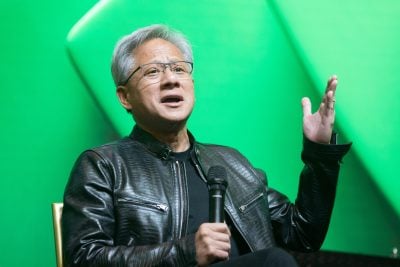
Nvidia’s (NASDAQ: NVDA) board is weighing whether to remove Jensen Huang, the man who co-founded the company in 1993 and has run it ever since. The Wall Street Journal reported Wednesday evening that the board was preparing to oust him and could meet as soon as that night. As of Thursday morning, Nvidia had announced no decision.
Huang has invited the scrutiny. He told employees days ago that he had been unfaithful to his wife, after reports linked him to Alice Huang, a former executive at Singapore’s Megaspeed whom U.S. officials suspect of spying for China. China calls that claim groundless, and Huang has not been accused of a crime. On Wednesday, The New York Times reported a second relationship, with Kimberly Powell, an Nvidia vice president who reports to him. Nvidia was at $159.98 in pre-market trading at 7:10 AM ET, down 7.9% from Wednesday’s close and 33% below its October 6 record. That is about $1.9 trillion of market value gone since the record.
Then, late Wednesday, the richest man in the world weighed in.
“That would be an honor”
At 6:22 PM ET on Wednesday, the market commentary account Zero Hedge posted four words on X: “Elon please hire Jensen.” Two hours later, Elon Musk replied: “That would be an honor.”
It was one line on social media, and it may be nothing more. But it puts a real question on the table. If Nvidia’s board pushes Huang out, what does one of the most driven executives in the world do next?
Why Huang is unlikely to sit still
The name Nvidia comes from invidia, the Latin word for envy. Co-founder Curtis Priem has said the idea was to make competitors green with envy, and the company’s green branding has carried that story ever since. Huang has spent 33 years building a company to that standard, and it worked. Nvidia’s chips became the engine of the AI boom, and even after this week it is worth about $3.9 trillion.
He also does not need the money. Huang holds about 811.5 million Nvidia shares directly and through trusts, according to his latest Form 4 filing, worth roughly $130 billion at the pre-market price. A founder in that position, pushed out at the peak of the industry he helped create, has every reason to want a second act and the means to choose it. California, where Nvidia is based, generally does not enforce non-compete agreements, so a move to a rival effort would face few legal barriers.
Two people who have run their own companies their own way for decades rarely make easy partners, and Huang and Musk are about as domineering as chief executives get. But if Huang wanted to stay a dominant figure in AI after Nvidia, few projects are bigger than the one Musk is building.
What Terafab is
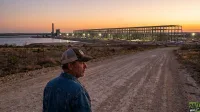
Musk announced Terafab on March 21 in Austin, Texas: a chip manufacturing complex owned by Tesla (NASDAQ: TSLA) and SpaceX, built to make the processors Musk’s companies need. Its stated long-term goal is one terawatt of AI computing hardware a year, a scale no chipmaker has attempted. Intel joined in April, and Musk said Terafab plans to use Intel’s 14A manufacturing process.
The plan has two parts. A smaller research fab near Tesla’s Gigafactory in Austin, which Musk put at about $3 billion, is meant to test ideas. The permanent plant is planned for Grimes County, Texas. County filings in May estimated $55 billion for the first phases and up to $119 billion for the full build. In August, Tesla and SpaceX said they would put about $16.8 billion into a first phase, with construction scheduled from December 2026 through 2028. The chips are for the things Musk is betting on most: Tesla’s cars and Optimus robots, and hardware for SpaceX.
Why the fit is closer than it looks
Terafab is a manufacturing project. Nvidia designs its chips and has Taiwan Semiconductor make them, so running a fab would be new ground for Huang. The rest of the overlap is hard to miss. Self-driving cars and robots are the two industries Huang has praised most often as the next wave of AI, and Nvidia has spent years building chips and software for both. Terafab would give him a hand in shaping the semiconductor industry itself and a direct line into the self-driving and robotics work he has championed.
For Musk, the appeal is just as plain. Terafab’s hardest problem is designing chips good enough to justify a fab of that size, and few people alive know more about that than Huang.
What it means for shareholders
For Nvidia holders, the immediate question is still the board’s. A founder leaving is a risk on its own. A founder leaving to help a customer build its own chips is a bigger one: Tesla and xAI have been among the large buyers of Nvidia hardware, and Musk has said Terafab is needed because outside suppliers cannot make enough chips for his companies. Dan Ives of Yorkville Ives has said Nvidia would be worth 25% to 30% less without Huang.
For Tesla holders, at $388.70 before Thursday’s open, a Huang hire would be a vote of confidence in a project that still has to prove it can be built on time and on budget. Nothing about it is settled. The board has not decided, Huang has said nothing about his plans, and Musk’s reply was one sentence. For investors holding either stock, the useful step today is the same: know how much of your portfolio rides on these two men, inside index funds as well as in shares you own directly.
Contact [email protected] for any questions or corrections.
I've been writing about stocks and personal finance for 20+ years. I believe all great companies are tech companies in the long run, and I invest accordingly.