Nvidia Lost the World’s Most Valuable Company Title. History Shows How Rarely the Crown Comes Back

This post may contain links from our sponsors and affiliates, and Flywheel Publishing may receive compensation for actions taken through them.

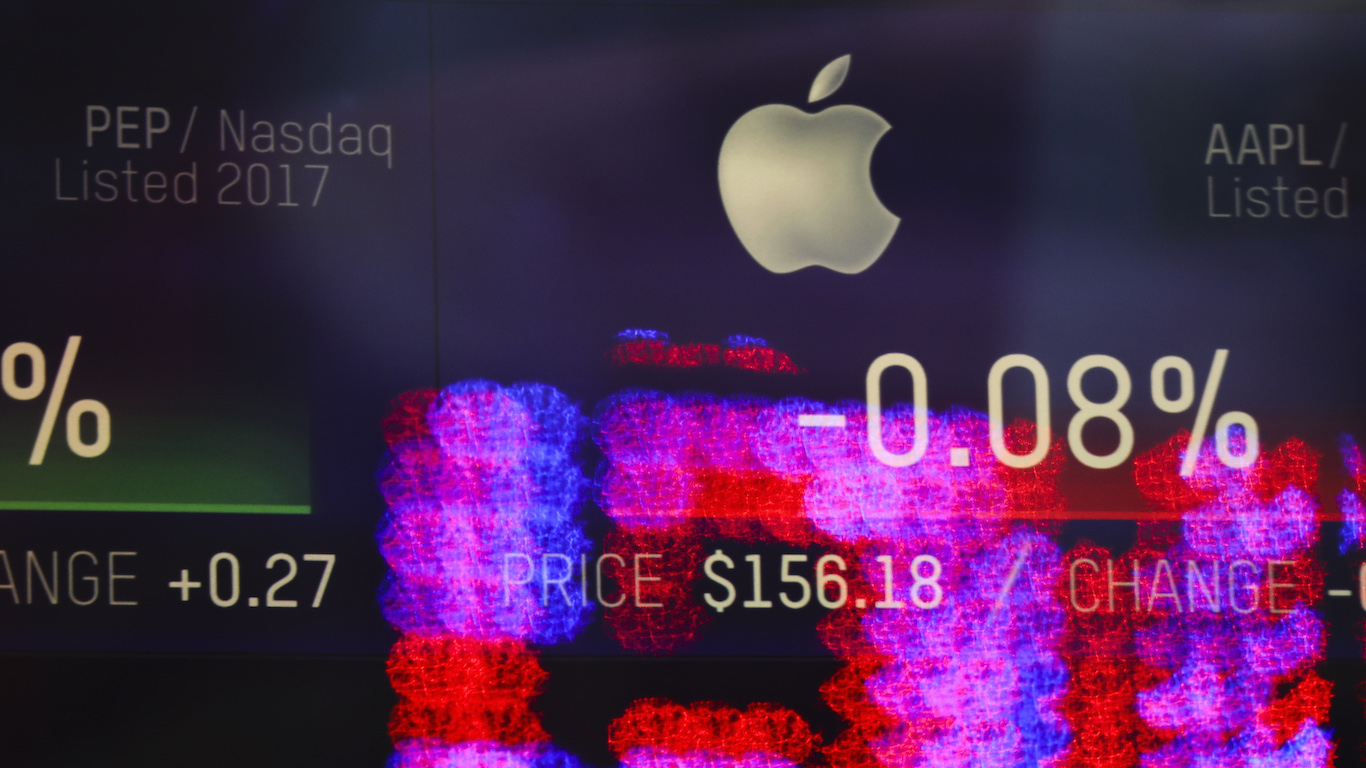
For most of 2026, Nvidia (NASDAQ:NVDA | NVDA Price Prediction) led Wall Street’s market value rankings, carried by an AI infrastructure boom that more than doubled its quarterly revenue. All three of the largest companies trade on the technology-packed Nasdaq Composite, so their order matters to anyone who owns a broad index fund. But Apple (NASDAQ:AAPL) now holds the title at $5.2 trillion, while Nvidia is worth $4.0 trillion and Microsoft (NASDAQ:MSFT) trails just behind at $3.9 trillion. Market value is simply the share price multiplied by every share outstanding: the price tag investors collectively put on an entire company.
The slide has been swift. CNBC’s Ari Levy reported that as of Thursday’s close, Nvidia shares have lost 29% since the losing streak began in early October, erasing roughly $1.6 trillion in value, and that the stock is headed for its sixth straight weekly decline, its longest losing streak since 2012. Three forces rattled the shares. Jensen Huang resigned on Thursday, and the board named finance chief Colette Kress interim CEO while it searches for a permanent successor. Selling also accelerated after the midterm elections, and rising interest rates pressured AI customers such as neoclouds (specialized AI cloud computing providers) that lean on the debt markets, according to CNBC.
Dethroned Market Leaders Rarely Climb Back
Cisco Systems (NASDAQ:CSCO) ruled the dot-com peak alongside Microsoft, then lost its standing when the telecom carriers that had piled into networking gear on borrowed money stopped ordering. On an adjusted basis, Cisco shares have climbed from $34.54 on January 3, 2000, to $102.01, a gain of 195.4% across nearly 27 years. Microsoft, measured from November 1, 1999, soared 1,761.7% over a similar stretch.
Exxon Mobil (NYSE:XOM) followed a similar script after it lost the title to Apple, as the economy’s center of gravity shifted from oil toward smartphones and software. Exxon’s adjusted shares have gained 313.5% since January 3, 2011. Over the past 10 years, however, Exxon rose 204.1% while Apple jumped 1,366.7%. Both dethroned giants kept rewarding patient owners, yet neither led the market again.
Why Some Crowns Do Come Back
The exceptions share a common thread. Apple and Microsoft have traded the top spot repeatedly, and those swaps typically followed temporary shocks, such as a soft product cycle, a rate scare, or a rough quarter, while the underlying earnings engine kept compounding. Cisco and Exxon faced fundamental shifts in which the demand behind their profits migrated elsewhere. Microsoft’s own return to the top required a reinvention around cloud computing, which explains why its record since 1999 looks so different from Cisco’s.
Nvidia’s Profit Engine Still Runs Hot
Nvidia’s latest results read like a business still expanding at full speed. In its fiscal second quarter, revenue climbed 105.9% to $96.221 billion, data center sales reached $89.023 billion, and management guided to $108.0 billion, plus or minus 2%, for the current quarter. Its net margin is 63.7%, compared with Apple’s 27.6%. In August, Kress said, “We expect supply to remain a bottleneck at least through the end of fiscal year ’28.”

The valuation gut-check favors Nvidia. It trades at 22 times trailing earnings, below Apple’s 39, even though Apple’s latest quarterly revenue grew 11.7%. Investors now pay less for each dollar of Nvidia profit than for each dollar of Apple profit.
The fundamental-shift risk lives with customers. Nvidia’s supply obligations ballooned to $279 billion, largely tied to Vera Rubin memory procurement. Kress also said demand from AI labs that Nvidia expects to support using its balance sheet could contribute roughly a quarter of the business next year, and days sales outstanding (the average number of days a company takes to collect payment after a credit sale) rose to 60 days. If higher rates choke off the debt financing those buyers depend on, a temporary shock could harden into Cisco’s script.
Verdict: Nvidia Resembles a Temporary Swap, for Now
On the evidence, Nvidia looks closer to the Apple and Microsoft swaps than to Cisco’s fall. The selloff stems from a leadership exit, an election, and rising rates, while revenue keeps more than doubling and the stock carries a lower earnings multiple than the new leader. The concrete signal to track is whether Kress’s team, in its next quarterly report, reaffirms the outlook for approximately 70% revenue growth in fiscal 2028 that management laid out in August. A cut to that figure would point toward a fundamental shift, while a reaffirmation would mark the slide as a shock. Long term, Wall Street has historically rewarded companies whose earnings keep compounding, whichever name holds the crown in a given month.


Contact [email protected] for any questions or corrections.
Trey has been an editor and author at 24/7 Wall St. for more than a decade, where he has published thousands of articles analyzing corporate earnings, dividend stocks, short interest, insider buying, private equity, and market trends. His comprehensive coverage spans the full spectrum of financial markets, from blue-chip stalwarts to emerging growth companies.
Beyond 24/7 Wall St., Trey has created and edited financial content for Benzinga and AOL's BloggingStocks, contributing additional hundreds of articles to the investment community.
Trey's editorial expertise extends across multiple publishing environments. He served as production editor at Dearborn Financial Publishing and development editor at Kaplan, where he helped shape financial education materials. Earlier in his career, he worked as a writer-producer at SVE. His freelance editing portfolio includes work for prestigious clients such as Sage Publications, Rand McNally, the Institute for Supply Management, the American Library Association, Eggplant Literary Productions, and Spiegel.
Outside of financial journalism, Trey writes fiction and has been an active member of the writing community for years, moderating workshop sessions at regional conventions.