3 Defensive Dividend Stocks for Retirees Worried About the Next Market Downturn

This post may contain links from our sponsors and affiliates, and Flywheel Publishing may receive compensation for actions taken through them.
When growth slows, retirees need income from companies whose customers keep paying. Phone bills, prescriptions, and pipeline fees fit that description, and the stock market treats them that way. Bristol Myers Squibb (NYSE:BMY | BMY Price Prediction) has a beta of just 0.186, AT&T (NYSE:T) sits at 0.494, and Enbridge (NYSE:ENB) at 0.786, so all three have moved less than the broad market. Each one also reported third-quarter results in the last four weeks that either raised or confirmed full-year guidance. Below is how well each dividend is covered.
AT&T: Free Cash Flow Covers a 5% Yield With Room to Spare
Current yield: AT&T pays $0.2775 per share quarterly, or $1.11 annualized. With the stock around $22.18, that works out to about a 5.0% yield.
The dividend is secure: coverage is strong. AT&T paid $8.18 billion in common dividends in 2025, and management expects $18 billion+[1] of free cash flow in 2026. That puts the dividend at roughly 45% of the guidance floor. In the third quarter, free cash flow of $4.95 billion[1] covered the $1.95 billion dividend about 2.5 times. Against the raised 2026 adjusted EPS outlook of ~$2.40[1], the payout ratio is about 46%. One flaw marks the history. The quarterly payout fell from $0.52 to $0.2775 beginning in April 2022 and has stayed flat since. Today’s dividend is a new, well-covered payout rather than a growth run.
Bull case: Households cut restaurant meals before they cancel wireless or home internet. AT&T added 379,000[2] postpaid phone subscribers last quarter, with churn of 0.92%, plus 696,000 advanced home internet customers. Fiber reaches 39M+ locations, and the company is aiming for 60 million+[2] by the end of the decade. Third-quarter adjusted EPS of $0.65[1] beat the $0.60 estimate. CEO John Stankey summed up the strategy: “The most durable customer combination in our industry is a fiber-fed broadband customer with a great wireless service on top of it, bar none.”[2] The stock trades at a forward P/E of about 9.
Risk: Debt is the main concern. Net debt to adjusted EBITDA rose to 3.13x[2] from 2.68x after a $23 billion spectrum purchase, and management doesn’t expect to return to its 2.5x target until 2029. Total debt stands at $159.6B. With roughly $10 billion[2] of buybacks planned for 2026, extra cash will go to repurchases and debt paydown before any dividend raise.
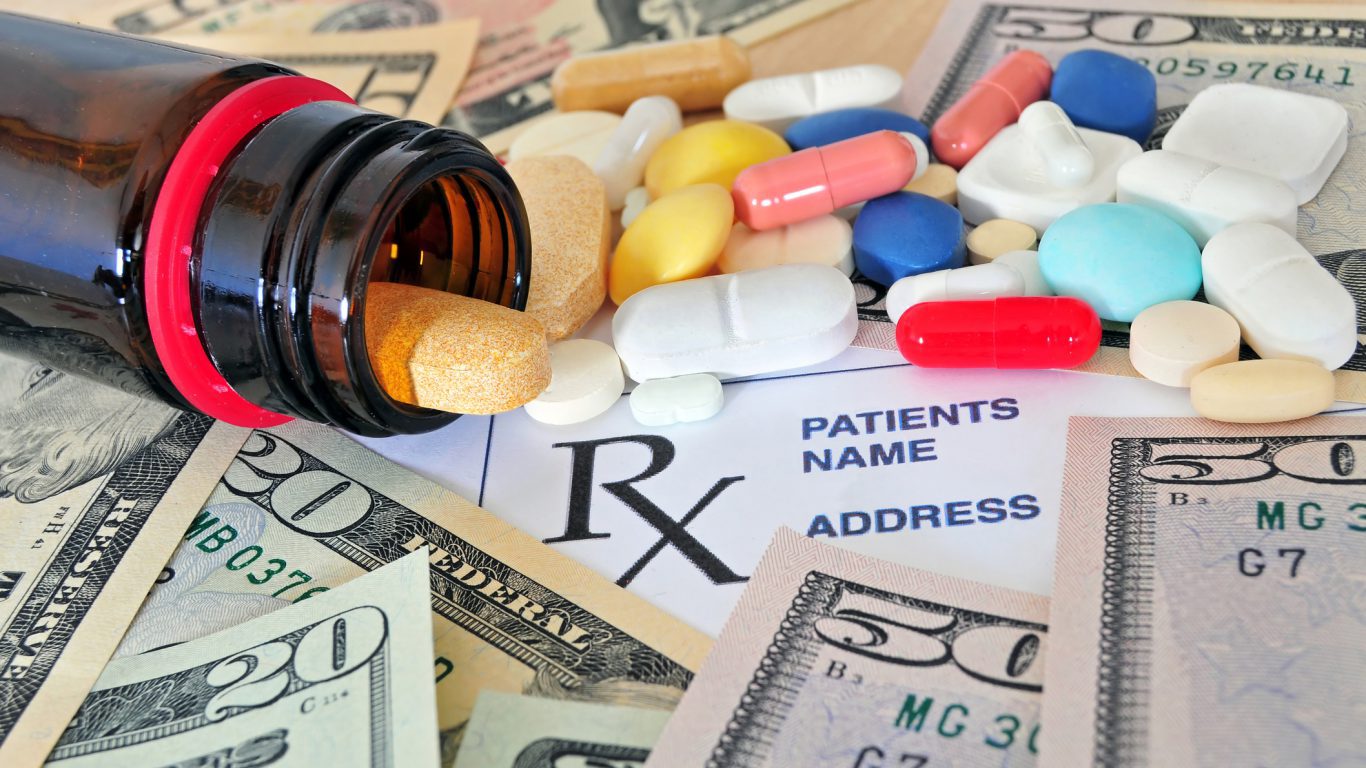
Bristol Myers Squibb: 17 Years of Raises Backed by 2.5x Free Cash Flow Coverage
Current yield: Bristol Myers pays $0.63 per share quarterly, or $2.52 annualized. At $63.43, the yield is about 4.0%.
Dividend safety: This is the best-covered dividend of the three. In 2025, operating cash flow of $14.16 billion minus capital spending of $1.31 billion left about $12.85 billion of free cash flow. That covered the $5.05 billion dividend roughly 2.5 times. Against the midpoint of 2026 non-GAAP EPS guidance of $6.35-$6.55[3], the payout ratio is about 39%. Quarterly cash flow is uneven: first-quarter operating cash flow of $1.10 billion came in below that quarter’s $1.28 billion dividend. Even so, the company ended September with about $13 billion[4] in cash against total debt of about $42.9B. The dividend record holds up. The quarterly payout has grown every calendar year since 2010, from $0.32 then to $0.63 in 2026.
Bull case: Patients don’t skip blood thinners or cancer drugs because of a recession. Eliquis sales rose 25%[3] to $4.69B last quarter, and the Growth Portfolio went up 12% to $7.66B. CEO Christopher Boerner said the company now has “eight growth portfolio medicines, each annualizing over $1 billion based on Q3 sales.”[4] Third-quarter adjusted EPS of $1.35[3] beat the $1.23 estimate, and management raised full-year revenue guidance to $49.75-$50.25B. CFO David Elkins linked capital allocation directly to “our commitment to the dividend.”[4] The forward P/E is about 9.
Risk: Patent expirations are the main threat. Revlimid sales fell 47%, and Pomalyst sales fell 81% in the third quarter, and management expects a $1.5 billion to $2 billion[4] Eliquis step-down in 2027. Dividend growth has slowed to a crawl: the latest raise lifted the quarterly payout from $0.62 to $0.63.
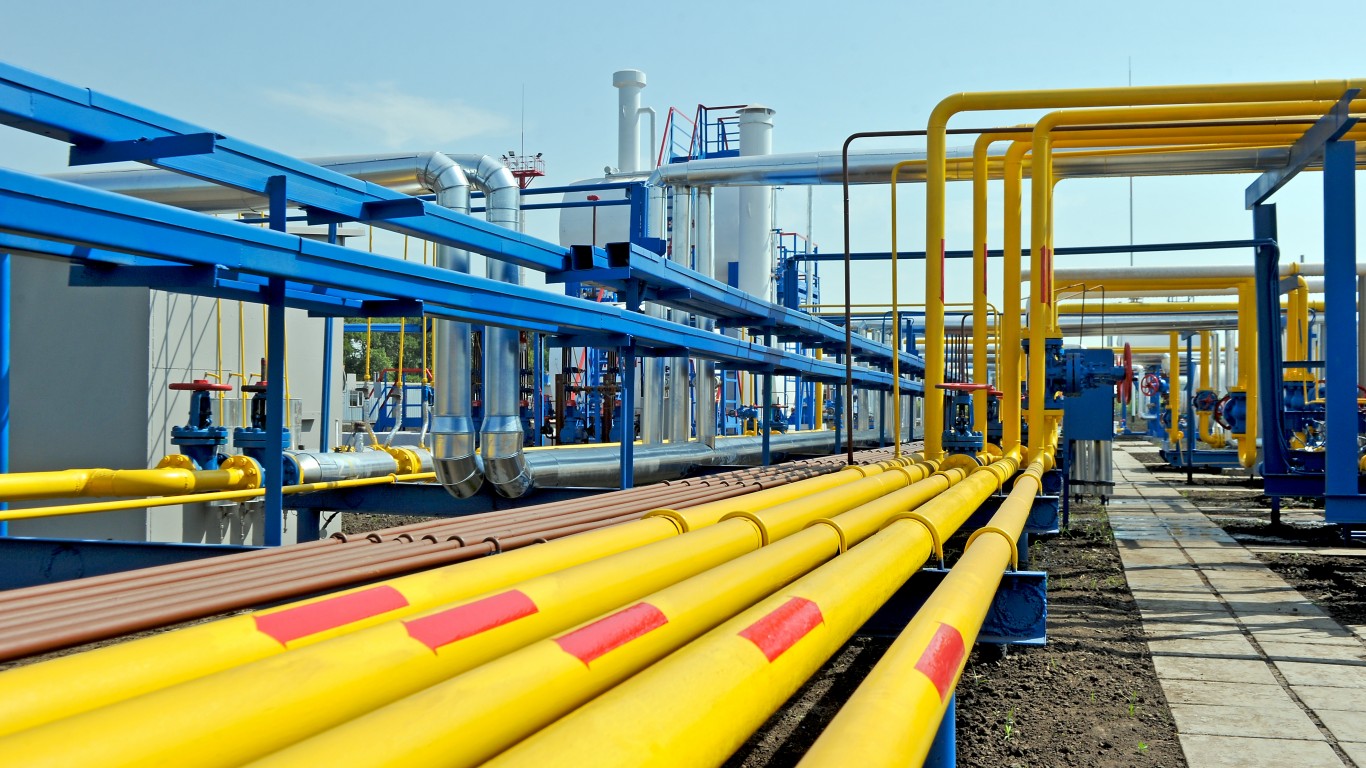
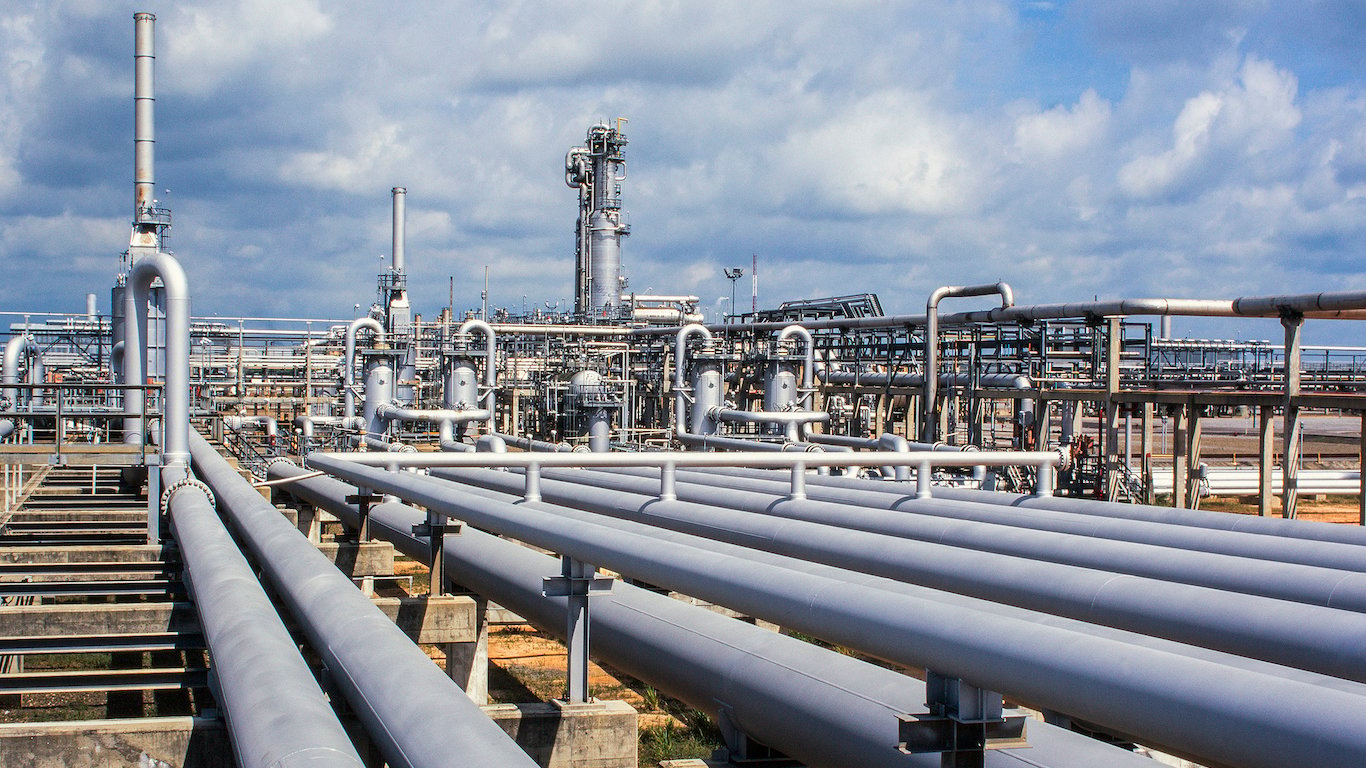
Enbridge: Contracted Pipeline Tolls Fund the Highest Yield of the Three
Current yield: Enbridge declared a quarterly dividend of C$0.97 per share[5], which comes to an annualized forward rate of about $2.75 in U.S. dollars. At $47.67, the U.S.-dollar yield is about 5.8%. That’s high, but it stays below the 6% line for ultra-high-yield.
Dividend safety: Pipeline companies measure coverage with distributable cash flow (DCF), the cash left after maintenance spending. Enbridge confirmed 2026 DCF guidance of C$5.70-C$6.10 per share. The annualized dividend of C$3.88 uses roughly 64% to 68% of that, which leaves a comfortable margin for a pipeline operator. In 2025, operating cash flow of C$12.27 billion covered dividends of C$8.64 billion about 1.4 times. Management says it is on track to meet guidance for the 21st consecutive year[6], and CEO-designate Michele Harradence cited “31 consecutive years of dividend increases.” Those raises are measured in Canadian dollars. In U.S. dollars, the payout moves with the currency: it dropped from $0.712 in February to $0.687804 for the payment due December 1.
Bull case: Enbridge gets paid for moving energy, regardless of what oil or gas sells for. Management said the Mainline “has continued to operate at or near capacity,”[6] and new gas lines serve customers under long-term take-or-pay agreements. Its gas utilities in Ontario, Ohio, Utah, and North Carolina earn regulated returns from heating customers. A secured growth backlog of about $38B supports what CEO Greg Ebel described as “continued 5% growth right through the end of the decade.”[6]
Risk: Leverage is the main risk. Debt to EBITDA is at 5.1 times[6], just above the 4.5 to 5 times aiming range, although management says it would be inside the range on an FX-adjusted basis. Third-quarter adjusted EPS of $0.35 missed expectations of $0.49 because of lower Mainline volumes and higher interest costs, and Harradence takes over as CEO on January 1[6]. U.S. holders should also plan for Canadian withholding tax on dividends and for currency swings in what they receive (dividends paid to US investors are typically subject to Canadian withholding tax and move with the exchange rate). U.S. citizens can generally claim a credit for income taxes paid to a foreign country under 26 U.S.C. § 901(b)(1)[7].
Three Durable Income Streams Built for a Slowdown
AT&T, Bristol Myers, and Enbridge each pay out less than they generate. AT&T’s dividend uses under half of its free cash flow guidance, Bristol Myers covers its payout about 2.5 times with free cash flow, and Enbridge pays out less than 70% of its distributable cash flow. In each case, customers keep paying even when the economy weakens. Leverage at AT&T and Enbridge, and patent expirations at Bristol Myers, are the risks to track in each company’s next earnings report.
Contact [email protected] for any questions or corrections.
Chris Lange is a financial and geopolitical writer with more than a decade of experience covering a myriad of topics. He has published thousands of articles for 24/7 Wall St., with past coverage focused heavily on stocks, IPOs, healthcare, defense, global affairs, and technology.
His work has been quoted, or referenced by a number of outlets including Business Insider, USA Today, Yahoo Finance, MSN, The Motley Fool, and many other publications. A graduate of Southwestern University, he studied business with a focus on investments and has previous experience in banking and startups.
When not reading or writing the news, he is following his passion for Lacrosse, playing chess, or building solar projects with his dad.