Conagra Cut Its Dividend 50%. The Stock Market Was Warning Investors

This post may contain links from our sponsors and affiliates, and Flywheel Publishing may receive compensation for actions taken through them.
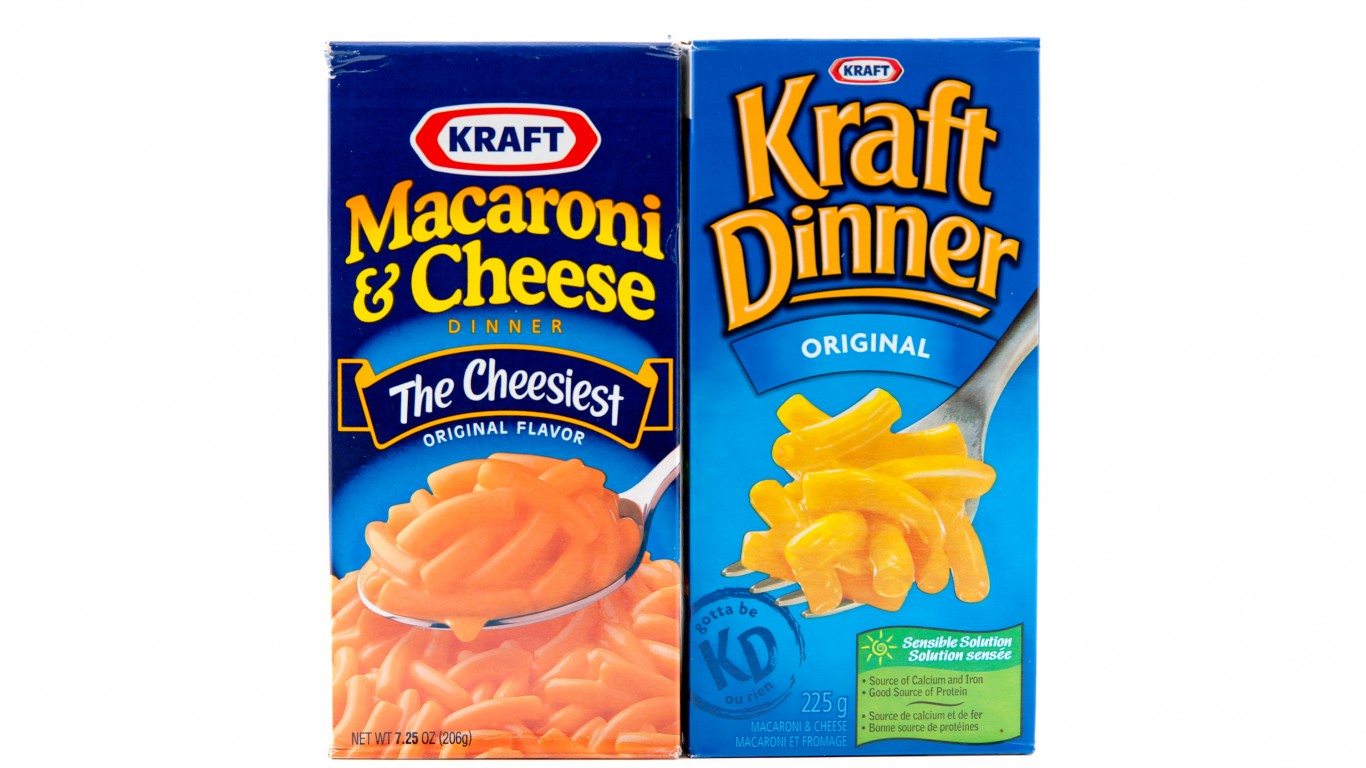
A falling share price is information. When a stock slips for years while the board keeps declaring the same dividend and executives keep promising to protect it, the market and management are telling two different stories. Conagra Brands (NYSE:CAG | CAG Price Prediction) shows how that can end. Its quarterly payout dropped from $0.35 to $0.175, and the stock is down 38.24% over five years. If you buy a yield like that, you are taking the other side of the market’s view, so it pays to know what each side is looking at.
Here’s the rule: a dividend is sustainable when earnings and free cash flow (operating cash flow minus capital spending) cover it without new borrowing. When they don’t, the payout is coming from debt.
Conagra Brands (CAG): A Case Where the Market Was Right
Conagra’s forward yield is about 4.6% even after the cut. Management told analysts that rating agencies “looked at our cut of the dividend as a positive in terms of our credit rating and our position.”[1] The pressure did not end with the cut. First-quarter fiscal 2027 free cash flow came in at -$127.9 million, and leverage stood at 3.99 times[1] against a three-times target. The names below carry several of the same warning signs, but their boards have not cut.
AT&T (T): A Flat Dividend Next to Rising Debt
AT&T (NYSE:T) pays $1.11 a year, a yield of roughly 4.96%. The shares are down 8.33% over one year. The company’s outlook keeps the $1.11 annualized dividend through the 2026 to 2028 outlook period.
The market sees net debt to adjusted EBITDA at 3.13x[2], up from 2.68x after the $23 billion EchoStar spectrum purchase. Management does not expect leverage to return to its 2.5x target until 2029[2]. Cash fell 46.89%[3], and third-quarter GAAP EPS was $0.13, below the $0.2775 quarterly dividend. AT&T has cut before: it paid $0.52 per quarter through 2021.
The company’s case rests on free cash flow of $18B+ in 2026, $19B+ in 2027 and $21B+ in 2028[3] and adjusted EPS of about $2.40. Marker to watch: whether fourth-quarter free cash flow makes the roughly $6 billion[2] management expects.
Pfizer (PFE): Borrowing Capacity Is Part of the Plan
Pfizer (NYSE:PFE) yields 5.94%, and its earnings yield is only 4.72%. The stock is still down 26% over five years. The CFO said Pfizer plans to “maintain and, over time, grow our dividend,”[4] and added that “operating cash flow, financial assets, and access to capital markets” will support it through the loss-of-exclusivity period.
Including “access to capital markets” in that list is a warning sign. In 2025, operating cash flow of $11.705 billion minus capex left about $9.076 billion, short of the $9.771 billion paid in dividends. Management expects leverage to stay “around current levels, or modestly higher”[4] as patents expire.
The dividend lasts only if adjusted EPS guidance of $2.95 to $3.05 holds up as patents expire. Marker to watch: the 2027 guidance, especially whether expected cash flow covers the dividend.
Hormel Foods (HRL): A 392-Quarter Streak and Thin Coverage
Hormel Foods (NYSE:HRL) yields about 5.12% after a 36.81% five-year slip. Management said: “We remain committed to the dividend and are proud to have reached our 392nd consecutive quarterly payout.”
The annual dividend of $1.17 is higher than fiscal 2026 GAAP EPS guidance of $1.06 to $1.12[5]. In fiscal 2025, net income of $477.8 million and free cash flow of about $534.3 million both fell short of $633.2 million in dividends. The optimistic read is that third-quarter operating cash flow rose 53.54%[5], and cash made $839.6 million. Marker to watch: whether full-year free cash flow covers the dividend.
Where the Market Agrees With Management: Bristol-Myers Squibb and Altria
Markets can misprice risk in either direction, and sometimes a reaffirmed dividend really is safe. Bristol-Myers Squibb (NYSE:BMY) rose 40.28% over one year and yields about 4.02%. Its CFO cited a “commitment to the dividend,” though he also expects a $1.5 billion to $2 billion Eliquis step-down in 2027. Altria (NYSE:MO) rose 43.98% over one year and yields about 5.66%. Adjusted EPS guidance of $5.66 to $5.74[6] covers its $4.44 payout, though shareholders’ equity is negative at -$2.225 billion.
What Settles Each Disagreement
A dividend cut usually takes the share price down with it, so investors who held only for the yield lose both income and principal. When the price has already fallen, and the payout hasn’t, read the next cash flow statement before believing the yield. A high yield on its own is never a reason to buy, and the signs that a payout is about to be cut tend to show up in the numbers first (we listed seven of them in a free dividend trap guide).
Contact [email protected] for any questions or corrections.
Chris Lange is a financial and geopolitical writer with more than a decade of experience covering a myriad of topics. He has published thousands of articles for 24/7 Wall St., with past coverage focused heavily on stocks, IPOs, healthcare, defense, global affairs, and technology.
His work has been quoted, or referenced by a number of outlets including Business Insider, USA Today, Yahoo Finance, MSN, The Motley Fool, and many other publications. A graduate of Southwestern University, he studied business with a focus on investments and has previous experience in banking and startups.
When not reading or writing the news, he is following his passion for Lacrosse, playing chess, or building solar projects with his dad.