Micron, SanDisk, and SK hynix Investors Should Fear One Thing: Elon Musk
The semiconductor cycle has always moved in waves — shortage, oversupply, correction, repeat. But the current cycle feels different. Demand isn’t just being pulled forward by smartphones or cloud servers. It’s being reshaped by artificial intelligence infrastructure that requires vastly…

The semiconductor cycle has always moved in waves — shortage, oversupply, correction, repeat. But the current cycle feels different. Demand isn’t just being pulled forward by smartphones or cloud servers. It’s being reshaped by artificial intelligence infrastructure that requires vastly more memory, more bandwidth, and more advanced packaging than the industry was ever scaled to deliver.
That imbalance has helped push memory names like Micron Technology (NYSE:MU | MU Price Prediction), SK hynix, and SanDisk (NASDAQ:SNDK) flash business into renewed investor favor.
Yet as valuations climb alongside AI optimism, a second force is emerging. Not a new customer or a cyclical downturn, but a buildout ambition large enough to potentially reset the supply curve itself. That force is Elon Musk.
Musk’s Core Argument: Memory Is the Bottleneck
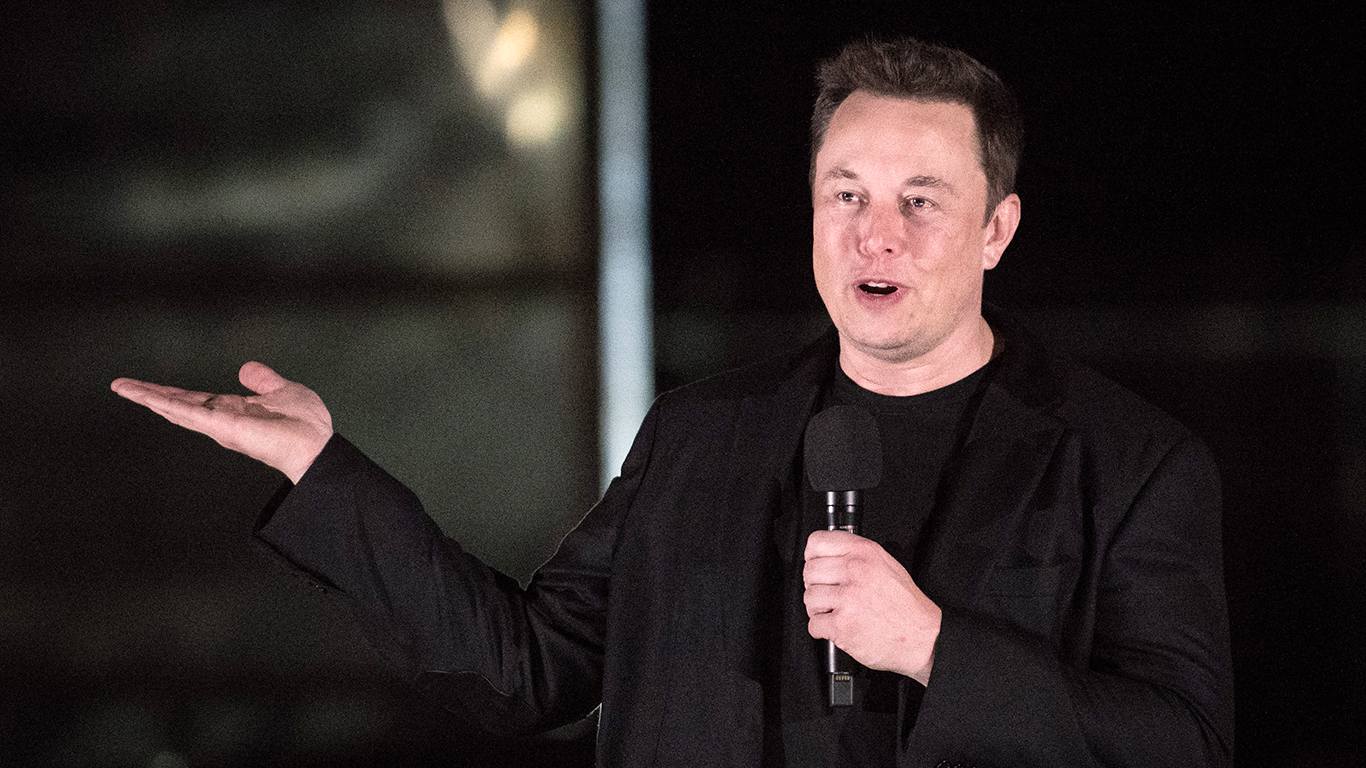
In recent interviews tied to SpaceX’s ongoing road show, Musk has repeatedly returned to one theme: there simply isn’t enough advanced memory manufacturing capacity in the U.S. — or globally — to meet AI-driven demand.
As Musk stated:
“There’s not a single high volume computer memory fab in America right now, zero… even if you take the best case assumptions… it is not enough to meet the demand that is anticipated… which is why you’re seeing stocks like Micron go to… 1.2 trillion… there will not be enough chips.”
He points specifically to delayed capacity additions from Micron, including a New York fab that is not expected to reach volume production until around 2028. He also highlights new projects tied to New York–based memory expansion that may not scale meaningfully until 2029–2030.
In short, Musk is arguing that the industry is structurally underbuilding relative to AI demand — not temporarily, but systemically.
A Market Already Pricing Scarcity
Investors are already behaving as if supply tightness will persist for years. Memory makers have seen renewed valuation support as pricing discipline holds across the industry.
- Micron continues to benefit from DRAM and HBM pricing strength tied to AI servers
- SK hynix has signaled plans to roughly double production capacity by 2030
- SanDisk is tied to NAND pricing cycles that were once constrained by cautious capex across the industry
What’s notable is not just demand strength, but restraint. Across the memory ecosystem, companies have been deliberately cautious about new capacity. That discipline has helped maintain pricing — but it also sets up the exact condition Musk is targeting: a gap between projected demand and actual buildout.
That “hold the line” strategy has been rational. Memory has historically been a brutal industry where oversupply can erase margins quickly. But in an AI-first economy, underbuilding carries its own risk.
Terafab: Long-Term Disruptor, Not Short-Term Catalyst
Musk’s answer is what he calls “Terafab” — a massive, vertically integrated manufacturing complex aimed at producing AI logic chips, HBM-class memory, and advanced packaging under one roof. Internal projections and filings suggest potential investment of up to $122 billion, with upside if additional capital from SpaceX‘s IPO is deployed.
That scale matters because it reframes the discussion. Terafab isn’t just incremental supply. It is an attempt to compress an entire supply chain into a single industrial system designed around AI workloads.
That said, timing is everything. Even under aggressive assumptions, a project of this magnitude would take many years to influence global supply. Equipment lead times, talent constraints, and fabrication complexity all point to a long ramp.
So investors in Micron, SK hynix, and SanDisk should not expect immediate pressure. But they should pay attention to the trajectory.
Key Takeaway
In short, memory stocks are currently priced for sustained scarcity — and Musk is proposing a system that could eventually eliminate it. The catch is that “eventually” likely means late this decade or beyond.
That creates a strange but important setup for investors: near-term strength driven by tight supply, paired with long-term uncertainty if Terafab scales successfully. The winners today may still be the winners in five years — but the ceiling on pricing power may not be as high as the current cycle suggests.
For now, the market is still on the incumbents’ side. Musk is simply arguing that the game board is about to get rebuilt.
Contact [email protected] for any questions or corrections.
After two decades of patrolling the dark corners of suburbia as a police officer, Rich Duprey hung up his badge and gun to begin writing full time about stocks and investing. For the past 20 years, he’s been cruising the markets looking for companies to lock up as long-term holdings in a portfolio while writing extensively on the broad sectors of consumer goods, technology, and industrials. Because his experience isn’t from the typical financial analyst track, Rich is able to break down complex topics into understandable and useful action points for the average investor. His writings have appeared on The Motley Fool, InvestorPlace, Yahoo! Finance, Money Morning, and, of course, 24/7 Wall St. He has been featured in both U.S. and international publications, including MarketWatch, Financial Times, Forbes, Fast Company, and USA Today.