SpaceX Just Lost a Starship Booster. Is Rocket Lab Stock the Better Bet?

This post may contain links from our sponsors and affiliates, and Flywheel Publishing may receive compensation for actions taken through them.

Rocket Lab (NASDAQ:RKLB | RKLB Price Prediction) trades at $61.53. SpaceX just showed how hard reusable heavy lift remains, and Rocket Lab’s own reusable rocket has yet to fly.
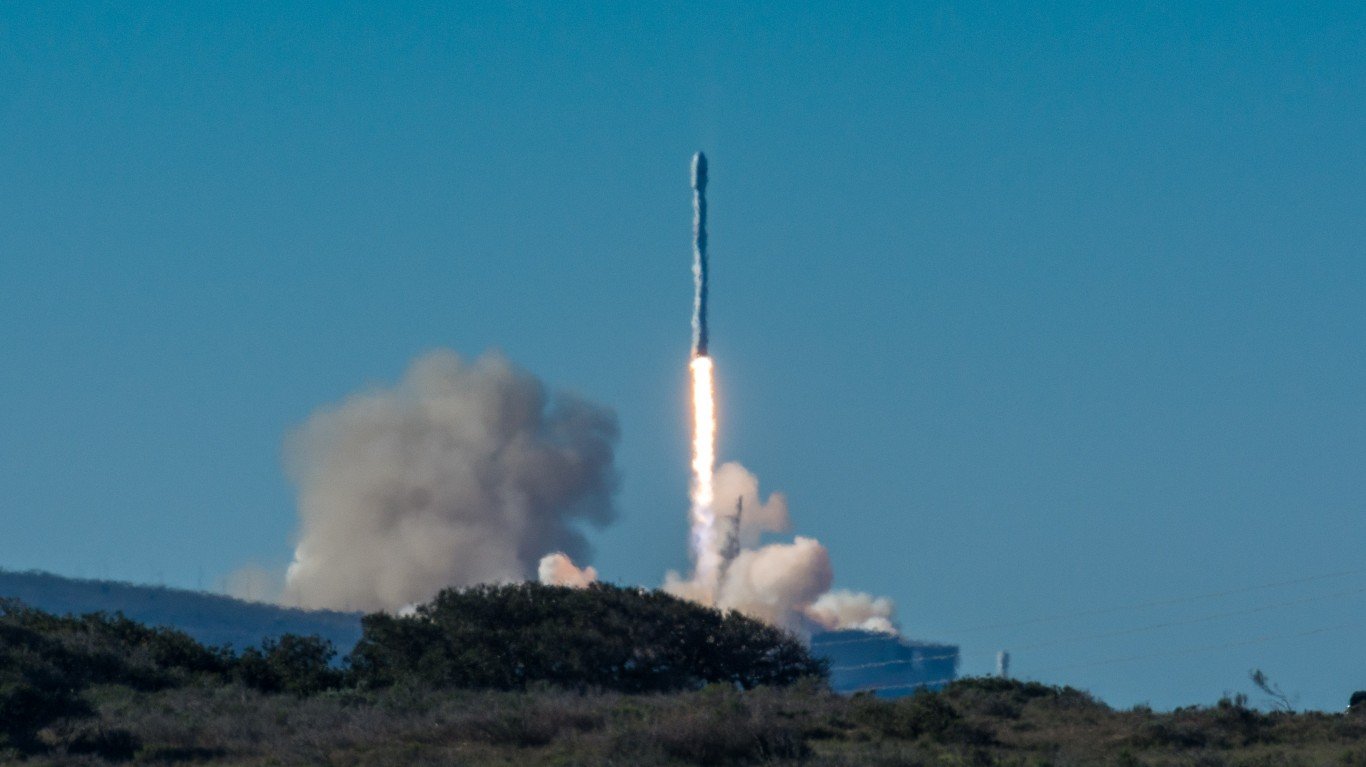
SpaceX (NASDAQ:SPCX) lost Super Heavy Booster 22 on Starship Flight 15 after diverting it from a planned tower catch to an offshore Gulf splashdown. The cause has not been publicly established. Ship 42 reached orbit and deployed all 26 Starlink V3 satellites, and its first-ever upper-stage tower catch is scheduled for this afternoon. Falcon 9 discards its second stage, so a successful catch would prove a missing piece of full reusability. Rapid repairs and repeat flights would still be required.
Rocket Lab flies the small Electron rocket and makes spacecraft. Its medium-lift reusable Neutron now targets a first launch no earlier than 2027 after a stage 1 tank test failure, and the stock trades far below its 52-week high of $151.

Record Backlog Shows Customers Committing Before Neutron Flies
Third-quarter revenue rose 72.7% to $267.83 million[1], beating the $257.18 million consensus. Backlog hit a record $3.57 billion, up 52% since Q2[1]. Neutron already has 16 missions reserved worth more than $515 million, several at a raised $70 million base price. Starship’s growing pains highlight the difficulty of scaling heavy-lift capacity.

Defense work adds depth, including an $816 million SDA prime contract and a $397 million Flatellite award. CEO Peter Beck said “There have been two commercial companies that have developed a vehicle, brought it to market, and scaled. That has been SpaceX and Rocket Lab.”[2] Cash stands at $4.45 billion[1].
Dilution and Delays Strain a 1,111x Forward Multiple
Shares trade at a forward P/E of 1,111x and 48.89 times trailing sales. GAAP EPS of -$0.12[1] missed the -$0.0665 estimate, weighed down by debt extinguishment losses and costs tied to the pending Iridium Communications (NASDAQ:IRDM) deal. Non-GAAP gross margin slipped to 38.4% from 41.9%[1].
Fourth-quarter guidance assumes about 681 million[1] weighted shares after heavy equity sales. Over the past 30 days, analysts cut 2027 EPS estimates four times and raised them once. A successful Starship upper-stage catch would advance SpaceX’s reusability before Neutron launches.
Neutron’s First Flight Decides This Stock
Management has said adjusted EBITDA could turn positive within six months of a successful Neutron first flight[2]. Until then, Neutron spending stays high. Strong execution elsewhere supports the business, while an unflown rocket keeps risk high. Watch Q4 revenue against the $270 million to $290 million[1] guide, Neutron’s cryogenic qualification and the Iridium close.
Wall Street Targets Sit Far Above a Lagging Share Price
The $93.10 consensus target means about 51.3% upside. Targets carry no guarantee and serve as one data point. Of 22 analysts:
- Strong Buy: 5
- Buy: 13
- Hold: 4
- Sell: 0

The stock is down 11.8% year to date while the S&P 500 is up 10.62%. Shares gained 15.94% over the past week, and a beta of 3.176 signals large moves.
Why Rocket Lab’s Valuation Hinges on Neutron Clearing the Pad
At $61.53, Rocket Lab’s valuation rests on Neutron.
The key upside driver is Neutron stage 1 passing cryogenic qualification, then a successful first flight. The key downside risk is another tank or engine failure that pushes Neutron further into 2027 while share count keeps climbing.

Backlog and cash support the business, while the current price reflects nearly 49 times sales for an unflown rocket. Each quarter, track backlog conversion (about 32.9%[2] is expected within 12 months), gross margins and share count.
SpaceX’s catch attempt frames the race, yet Rocket Lab’s value rests on Neutron, and Neutron’s first flight is the proof point that matters most.
Contact [email protected] for any questions or corrections.
After two decades of patrolling the dark corners of suburbia as a police officer, Rich Duprey hung up his badge and gun to begin writing full time about stocks and investing. For the past 20 years, he’s been cruising the markets looking for companies to lock up as long-term holdings in a portfolio while writing extensively on the broad sectors of consumer goods, technology, and industrials. Because his experience isn’t from the typical financial analyst track, Rich is able to break down complex topics into understandable and useful action points for the average investor. His writings have appeared on The Motley Fool, InvestorPlace, Yahoo! Finance, Money Morning, and, of course, 24/7 Wall St. He has been featured in both U.S. and international publications, including MarketWatch, Financial Times, Forbes, Fast Company, and USA Today.