Steve Jobs Went Back to Apple in 1997 and $10,000 Became $18.6 Million. Jensen Huang May Be Next

This post may contain links from our sponsors and affiliates, and Flywheel Publishing may receive compensation for actions taken through them.

A retiree who held $250,000 of Nvidia at the Oct. 6 record has $170,174 now, $79,826 less. Now the man who built the company may come back.
The Financial Times reported on Sunday that Huang, who resigned Thursday, has discussed a return with people close to him. Nvidia closed Friday at $162.85, 31.9% below its Oct. 6 record, and reports earnings Tuesday.
Leaders have come back before. Here is what each stock did from the last close before the news to Friday’s close, on $10,000, counting price alone and leaving dividends out.
Five leaders who came back
Steve Jobs, Apple, named interim CEO on Sept. 16, 1997. The stake is worth $18.6 million, a gain of 29.4% a year for 29 years. The same money in an S&P 500 fund (SPY) grew to $81,554.
Larry Page, Google, return announced Jan. 20, 2011. The stake is worth $188,570, against $58,898 in the S&P 500.
Howard Schultz, Starbucks, return announced Jan. 7, 2008. The stake is worth $115,822, against $53,429 in the S&P 500.
Charles Schwab, Charles Schwab Corp., return announced July 20, 2004. The stake is worth $112,024, against $68,430 in the S&P 500.
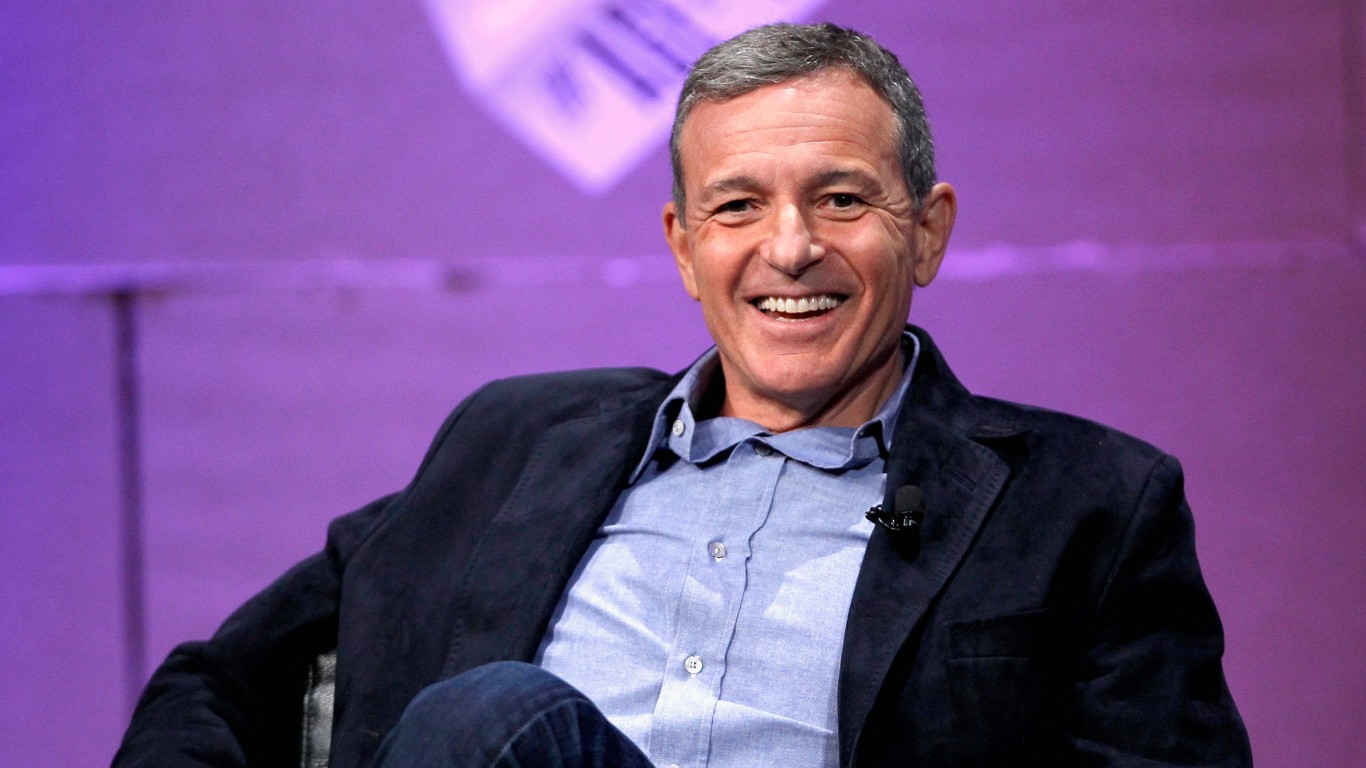
Bob Iger, Disney, return announced on a Sunday night, Nov. 20, 2022. The stake is worth $12,960. The same money in the S&P 500 grew to $19,048.
Four of the five beat the index. Apple did it by so much that it turned a $10,000 bet into a fortune. Disney is the reminder that a famous name coming back does not fix a business on its own: Iger’s Disney has gained 6.7% a year since his return, while the S&P 500 gained 17.5% a year.
The first day says little
The market cheered most of these returns right away. Starbucks rose 8.1% the day after Schultz’s return was announced. Schwab rose 6.6%. Disney rose 6.3% the Monday after Iger’s. Apple rose 2.0%, and Google slipped 2.4%.
None of those first-day moves predicted what came next. Disney’s pop was one of the biggest, and it is the one stock of the five that trailed the market. Google fell on the news and returned almost 19 times the money.
There is also a difference in timing. Each of those five leaders came back after someone else had run the company for at least two years. Huang resigned on Thursday, and the board has not said what its investigation found or whether it would take him back.
The push to bring him back is loud. An open letter asking the board to “bring Jensen back while an independent investigation establishes the facts” had more than 158,000 signatures by Sunday, according to AFP, including Elon Musk and Uber co-founder Travis Kalanick. On Friday, Altimeter’s Brad Gerstner and Atreides’ Gavin Baker asked the board to keep “all options” open. Neither Huang nor Nvidia has confirmed any of it, and CFO Colette Kress is running the company as interim CEO.
A retiree who held $250,000 of Nvidia at the Oct. 6 record has $170,174 now, $79,826 less. A comeback report could move that number either way on Monday morning, and the earnings report could move it again on Tuesday night. Neither one tells you what the company is worth in five years.
Three questions matter more than the headlines this week.
How much of your money is in this one stock? A long run like Nvidia’s can leave a retirement account heavier in one stock than its owner planned. If one company is a quarter of your savings, a drop like this one moves your whole retirement plan.
Which account holds it? Selling inside a traditional IRA or a Roth IRA owes no tax on the sale itself. Selling in a taxable account can bring a capital gains bill on years of profit, which is a reason to trim in steps rather than all at once.
Would you buy it today at this price? If the answer depends on whether Huang comes back, you are holding a bet on one board decision. Jobs and Schultz paid off. Iger did not beat the index.
The Jobs number is the one people remember, and $18.6 million is real. It is also the best result of the five, from a company that lost more than $1 billion in its 1997 fiscal year. For a retiree, the plan should work whether Huang comes back or not.
Contact [email protected] for any questions or corrections.
I've been writing about stocks and personal finance for 20+ years. I believe all great companies are tech companies in the long run, and I invest accordingly.