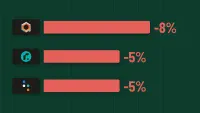
D-Wave Quantum Falls 7% as Post-Earnings Selloff Deepens on Weak Bookings; IonQ Sinks 8%, Rigetti Slides 5%

This post may contain links from our sponsors and affiliates, and Flywheel Publishing may receive compensation for actions taken through them.

Selling pressure on D-Wave Quantum (NASDAQ:QBTS) is deepening as the market keeps weighing the weak quarterly bookings in its Q3 2026 report, and the rest of the quantum group is sliding with it. D-Wave stock is at $8.87 in afternoon trading, down 7%. Measured year to date (YTD), D-Wave stock is down 66%.
Speculative tech stocks are sliding as investors pull back from AI-linked and high-valuation names, and the NASDAQ 100 is down 2%. That sector-wide retreat is adding to a D-Wave slide that started after the company’s quarterly report (if speculative names have a place in a portfolio, it is a small one with real rules, which we laid out in a free guide here: Small Stakes, Big Swings). The question for D-Wave is whether the market is starting to separate quantum names with real revenue from those still converting backlog, even as all of them fall.
Weak Quarterly Bookings Keep Pressure on D-Wave
D-Wave Quantum’s third-quarter revenue rose 21%[1] to $4.5 million, the company disclosed on November 10[2]. Quarterly bookings at D-Wave Quantum fell 19%[1] to $1.9 million, fueling the post-earnings selling.
Acting Chief Financial Officer Greg Golkov noted on the company’s call that “bookings in any single quarter can vary significantly based on the timing of larger transactions.”[3] Nine-month bookings at D-Wave Quantum reached $37.4 million[2], up 611%, and remaining performance obligations (RPO), or contracted backlog, stand at $38.3 million[1]. CEO Alan Baratz stated, “Our triple-digit increase in year-to-date bookings and robust pipeline reinforce our confidence in the opportunity ahead.”[2]
Continued losses add to the debate, with D-Wave Quantum’s adjusted EBITDA (earnings before interest, taxes, depreciation and amortization) loss at $37.7 million[1]. Cash and marketable securities at D-Wave Quantum totaled $503.4 million[1], giving it room to keep funding both quantum platforms. A larger mix of lower-margin professional services pulled D-Wave’s gross margin to 52.9%[2] from 71.4%.

IonQ Falls Harder Than D-Wave Despite Its Revenue Lead
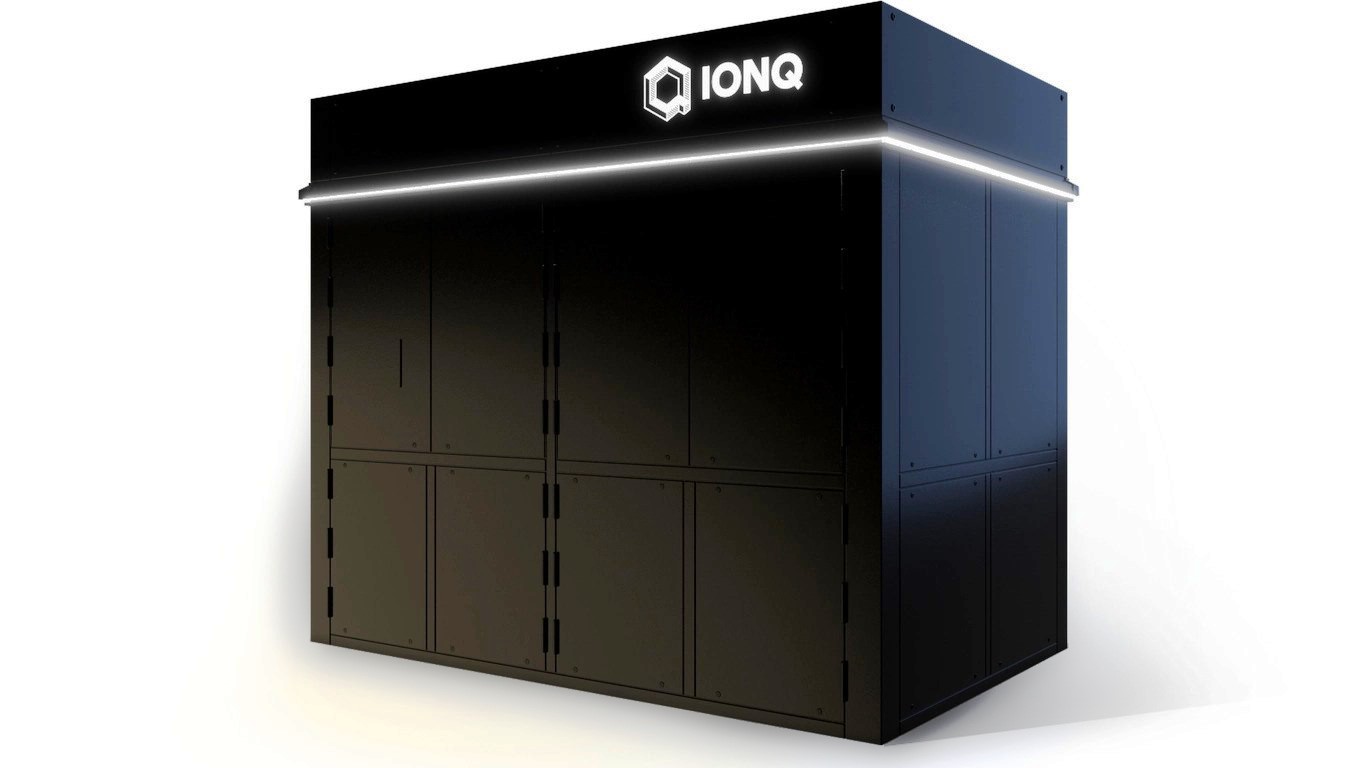
IonQ (NYSE:IONQ | IONQ Price Prediction) stock is at $26.54, down 8%, a steeper decline than D-Wave’s. That drop cuts against the scale argument, since IonQ reported third-quarter revenue of $173.8 million[1] on November 5[4] and raised its full-year 2026 revenue guidance to $505 million to $515 million. Scale hasn’t protected IonQ from the group-wide selling.
Rigetti Computing (NASDAQ:RGTI) stock is at $9.13, down 5%, a smaller drop than D-Wave’s. On November 10[5], Rigetti reported third-quarter revenue of $1.41 million, which fell 27.5% year over year and missed expectations as on-premises system deliveries and customer acceptance were delayed. Both reports, Rigetti’s and D-Wave’s, point to the same issue: hardware revenue that depends on delivery timing.
Quantum Computing Inc. (NASDAQ:QUBT) rounds out the major pure-play names in the group. Even so, the gap between IonQ’s revenue base and D-Wave’s is far wider than the gap between their share-price moves.
How D-Wave’s Business Model Differs From IonQ and Rigetti
D-Wave sells access to annealing quantum computers, which management views as production-ready for optimization work such as scheduling and logistics, with revenue from cloud access, professional services and system sales, while the gate-model platform from its Quantum Circuits acquisition remains years from production.
IonQ runs a broader full-stack model built on trapped-ion systems, adding networking, sensing, security and a SkyWater foundry business that also manufactures chips for D-Wave, while Rigetti builds superconducting gate-model chips in its own fab and leans on system sales and government contracts, so its revenue moves with customer acceptance.
Can D-Wave Turn Its Backlog Into Revenue in Time?
The bulls can point to D-Wave’s long-term promise in quantum deployments, its growing customer activity and a backlog that management expects to convert. That hope runs into the bears’ case against D-Wave: thin revenue, continued losses, delayed conversions and a valuation running ahead of commercial demand.
D-Wave must now show it can deliver the Florida Atlantic University system in Q4 2026[3] and recognize a substantial portion of that revenue on delivery. A rebound in quarterly bookings could show the market whether D-Wave belongs with the revenue leaders or the backlog stories. Backlog conversion could remain a key swing factor for D-Wave stock until it settles.
Contact [email protected] for any questions or corrections.
David Moadel is financial writer specializing in stocks, ETFs, options, precious metals, and Bitcoin. David has written well over 1,000 articles for leading online publications, helping investors understand markets, income strategies, and risk. His work has appeared in 24/7 Wall St., The Motley Fool, InvestorPlace, U.S. News & World Report, TipRanks, ValueWalk, Benzinga, Market Realist, MarketScreener, TalkMarkets, Finmasters, and others. With a master’s degree in education, David has taught at the elementary, high school, and college levels. That teaching background shapes his writing style: clear, educational, and practical. David has also built a loyal social-media audience by providing trustworthy financial content on YouTube, X/Twitter, and StockTwits.