Planet Labs Has Shed 70% Over 6 Months: Two Highly Respected Wall Street Teams Expect Gains Exceeding 250%

This post may contain links from our sponsors and affiliates, and Flywheel Publishing may receive compensation for actions taken through them.

Planet Labs (NYSE:PL) trades at $12.73. The average analyst price target of $30.27 suggests 137.78% of upside.
Planet runs the satellite fleet that photographs Earth’s landmass every day. It sells that imagery, AI analytics, and sovereign satellite services to defense, intelligence, government, and commercial customers. Revenue grew 58.1%[1] year over year last quarter, and the backlog tops $900M. Two Street-high targets of $50.00, from Wedbush’s Dan Ives and Cantor Fitzgerald’s Colin Canfield, mean 292.77% upside. That is a very wide gap for a company growing revenue this quickly.
Six-Month Rout Leaves Planet Labs Stranded Far Below Its Targets
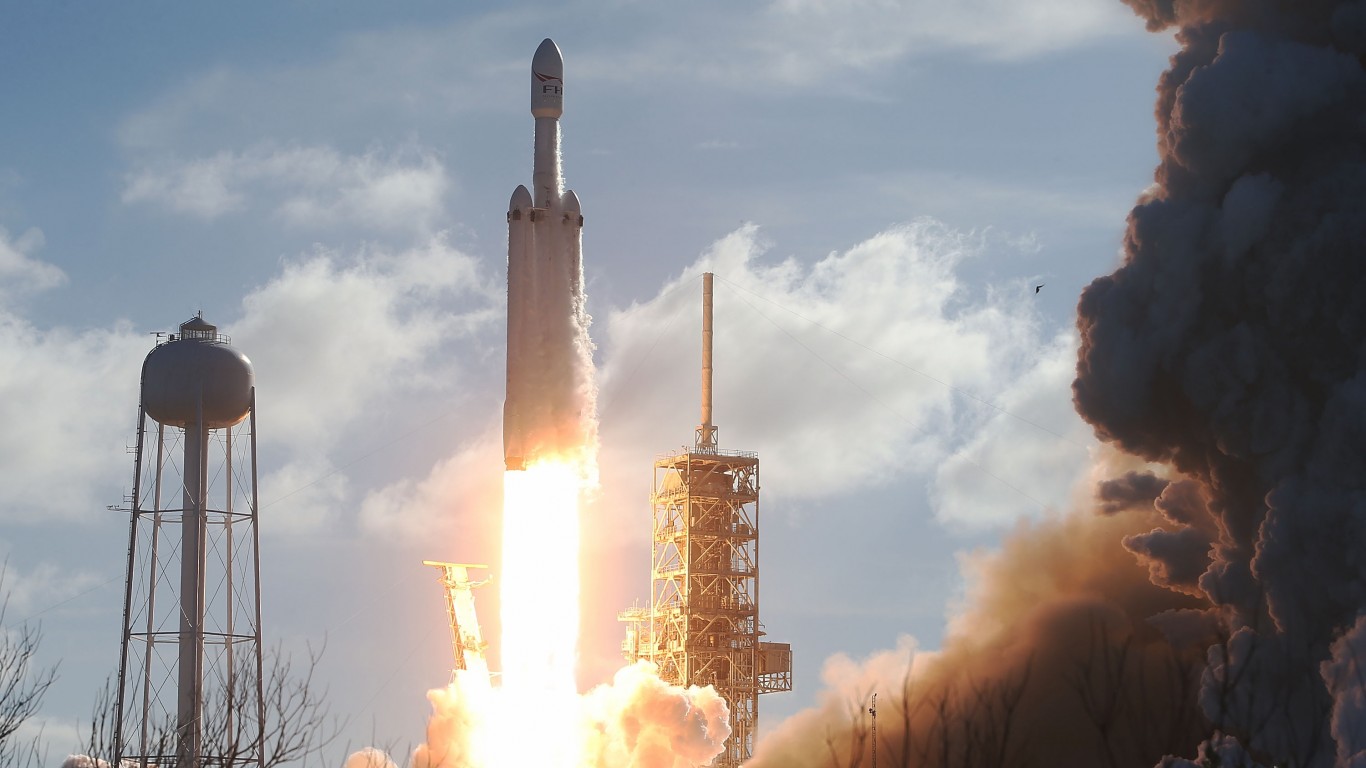
SpaceX’s IPO Drained Capital From Planet Labs
Rotation into SpaceX did the most damage. Once SpaceX went public, investors sold smaller space names to buy the sector leader. Planet fell 20% in the weeks after that IPO. Over six months, the stock dropped from $41.61 to $12.72, a 69.43% loss. That is far beyond the 30% mark that defines a violent selloff, and losses are still piling up: the stock lost 11.41% in the past week alone.
The fundamentals also gave sellers ammunition. Guidance for the current quarter of $101 million to $105 million[2] mean about 27% growth at the midpoint. Management said the timing of a Swedish satellite transfer pulled revenue into the prior quarter. Remaining performance obligations rose about 9%[2] year over year, down from 81%[3] growth one quarter earlier.
Wedbush and Cantor Still See $50 as Morgan Stanley Retreats
Of 12 analysts, one rates Planet a Strong Buy, six rate it a Buy, five say Hold, and none say Sell. Recent changes lean bearish. Needham cut its target to $40.00 from $53, and Morgan Stanley went to $19.00 from $35 with an Equal-Weight rating. Craig-Hallum held at $49.00.
Defense is the core of the bull case. Defense and intelligence revenue grew over 90%[2] year over year. Planet also lists over $4 billion[2] of satellite services opportunities, with over 25% qualified as near-term. CEO Will Marshall says Planet’s daily scan has no direct competition: “If you want to monitor for new threats and monitor things consistently, we’re the only game in town.”[2]
Bulls are also tracking execution. Full-year revenue guidance rose to $430M-$441M[1], with adjusted EBITDA of $3M-$10M. Consensus revenue rises to $570.54 million next fiscal year. Next-generation Owl satellites, with a first demo targeted for late 2026[4], should support higher pricing. The risk is that these are 12-month targets, and the quarter ending in January has drawn five downward EPS revisions in 30 days.
BlackSky and Rocket Lab Held Up While Planet Fell
Planet’s slide was mostly its own. Its closest peers have held up far better this year.
BlackSky Technology (NYSE:BKSY) trades at $23.14. It is up 23.47% year to date and 33.66% over the past month. Its $36.38 target mean 57.22% upside, with five Buys and one Hold. Wall Street sees less upside here than at Planet.
Rocket Lab (NASDAQ:RKLB | RKLB Price Prediction) trades at $57.37 and is down 17.76% year to date. Its $93.10 target mean 62.28% upside, with 18 Buy or Strong Buy ratings against four Holds. Its upside also trails Planet’s.
Planet has the largest implied upside in the group by a wide margin. To analysts, that makes it the most mispriced name in the group. The market sees the most risk there.
Planet Labs Trails the S&P 500 by a Wide Margin
Planet shares sell for $12.73, against a consensus target of $30.27 from 12 analysts. That works out to 137.78% implied upside. Targets are opinions, though, and several have fallen recently.
The stock is down 35.45% year to date. The S&P 500 is up 8.51%. Shares trade below their 50-day average of $15.38 and well below the 200-day average of $26.04. The 52-week low is $10.52. A beta of 2.27 means moves in either direction will stay large.
Planet Labs Looks Mispriced, but the Clock Matters
Shares would get a lift if the next earnings report comes in inside guidance and more of the $4 billion[2] pipeline turns into signed sovereign contracts. A path toward a stock in the $20s or higher requires management to hit the $430M-$441M[1] revenue guide and deliver positive adjusted free cash flow for the year.
The bear case strengthens if backlog growth stays near single digits or capital continues leaving smaller space stocks for SpaceX. The $448M in convertible notes, ongoing GAAP losses, and the use of share sales to raise cash point to a value trap if growth stalls.
The fundamentals lean toward the bull side. Planet’s business continues growing even as its stock price falls. I treat the $30.27 consensus as the realistic test. The $50.00 targets need a sector-wide re-rating that has yet to show up.
Contact [email protected] for any questions or corrections.
Alex Sirois is a financial writer with experience spanning both retail and institutional investing. He has written for InvestorPlace and held roles at BNY Mellon and Bernstein, giving him a perspective that bridges Main Street portfolios and Wall Street analysis.
Alex holds an MBA from George Washington University and has built his career across multiple industries, including e-commerce, education, and translation — a breadth of experience that informs how he breaks down complex financial topics for everyday investors. His writing is conversational, actionable, and grounded in long-term, buy-and-hold investing principles.
At 247 Wall St., Alex focuses on delivering analysis that is both accessible and useful, with a clear emphasis on helping readers make more informed decisions with their money.