Broadcom Already Eclipsed AMD as The 2nd Biggest Chip Maker, But The Market Won’t Recognize That Truth Until 2027

This post may contain links from our sponsors and affiliates, and Flywheel Publishing may receive compensation for actions taken through them.
Broadcom (NASDAQ:AVGO | AVGO Price Prediction) and AMD (NASDAQ:AMD) both just reported record AI quarters, and they sell to the same leading labs. Broadcom has a market cap of about $1.63 trillion. AMD’s is about $825.6 billion. Even so, AMD shares are up 135.06% this year, while Broadcom has slipped 0.76%. So far, investors are rewarding AMD’s momentum more than Broadcom’s size.
Custom XPUs Carry Broadcom While Helios Racks Lift AMD
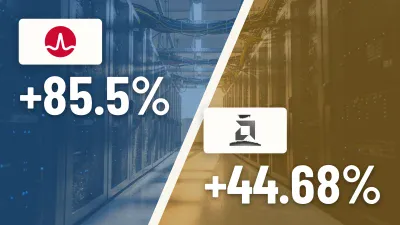
Broadcom’s fiscal Q3 revenue reached $29.591B[1], up 85.5% from a year earlier. Non-GAAP EPS of $3.32[1] beat the $3.2382 consensus. AI semiconductor revenue hit $16.7 billion[1], now 56% of total revenue[2], so AI now makes up most of Broadcom’s sales. Custom chips (XPUs) made up 73% of AI revenue[2]. Hock Tan said that “when you co-develop a chip that is optimized for your particular large language model workloads, you will outperform any GPU.”[2]
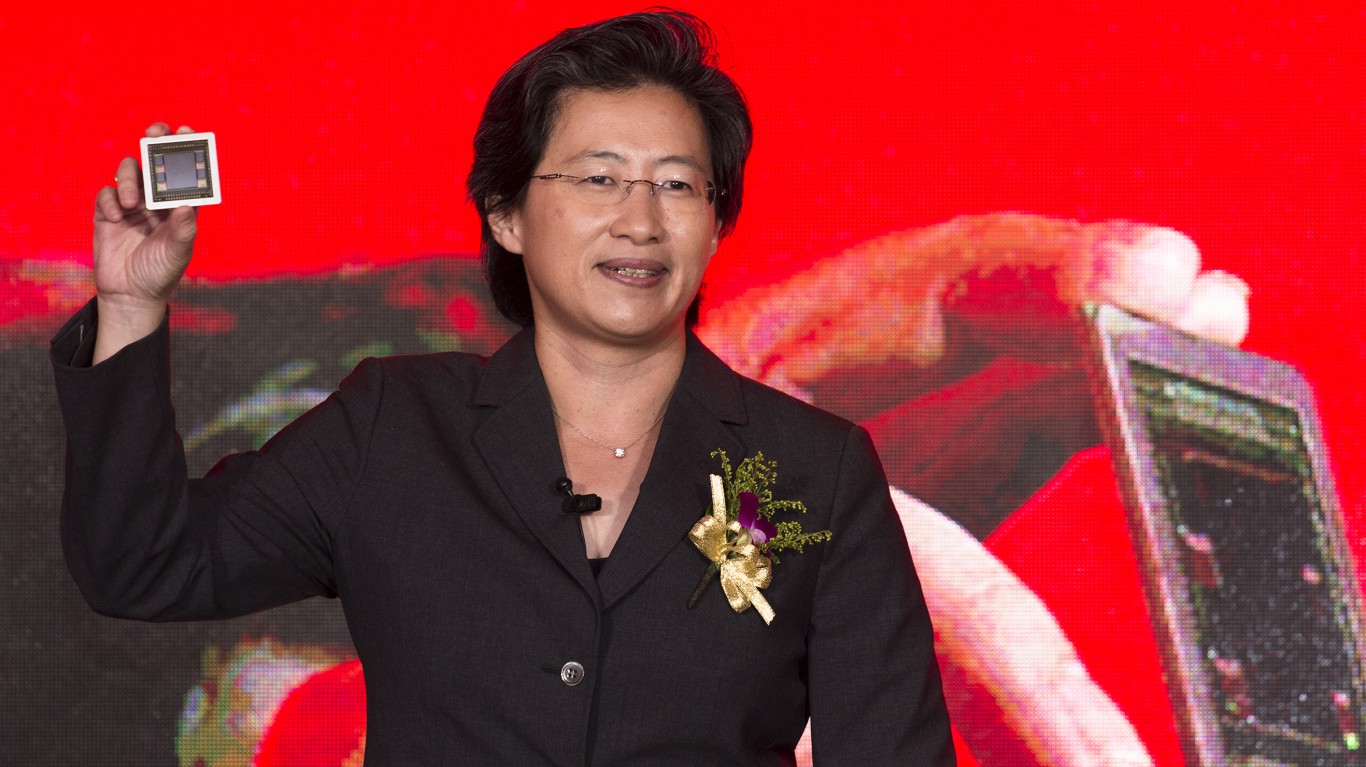
AMD posted $13.377B[3] in revenue, up 44.68%. EPS of $2.09[3] beat the $1.94 consensus. Data Center sales rose 97%[3] as Anthropic and OpenAI brought their first Helios racks online. Gaming fell 40%[3], so consumer hardware is still holding AMD back. Lisa Su called it “the largest and most profitable in our history.”[4]
| Business Driver | Broadcom | AMD |
|---|---|---|
| AI Engine | Co-designed custom XPUs | Instinct GPUs in Helios racks |
| Second Engine | Tomahawk Ethernet, VMware | EPYC Venice server CPUs |
| Main Drag | Memory-heavy XPU mix pressuring gross margin | Shrinking gaming sales |
Broadcom Builds Chips Labs Own While AMD Sells Full Racks
Broadcom designs chips that its customers own. Management says these custom chips can run workloads at less than half the cost of GPUs[2]. AMD competes with full server racks, its open ROCm software and its new EPYC Venice server chips. Su said AMD feels “extremely good”[4] about the total cost of ownership Helios offers. Broadcom’s case looks easier to check: Anthropic is on track to become its largest custom-chip customer in 2027[2].
Broadcom generated $13.665 billion[1] of free cash flow. AMD produced $554 million[3] as inventory rose 35% in one quarter. Broadcom is already cashing in on its growth. AMD is still paying to build its own.
Fiscal 2027 Supply Will Decide Who Ranks Second
Broadcom raised its fiscal 2026 AI revenue forecast to $58 billion[2]. It says it has secured enough supply to reach about $115 billion[2] in fiscal 2027, and that demand is even higher. AMD expects revenue to grow more than 80% in 2027[4]. Both companies name chip substrates and high-bandwidth memory (HBM) as constraints. I’m watching whether AMD hits its fourth-quarter forecast of about $17B[3] as Helios production growth.
Why I Lean Toward Broadcom Heading Into 2027
I lean toward Broadcom. Its AI chip revenue alone already tops AMD’s total quarterly revenue. Yet Broadcom’s stock is up just 0.43% over the past year. I do have concerns. Broadcom depends on a small group of large customers.
It may also take on contingent liabilities through guarantees in the financing program that helps AI labs pay for chips. AMD matches growth investors who want exposure to both server chips and AI accelerators. Still, a trailing P/E around 190 leaves little room for supply hiccups. If AMD’s next-generation MI500 chips win deals worth multiple gigawatts and its cash flow catches up, I would revisit.
The expansion behind these chip growth also runs on power, cooling, and networking suppliers that rarely make the headlines, and we featured seven of them in a free AI infrastructure report.
Contact [email protected] for any questions or corrections.
Alex Sirois is a financial writer with experience spanning both retail and institutional investing. He has written for InvestorPlace and held roles at BNY Mellon and Bernstein, giving him a perspective that bridges Main Street portfolios and Wall Street analysis.
Alex holds an MBA from George Washington University and has built his career across multiple industries, including e-commerce, education, and translation — a breadth of experience that informs how he breaks down complex financial topics for everyday investors. His writing is conversational, actionable, and grounded in long-term, buy-and-hold investing principles.
At 247 Wall St., Alex focuses on delivering analysis that is both accessible and useful, with a clear emphasis on helping readers make more informed decisions with their money.