Traders Now See a 95% Chance the Fed Hikes Rates in December

This post may contain links from our sponsors and affiliates, and Flywheel Publishing may receive compensation for actions taken through them.

Futures traders now treat a December rate hike as nearly certain. At the November 17 close, CME FedWatch put the odds of a quarter-point increase at the Fed’s December 8-9 meeting at about 95%, with the rest priced on a larger half-point move.
That is up from 77% after the early-November jobs report. A November 18 reading put a quarter point at about 96%, again with the rest on a half point.
The iShares 20+ Year Treasury Bond ETF (NASDAQ:TLT) closed at $79.55 on November 17, up 0.21%. It is still down 1.64% over the past week and 5.15% year to date. For long-bond holders, a near-certain hike shifts the focus to long-term yields.
Musalem Pushed the Odds Higher While Williams Capped Them
St. Louis Fed President Alberto Musalem said in a November 17 speech in Argentina that the economy will likely need several more hikes before spring 2027. He wants the real policy rate (fed funds minus inflation) at 2% to 2.5% by then. That is about a full point above his estimate of the current level.
He called a path with no more hikes unlikely but plausible. One outside reading of his math implies up to four hikes, at the December, January, March and April meetings. He said only “several,” however, and he does not vote until 2028.
New York Fed President John Williams ruled out a half-point move, saying conditions do not call for “dramatic action.” He added that continued AI-driven strength and stock-fueled spending could argue for more hikes.
Dissents and Hot Inflation Point Toward More Hikes
The current 3.75% to 4.00%[1] target range came from a 12-0 quarter-point hike on September 16. On October 28, the Fed held by a 10-2 vote, with Governor Lisa Cook and Cleveland Fed President Beth Hammack dissenting for another increase. When officials dissent in favor of tighter policy, it is an early sign that the committee under Chair Kevin Warsh leans toward more hikes.
October consumer prices (CPI) rose 0.4% for the month, and core CPI, which leaves out food and energy, rose 0.3%. Year-over-year changes were not published because October 2025 prices were never collected. That leaves officials leaning on monthly readings and their own judgment.
October retail sales, released November 17, rose 0.2% to $748.2 billion[2], while industrial production fell 0.4%. When shoppers keep spending even as factories slow, a Fed that is raising rates finds demand that has not cooled enough.
Why Long Bonds Answer to a Different Signal
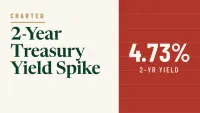
The two-year Treasury yield is the maturity that responds most to the Fed. It eased to 4.80% on November 17 from 4.83% on November 16. The ten-year yield stood at 5.10%.
TLT holds Treasuries maturing in 20 years or more. Its duration, meaning how much its price moves when rates change, therefore links it to long-term yields. A fully priced hike is already priced into short yields.
What happens to TLT next depends on long yields. They will likely keep climbing on inflation and on the extra pay investors demand for holding long bonds, unless hikes slow growth enough to pull them down.
What a Near-Certain Hike Means for TLT Holders
Long bonds lose when long yields rise, and they recover once a hiking cycle slows the economy. That second phase has not started while inflation runs hot.
Treasury bills and money market funds reset higher with each hike and carry little price risk. On November 17, 52-week bills yielded 4.59%.
TLT carries significant price risk at $79.55. The risk that long yields keep drifting higher outweighs the reward for locking in long rates in the middle of a hiking cycle.
Minutes of the October 27-28 meeting come at 2 p.m. ET on November 18. The December 8-9 meeting brings new projections before November CPI lands on December 10. If those projections show December as the final hike, TLT’s case improves. Until then, bills offer a steadier yield with less price risk than long bonds.
Contact [email protected] for any questions or corrections.
Omor Ibne Ehsan is a writer at 24/7 Wall St. He is a self-taught investor with a focus on growth, cyclical, and dividend equities that have strong fundamentals, value, and long-term potential. He also has an interest in high-risk, high-reward investments such as penny stocks.