Microsoft’s CEO Says He’s “Extremely Sorry” for the Outlook Outage

This post may contain links from our sponsors and affiliates, and Flywheel Publishing may receive compensation for actions taken through them.
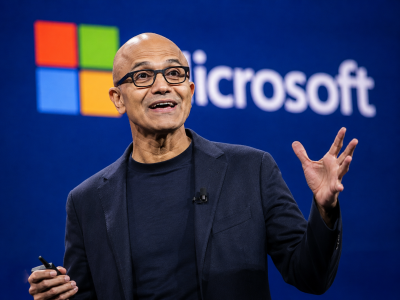
On Wednesday, November 18, 2026, Microsoft (NASDAQ:MSFT | MSFT Price Prediction) chief executive Satya Nadella told a business conference in New York that he was “extremely sorry” to the people affected by the outage. Starting November 12, it knocked out Outlook, Teams and Copilot for about a day.
The stock hardly moved on the apology. Microsoft closed at $508.29, up $2.05, or 0.40%, for a market value of about $3.77 trillion. It then traded at $513.93 after hours, up 1.11%.

Microsoft is asking businesses to pay more for AI. At the same time, its CEO admits that the systems running its flagship apps failed in ways that better testing should have caught.
What Nadella Admitted
He described the failure as a rare combination of conditions: a hidden bug that sat in the system until a particular traffic pattern triggered it. Microsoft has run an incident response and says it will act on the architectural and operational lessons. That is a statement of intent that came with no timeline and no budget.
In a television interview that evening, he said Microsoft should have done the testing in advance. He also said it should have built bulkheads, which are internal barriers that stop a local failure from spreading across the whole system, so the problem never became a global outage.
The explanation changed over the week. On November 13, Microsoft traced the outage to an earlier network capacity upgrade that showed up after a recent network change. It ruled out AI or a cyberattack as the cause.
On November 16, Charles Lamanna, executive vice president of Copilot, Agents and Platform, gave a fuller account. He said three things combined to trigger a bug dating to July: a hidden defect in a fix for the company’s networking gateway servers, a surge in load on those gateways, and reduced server capacity. Microsoft has not published a final root-cause report.
How Much This Matters to Microsoft’s Business
Outlook is part of Microsoft 365. Its cloud revenue reached $27.778 billion[1] in the quarter ended September 30, 2026, inside an Agents and Infra segment that brought in $76.795 billion, up 25%.
Microsoft has reported no customer credits, refunds, or lost contracts tied to the outage, so the financial cost is unknown. A single day of downtime rarely shows up in quarterly revenue. It does come up when contracts are up for renewal.
Copilot takes most of the exposure because it has passed 30 million[2] paid seats. A customer paying extra for an AI assistant expects the email behind it to stay up.


Reality Check on AI and Fragility
Nadella’s explanation works against Microsoft as well as for it. AI helps the company find vulnerabilities faster, but each find means another patch, and he said that patches applied to old infrastructure create instability.
He also suggested outages could become more common now that launching cyberattacks has become easier. He offered no reliability targets, spending figures, or changes to service credits.
Switching costs still protect Microsoft. Moving a company’s email, calendars, files, and logins elsewhere takes years, which is why investors treated the outage as an embarrassment with a limited financial cost.
What Could Shift the Case for MSFT Stock
The stock is about 8.5% below its $555.80 record close from November 4 but still up 5.77% this year. It trades at about 28 times earnings for a business with a 46.78% operating margin.
The outage was an engineering failure that can be fixed, and Microsoft can afford the fix. Operating cash flow reached $58 billion[1] last quarter, which easily covers more testing and better bulkheads.
That view changes if another day-long Microsoft 365 outage hits before the next earnings report. It also changes if management can’t point to specific reliability fixes on that call. Either would turn a one-time failure into a pattern that customers can use to push for better contract terms.
Shares go ex-dividend on November 19 for the $0.98 quarterly payout. A close back above $555.80 would show the market has put the outage behind it.
Contact [email protected] for any questions or corrections.
Omor Ibne Ehsan is a writer at 24/7 Wall St. He is a self-taught investor with a focus on growth, cyclical, and dividend equities that have strong fundamentals, value, and long-term potential. He also has an interest in high-risk, high-reward investments such as penny stocks.