The Car So Popular Dealers Can’t Keep It In Stock

This post may contain links from our sponsors and affiliates, and Flywheel Publishing may receive compensation for actions taken through them.
The primary measure of a vehicle’s popularity is a yardstick called Market Day Supply. CarEdge calls it “the number of days it would take to sell all current inventory at the current daily sales rate.” The Subaru Trailseeker tops the list. Its market day supply is eight. That means Subaru can barely keep these in stock. The industry average is about 60 days.
The Trailseeker is followed by the Toyota Land Cruiser (10 days), Toyota Corolla Cross (11 days), and Toyota Grand Highlander (11 days).
The Subaru Brand sits atop Consumer Reports’ list of 31 models, which measures reliability, owner satisfaction, safety, and road-test scores. Jake Fisher, CR’s senior director of auto testing at Consumer Reports, commented, “While Subaru models provide good performance and comfort, they also excel in areas that may not be immediately apparent during a test drive. They share proven parts that help assure consistently great reliability. They also use cutting-edge safety systems and perform well in our emergency handling and braking tests.”
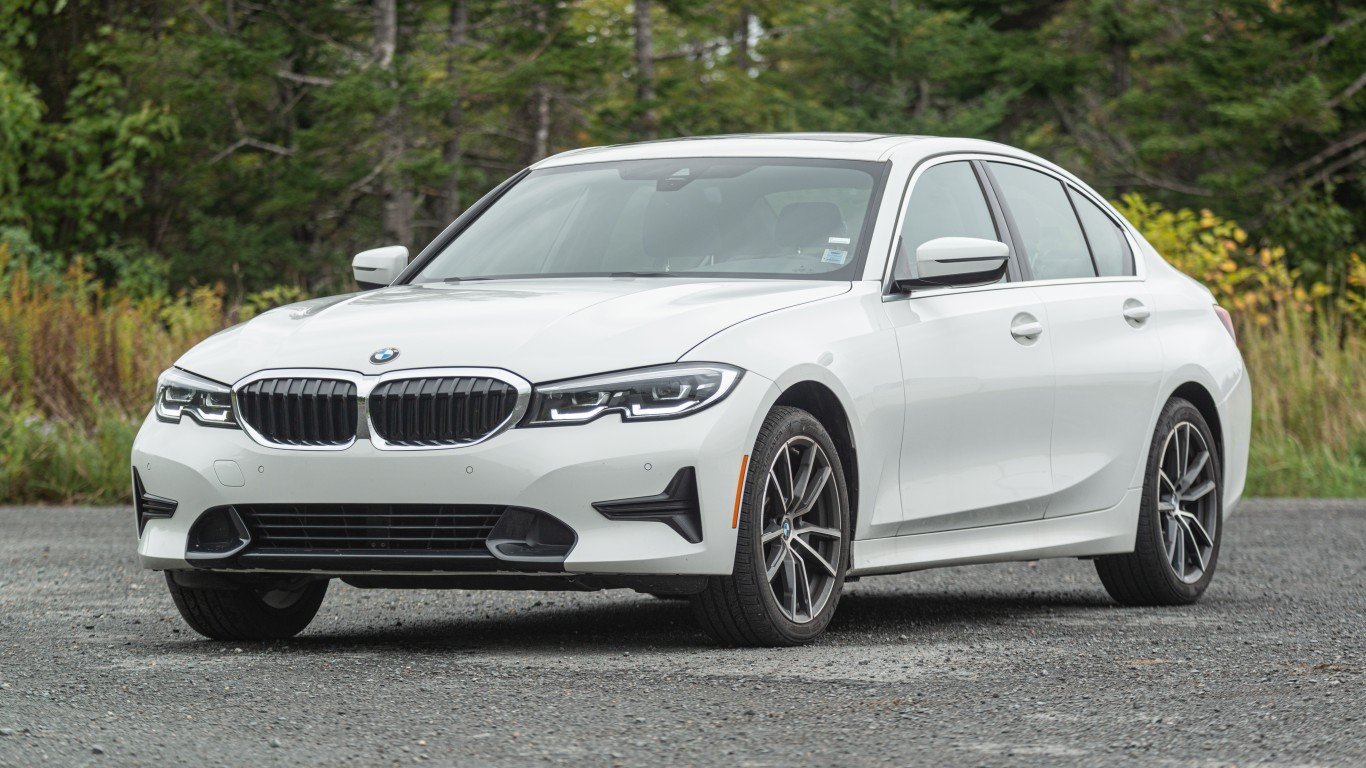
One notable aspect of the Consumer Reports research is that the two brands just below Subaru at the top of the list are BMW and Porsche, which make some of the most expensive vehicles sold in America. Subarus are among the least expensive
Subaru was also near the top of the J.D. Power 2026 U.S. Vehicle Dependability Study. It ranked 6th, just ahead of Porsche. The survey included 26 brands
Subaru is a unicorn among car brands. It is famous for its four-wheel-drive models, which are virtually all configured with that feature, and have been for decades. However, they are only the fourth-largest Japanese car maker, well behind Toyota, Honda, and Nissan. Subaru also has only 10 models. Most mainline car brands have twice that many
Subaru’s SUVs and Crossers compete with vehicles from Chevy, GMC, Ford, Toyota, Honda, Stellantis, Kia, Hyundai, and higher-end vehicles from Genesis, Land Rover, BMW, Mercedes, and Audi.
Finally, its parent company also does well. Yahoo Finance reports, “According to Subaru’s third-quarter financial report, the Japanese brand has earned triple its operating profit compared to the same period last year.”
Contact [email protected] for any questions or corrections.
Douglas A. McIntyre is the co-founder, chief executive officer and editor in chief of 24/7 Wall St. and 24/7 Tempo. He has held these jobs since 2006.
McIntyre has written thousands of articles for 24/7 Wall St. He is an expert on corporate finance, the automotive industry, media companies and international finance. He has edited articles on national demographics, sports, personal income and travel.
His work has been quoted or mentioned in The New York Times, The Wall Street Journal, Los Angeles Times, The Washington Post, NBC News, Time, The New Yorker, HuffPost USA Today, Business Insider, Yahoo, AOL, MarketWatch, The Atlantic, Bloomberg, New York Post, Chicago Tribune, Forbes, The Guardian and many other major publications. McIntyre has been a guest on CNBC, the BBC and television and radio stations across the country.
A magna cum laude graduate of Harvard College, McIntyre also was president of The Harvard Advocate. Founded in 1866, the Advocate is the oldest college publication in the United States.
TheStreet.com, Comps.com and Edgar Online are some of the public companies for which McIntyre served on the board of directors. He was a Vicinity Corporation board member when the company was sold to Microsoft in 2002. He served on the audit committees of some of these companies.
McIntyre has been the CEO of FutureSource, a provider of trading terminals and news to commodities and futures traders. He was president of Switchboard, the online phone directory company. He served as chairman and CEO of On2 Technologies, the video compression company that provided video compression software for Adobe’s Flash. Google bought On2 in 2009.