Why Microsoft’s Stickier Revenue Gives It the Edge Over Apple Heading Into 2027

This post may contain links from our sponsors and affiliates, and Flywheel Publishing may receive compensation for actions taken through them.
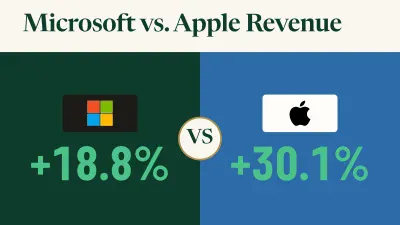
Within a week of each other, Microsoft (NASDAQ:MSFT | MSFT Price Prediction) and Apple (NASDAQ:AAPL) reported September quarters. Microsoft increased revenue 18.8%[1] to $92.28 billion, driven by cloud contracts. Apple posted a record $114.48 billion[2] in John Ternus’s first earnings call as CEO. New iPhones drove most of it. Heading into 2027, the question is which revenue base is harder to shake.
Contracts Carry Microsoft While a Hit iPhone Carries Apple
Microsoft Cloud revenue reached $63.9 billion, up 30%[3], and Azure increased 48% while demand still exceeded supply. Commercial remaining performance obligation, or contracted revenue not yet recognized, rose 73% to $677 billion[3]. About 30%[3] of that converts to revenue within 12 months, which gives Microsoft a revenue floor already under contract.
Copilot adds another layer. Daily users rose more than 5x year-over-year[3], and Volkswagen plans to roll out to it to more than 330,000 employees. Satya Nadella summed up the timeline: “Enterprise is not a quarter-over-quarter thing; it’s a decade-long thing.”[3]
Apple leaned on hardware. iPhone revenue hit $57.58 billion[2], a September-quarter record, while iPad and Wearables declined. Services set an all-time high of $31.57 billion[2], and paid subscriptions passed 1.5 billion[4]. That recurring layer is real, but it still depends on device sales.
| Business Driver | Microsoft | Apple |
|---|---|---|
| Growth Engine | Copilot and Azure | iPhone 18 Pro and iPhone Duo |
| Recurring Layer | $677 billion[3] contracted backlog | 1.5 billion+[4] paid subscriptions |
| Weak Spot | Devices and Windows OEM, -22%[1] | iPad and Wearables declines |
Memory Costs Squeeze Apple as Microsoft Spends to Meet Demand
Apple forecast December-quarter gross margin to 45% to 46%[4], citing memory pricing that Ternus called “unprecedented”. Inventories rose to $14.54 billion[2] from $5.72 billion. Even so, Apple expects revenue growth of 7% to 10%[4] and its best quarter ever.
Microsoft forecast Azure growth to 49% to 50%[3] in constant currency. That growth requires heavy spending. Capex reached $45.2 billion[3], and calendar-year spending should land near $170 billion. The size of that spending is my main concern, and it is also why the companies providing power, cooling, and network gear for data centers keep turning up in our free report on seven AI infrastructure names that aren’t chipmakers.
| Lens | Microsoft | Apple |
|---|---|---|
| Operating Margin | 46.8% | 33.0% |
| P/E | 28x | 39x |
| Key Vulnerability | AI capex returns | Memory costs, supply limits |
GPU Deliveries Will Test Microsoft’s Floor
I will be watching third-party GPU capacity, which Microsoft says has been delayed to the second half of the fiscal year[3]. For Apple, you should keep an eye on whether iPhone Duo supply catches up with demand. Management could not forecast when it will.
Why I Lean Toward Microsoft Into 2027
Investors have preferred Apple this year. Its stock is up 30.1% year to date, against 5.77% for Microsoft. Over six months, though, Microsoft returned 22.26% to Apple’s 18.08%.
I prefer paying 28x earnings for revenue already under contract over 39x for growth that depends on upgrade cycles and memory prices. Apple appeals to those seeking consumer brand strength and buybacks. That could change if Azure growth slows while capex keeps rising.
Contact [email protected] for any questions or corrections.
Alex Sirois is a financial writer with experience spanning both retail and institutional investing. He has written for InvestorPlace and held roles at BNY Mellon and Bernstein, giving him a perspective that bridges Main Street portfolios and Wall Street analysis.
Alex holds an MBA from George Washington University and has built his career across multiple industries, including e-commerce, education, and translation — a breadth of experience that informs how he breaks down complex financial topics for everyday investors. His writing is conversational, actionable, and grounded in long-term, buy-and-hold investing principles.
At 247 Wall St., Alex focuses on delivering analysis that is both accessible and useful, with a clear emphasis on helping readers make more informed decisions with their money.