Crown Castle vs. American Tower: Higher Yield or Better Dividend Growth

This post may contain links from our sponsors and affiliates, and Flywheel Publishing may receive compensation for actions taken through them.

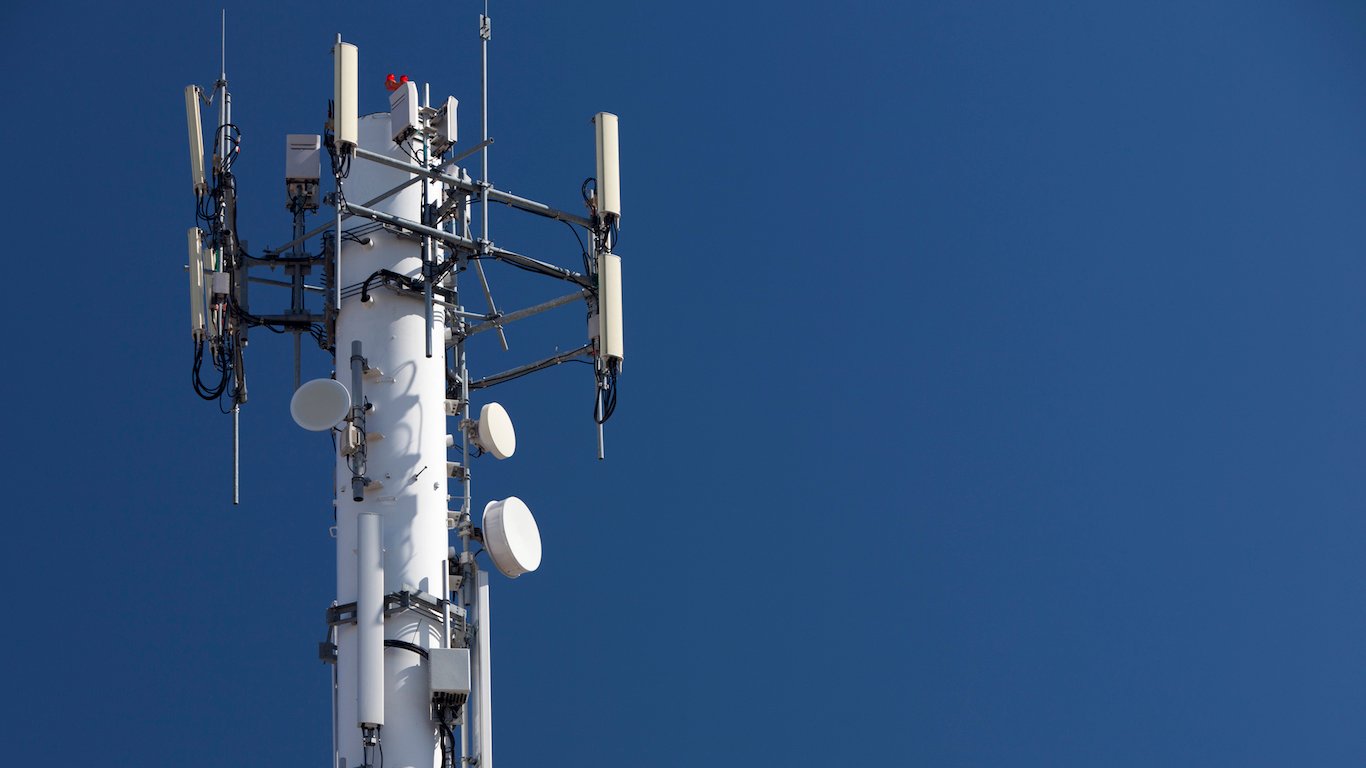
Should a retirement-focused investor own Crown Castle (NYSE:CCI) or American Tower (NYSE:AMT) for income right now? Both are cell tower REITs. They lease space on their towers to wireless carriers under long-term contracts with built-in rent increases, and they pass most of their cash flow to shareholders as dividends. Crown Castle pays more today. American Tower makes the stronger case for paying more over time.
Crown Castle Pays the Bigger Check Today
Crown Castle’s story starts with a cut. The quarterly dividend fell from $1.565 to $1.0625 starting with the June 13, 2025 ex-dividend date. That was a 32%[1] per-share reduction, and the payout has stayed flat through the payment due December 31, 2026. Management announced the restructuring in March 2025 along with its plan to sell the fiber business. The goal was to size the dividend to the smaller earnings base of a tower-only company. The sale closed May 1, 2026, for $8.40B in net proceeds, which paid down more than $7B of debt and funded about $1B of buybacks.
At $81.92, the $4.25 annualized dividend yields about 5.2%. American Tower’s $7.16 forward dividend at $181.15 yields about 4.0%. A retiree who needs the most cash this year gets more from Crown Castle.
American Tower Has the Safer, Growing Dividend
Coverage closes most of that gap. Crown Castle’s dividend uses about 92% of its $4.60[2] per share 2026 AFFO guidance midpoint. American Tower’s forward payout uses about 65% of the midpoint of its $11.04 to $11.16[3] AFFO guidance, which leaves room for buybacks, data center spending, and future increases.
American Tower’s dividend record has a dip. The quarterly payout was $1.70 in late 2023 and dropped to $1.62 for the 2024 payment. It went back to $1.70 in 2025, and the latest raise brought it to $1.79[3], up 5.3% per share. CFO Rodney Smith called 2026 a trough year. He said the company expects to return to “AFFO per share growth in the mid- to high-single-digit range”[4] in 2027. In the third quarter, CoreSite data center revenue rose 17.4%,[3] and Africa & APAC rose 15.4%.
Crown Castle’s third-quarter AFFO per share climbed 11%[2] to $1.24. Much of that gain came from interest expense falling to $177M from $247M[2] and from a smaller share count. Organic billings growth was only 3.5%[2], site rental revenue fell 4.5%, and the dividend has gone without a raise for over a year.
American Tower Carries Less Risk at a Lower Multiple
Crown Castle’s three largest carrier tenants generate 93% of its site rental revenue, so a carrier deal or a spending pullback reaches the whole portfolio. DISH terminations alone take $220M out of 2026 billings. Leverage stands at 6.5x[5] net debt to annualized adjusted EBITDA, stockholders’ equity is negative, and $2.197B[2] of debt comes due in 2027, which makes interest rates a real risk. American Tower runs at 4.9x[3], inside its 3 to 5 times[4] target, and spreads its revenue across five divisions. Its own risks are currency swings and emerging-market turnover, including elevated turnover in Brazil.
American Tower also costs less: about 16x its 2026 AFFO midpoint, compared with 18x for Crown Castle. Over 10 years, its adjusted share price rose 122.01%, while Crown Castle’s gained 47.97%. Over five years, American Tower fell 18.31%, and Crown Castle fell 42.94%.
Verdict: American Tower Is the Better Retirement Income Holding
American Tower screens as the stronger retirement income profile on the data. Its dividend is better covered and growing, its balance sheet is stronger, it trades at a cheaper multiple, and it has the better long-term record. The about one-point yield gap is small next to a payout that keeps rising.
Crown Castle fits a different investor. This investor wants the highest current yield, can accept a flat dividend, and expects U.S. leasing to pick up as new spectrum gets deployed. Management has a clear view on 2026. The company calls the year “the low point for organic growth.”[5] The next things to watch are whether Crown Castle’s 2027 leasing recovery shows up and whether American Tower delivers its promised AFFO rebound.
Contact [email protected] for any questions or corrections.
Chris Lange is a financial and geopolitical writer with more than a decade of experience covering a myriad of topics. He has published thousands of articles for 24/7 Wall St., with past coverage focused heavily on stocks, IPOs, healthcare, defense, global affairs, and technology.
His work has been quoted, or referenced by a number of outlets including Business Insider, USA Today, Yahoo Finance, MSN, The Motley Fool, and many other publications. A graduate of Southwestern University, he studied business with a focus on investments and has previous experience in banking and startups.
When not reading or writing the news, he is following his passion for Lacrosse, playing chess, or building solar projects with his dad.