In 2000, Elon Musk Crashed His Uninsured $1 Million McLaren Trying to Show Peter Thiel What It Could Do. In 2025, Thiel’s Fund Quietly Sold Every Tesla Share It Owned

This post may contain links from our sponsors and affiliates, and Flywheel Publishing may receive compensation for actions taken through them.
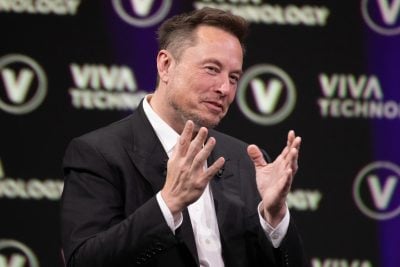
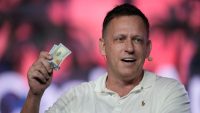
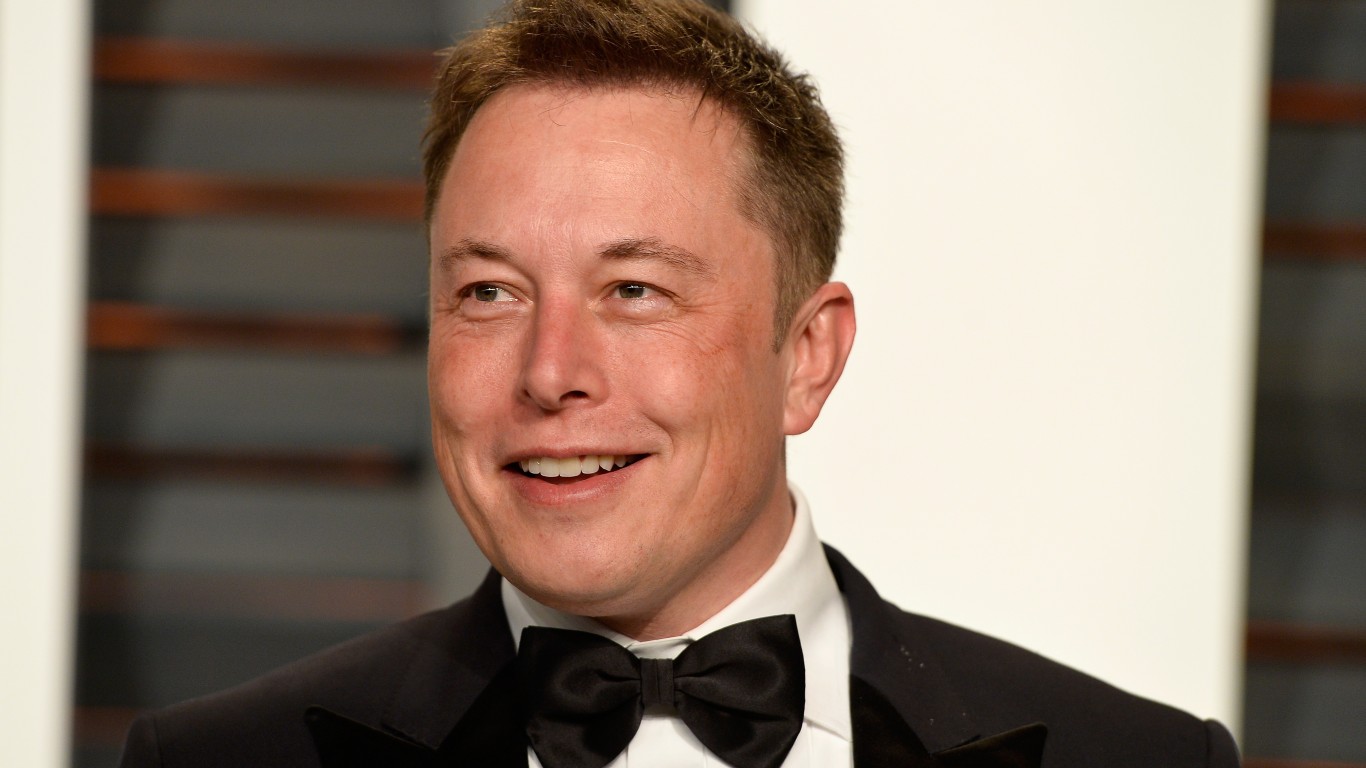
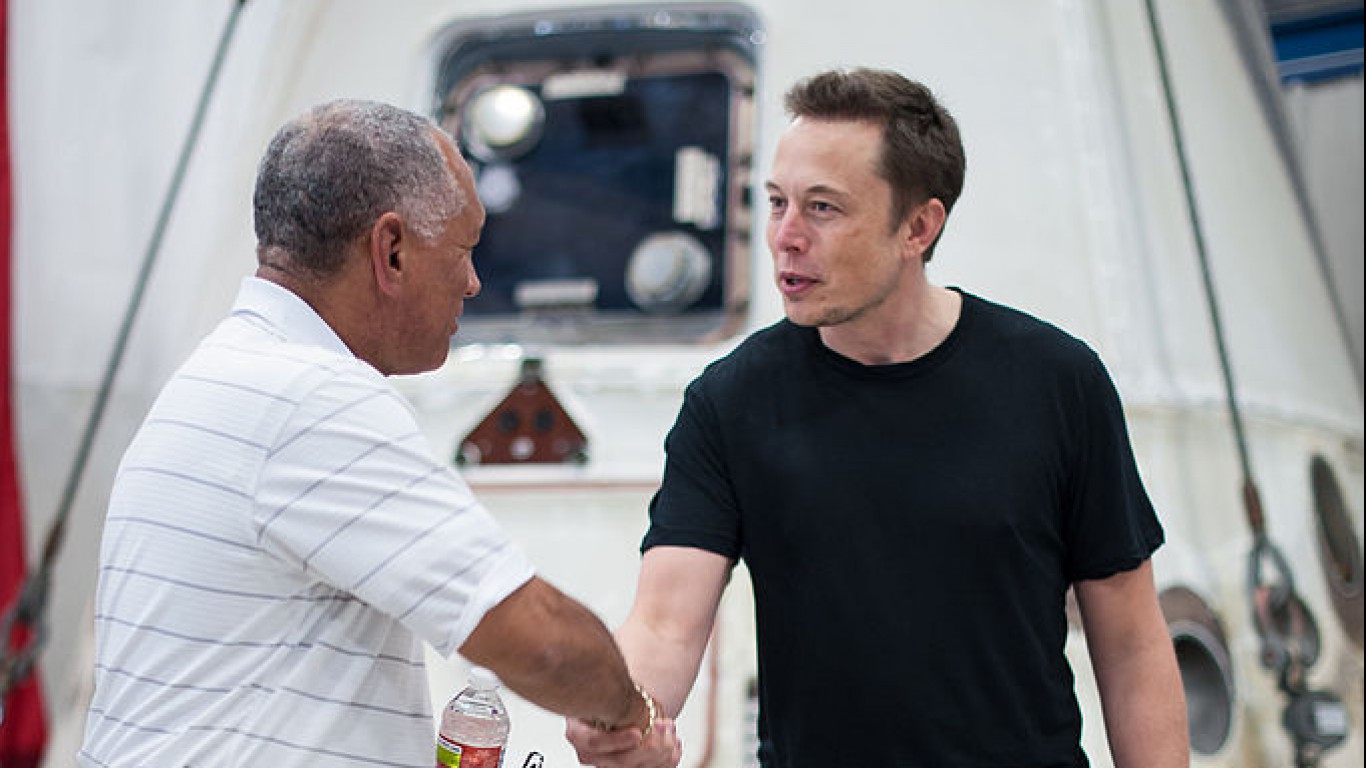
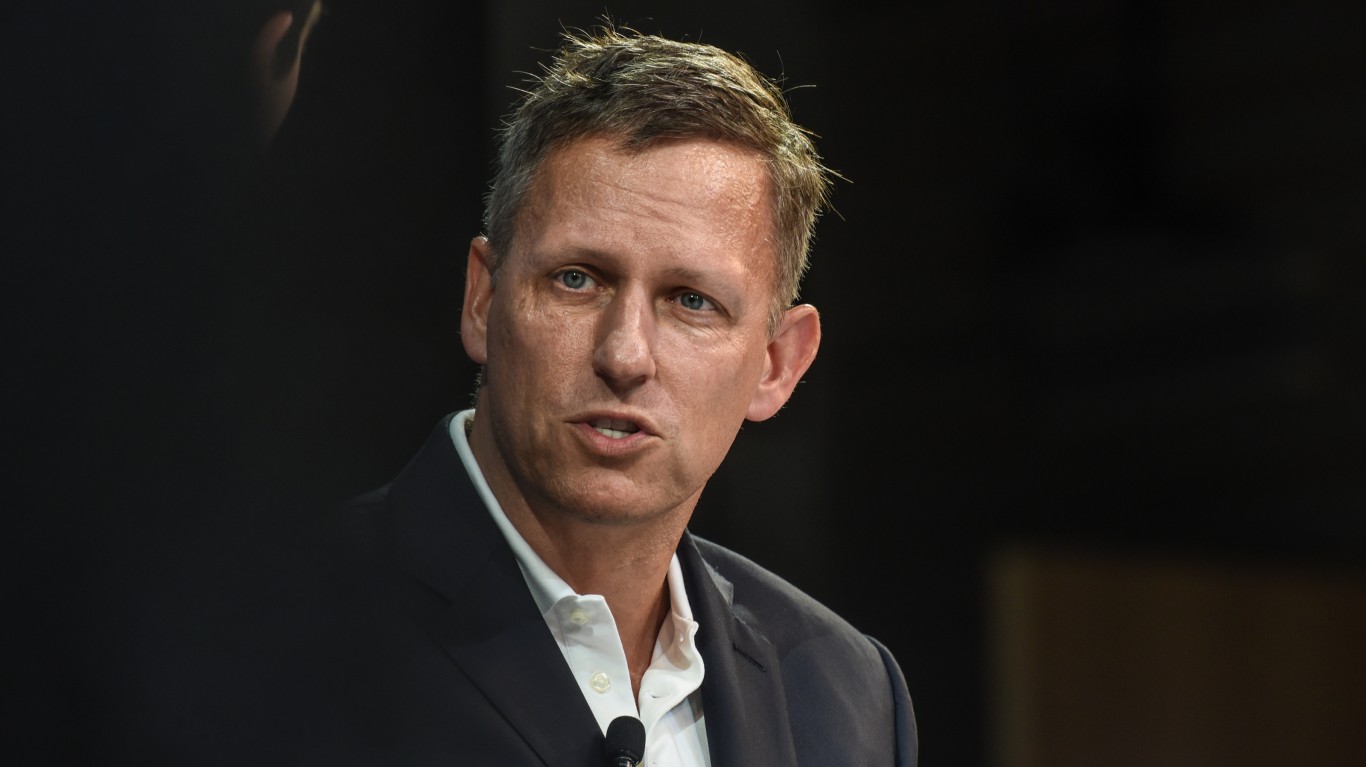
In 2000, Elon Musk put Peter Thiel in the passenger seat of a $1 million McLaren F1 he had never insured, floored it on Sand Hill Road to show what the car could do, and crashed it. In 2025, Thiel’s hedge fund sold every Tesla (NASDAQ: TSLA) share it owned, and its newest filing, sent to the SEC on Monday, shows it still holds none.
Both men have told the crash story themselves. The Tesla sale came with no comment at all, so the filings are the only record. Thiel Macro LLC, the hedge fund that reports Thiel’s stock holdings every quarter, cut its Tesla stake by 76% in the third quarter of 2025 and sold the rest in the fourth, the quarter Tesla set its record high. It has reported no Tesla since.
Selling the last of the stake in the quarter the stock peaked, then staying out for four straight filings while the fund rebuilt a $460.2 million portfolio around other names, reads as Thiel taking his Tesla profit near the top and keeping his bet on Musk in the rocket company, where it has paid him most. The limit is that a 13F shows only what a fund held on the last day of a quarter, never the price it got or the reason, and this fund has emptied its stock book before and come back.
The car
In 1999 Musk sold his first company, Zip2, to Compaq, and his share came to about $22 million. He has said he had to choose between a house in Palo Alto and a McLaren F1, and that it "was no contest." He bought the car, for about $1 million, and a much cheaper condo. A CNN crew filmed the delivery. "It’s a million dollars for a car," his fiancee Justine said on camera. "It’s decadent."
The following year, by Musk’s telling, he was driving Thiel up Sand Hill Road to see Michael Moritz at Sequoia Capital about money for the company that would become PayPal. Thiel asked what the car could do. Musk answered, "Watch this," floored it and changed lanes. The F1 has no traction control. The rear wheels broke loose, the car spun, hit an embankment and, in Musk’s words, was tossed into the air "like a discus" before it came down with the suspension gone.
"It was a miracle neither of us were hurt," Thiel told The New York Times in 2017. He was not wearing a seatbelt. Musk’s first words, in Thiel’s telling, were "Wow, Peter, that was really intense." Then Musk explained that he had read all the stories about people who made money, bought sports cars and crashed them, had been sure it would never happen to him, and so had not bought insurance. They hitchhiked the rest of the way to the meeting.
Musk paid for the repairs himself, put about 11,000 miles on the car and sold it in 2007, by then the chief executive of an electric car company. Examples of the F1 have since changed hands for more than $20 million.
The PayPal years
Musk’s X.com and Thiel’s Confinity merged in March 2000. Musk ran the combined company and Thiel chaired it. That fall, while Musk was away on a trip, the board replaced him with Thiel. The company took the PayPal name in 2001, and eBay bought it in October 2002 for $1.5 billion in stock. Musk’s stake came to about $176 million, Thiel’s to about $55 million.
The friendship held. In August 2008, two days after the third Falcon 1 rocket failed to reach orbit, Founders Fund, the venture firm Thiel co-founded, put $20 million into SpaceX. Musk called it a precautionary measure. The fourth rocket reached orbit seven weeks later. When SpaceX went public in June 2026 at $135 a share, Founders Fund’s stake, built from about $600 million over the years, was worth more than $50 billion at the offering price, by Bloomberg’s count one of the largest venture returns on record.
The quiet exit
Thiel Macro’s recent filings tell the Tesla side in five lines.
| Quarter end | Tesla shares | Value in the filing | Tesla’s close that day |
|---|---|---|---|
| Dec. 31, 2024 | 105,460 | $42.6 million | $403.84 |
| March 31, 2025 | 57,180 | $14.8 million | $259.16 |
| June 30, 2025 | 272,613 | $86.6 million | $317.66 |
| Sept. 30, 2025 | 65,000 | $28.9 million | $444.72 |
| Dec. 31, 2025 | 0 | no holdings reported | $489.88 record on Dec. 16 |
On June 30, 2025, Tesla was the fund’s biggest position, 41% of a $212.0 million book. During the third quarter the fund sold 207,613 shares and kept 65,000, still its largest holding at 39% of $74.4 million. Tesla closed that quarter at $444.72. In the fourth quarter the fund sold the rest. Its filing for December 31 lists no stock holdings at all, and neither does the one for March 31, 2026.
That fourth quarter is the one Tesla investors remember. The stock never closed below $391.09 and set its record close of $489.88 on December 16. The last 65,000 shares were worth $31.8 million at the record. Nobody outside the fund knows what price they fetched.
Since then the stock has gone the other way. At Friday’s close of $345.82, Tesla is 29% below its record and 22% below its September 30, 2025 price. The 272,613 shares the fund held in June 2025 would be worth $94.3 million today, still $7.7 million more than the $86.6 million in that filing, but $27.0 million less than at the end of September 2025.
The fund came back to stocks this summer with $418.7 million across eight names, led by Amazon, and the filing that landed Monday shows $460.2 million in five, led by a semiconductor fund. Tesla is in neither. One more limit: the fund also reported no holdings from the end of 2019 through September 2020, the year Tesla rose 743%, so an empty filing has not meant an empty wallet before.
The car company and the rocket company
There is a twist. Musk now wants to put Tesla and SpaceX together. On SpaceX’s October 20 earnings call he said a merger would be "a good idea," that both boards had formed special committees of independent directors to study it, and that as a conflicted party he cannot sit in on the talks. Bloomberg reported on November 12 that the talks were progressing and a deal could be announced as soon as December. Tesla would need a yes from holders of 50% of all its shares. SpaceX closed Friday at $127.79.
So the man who rode out the McLaren owns no Tesla through his hedge fund, while the venture firm he co-founded, still a large SpaceX holder by its own SEC filing, would end up holding Tesla’s business anyway if the two companies merge.
An old habit
Nobody outside Thiel Macro knows whether it got $444.72 or $489.88 for its last shares. What the filings show is a fund that sold out in Tesla’s record quarter, then watched the stock fall 29%, and has stayed out while the bet on Musk’s other company kept paying. Getting out of the car and finding another way to the meeting, it turns out, is an old habit.
Contact [email protected] for any questions or corrections.
I've been writing about stocks and personal finance for 20+ years. I believe all great companies are tech companies in the long run, and I invest accordingly.