Union Pacific vs. CSX: Which Railroad Dividend Is Better for Retirement?
One railroad has the fatter yield, the other has the safer-looking payout cushion, and a pending megamerger clouds the picture. Three tests of income, coverage, and risk reveal which stock deserves a spot in a retiree's portfolio.

This post may contain links from our sponsors and affiliates, and Flywheel Publishing may receive compensation for actions taken through them.
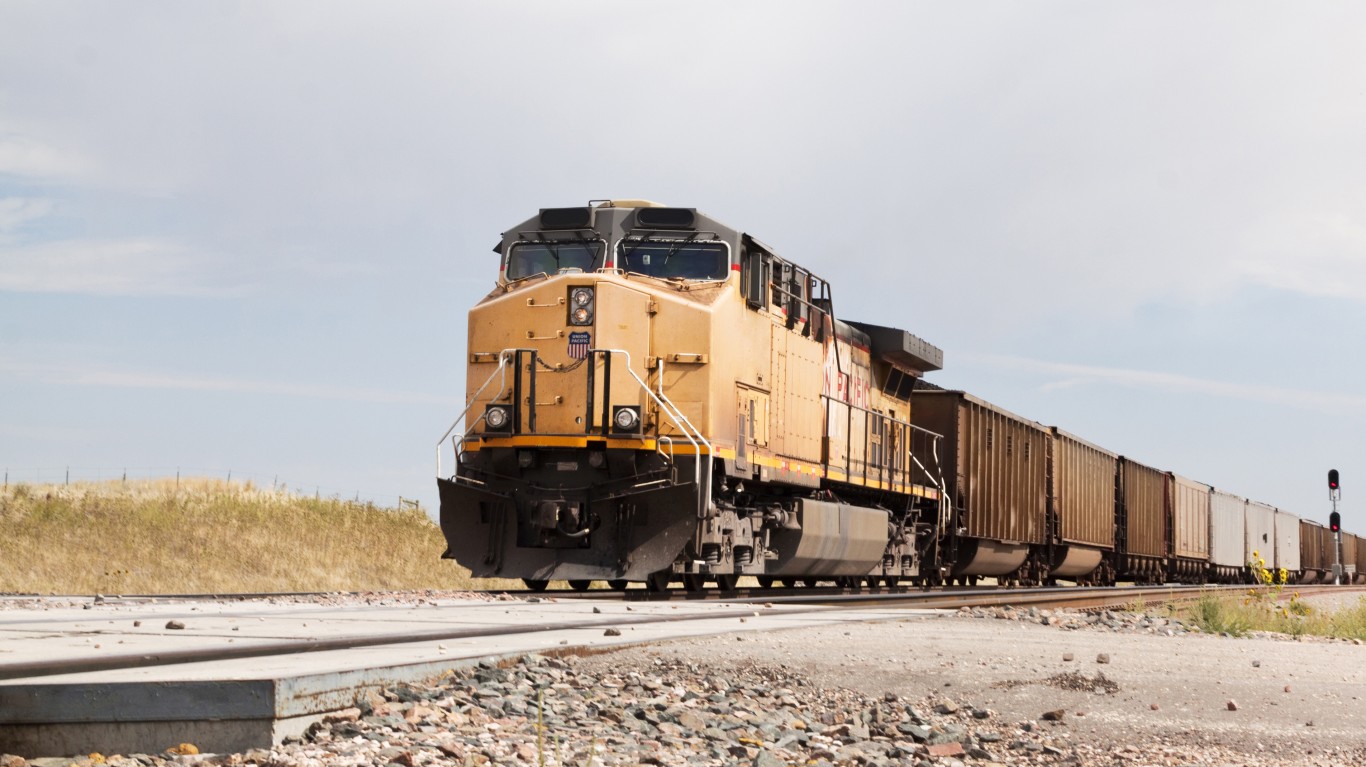
Union Pacific (NYSE:UNP | UNP Price Prediction) or CSX (NASDAQ:CSX): which railroad better fits an income strategy for retirees right now? Both stocks have climbed in 2026. Union Pacific is up 28.63% year-to-date, and CSX is up 39.36%, so the yield you get on a purchase today is smaller than it was in January. We compared the two on income, payout coverage, and risk.


Yield and Dividend Growth: Union Pacific Pays the Bigger Check
Union Pacific raised its quarterly dividend to $1.42 from $1.38, which puts the annualized forward payout at $5.68 per share. The stock yields 1.83% on trailing payments. CSX pays $0.14 a quarter, or $0.56 annualized, for a yield of 1.08%.
CSX has raised its dividend faster recently. Its quarterly payout is up about 27% from $0.11 in 2023, while Union Pacific’s is up about 9% from $1.30. Union Pacific has the longer run, though. Its CFO said the third-quarter increase marked “the 20th consecutive year providing our shareholders with an annual dividend raise.” For a retiree living on dividends, the larger yield today has the most weight. Winner: Union Pacific.
Payout Coverage: CSX Carries the Thicker Cushion
Union Pacific pays out about 43% of trailing earnings: $5.56 in dividends against $12.82 in EPS. CSX pays out about 29%: $0.55 against $1.92. Both payouts are safe, and CSX has more room for error.
Cash flow shows the same gap. In the first nine months of 2026, CSX had about $1.7 billion left after capex and dividends, and it spent $1.049B buying back 23M shares. Management expects free cash flow growth of more than 80% this year. Union Pacific’s year-to-date free cash flow came to $2.4 billion after reinvestment and the dividend. That cash is being saved for the merger, and buybacks fell to $26M from $2.679B a year earlier. Winner: CSX.
Volatility and Risk: Union Pacific Swings Less
Union Pacific’s beta is 0.845, compared with CSX’s 1.108. Beta measures how much a stock moves relative to the overall market, and it matters for retirees who may have to sell shares during a downturn. Union Pacific’s main risk is its pending deal for Norfolk Southern (NYSE:NSC), which could bring more debt and a possible credit downgrade. Leverage is reasonable for now, with adjusted debt-to-EBITDA of 2.4x. The CEO has also drawn a clear line: “If anybody thinks we’re going to make a bad deal for Union Pacific, we’re not. We will walk away from this.”
CSX’s risk is in its day-to-day operations. Terminal dwell (how long cars sit in rail yards) rose 12%, carload trip plan performance fell 12%, and train speed slipped 2%. Slower, less reliable service is how railroads lose shippers. Winner: Union Pacific.
Verdict: Union Pacific Is the Retiree’s Railroad
Union Pacific wins two of the three categories, including the two that matter most to someone living off a portfolio: a higher yield today and a steadier stock. Shares also trade at a lower multiple, at 24 times trailing earnings compared with 27 for CSX. The business is still growing. Third-quarter adjusted EPS of $3.53 beat the $3.47 consensus, and management confirmed high-single-digit EPS growth for 2026.


CSX’s profile lines up more closely with an investor a decade or more from retirement. That investor can accept a lower yield today in exchange for faster dividend growth, heavy buybacks, and a low payout ratio that leaves room for more raises. For anyone at or near retirement, Union Pacific offers the stronger income profile. The key thing to watch is the merger’s regulatory review. The public comment deadline is November 18, and the company expects to close the deal in the second half of 2027. Any credit rating action linked to merger debt is the biggest threat to its 20-year run of raises.
Contact [email protected] for any questions or corrections.
Chris Lange is a financial and geopolitical writer with more than a decade of experience covering a myriad of topics. He has published thousands of articles for 24/7 Wall St., with past coverage focused heavily on stocks, IPOs, healthcare, defense, global affairs, and technology.
His work has been quoted, or referenced by a number of outlets including Business Insider, USA Today, Yahoo Finance, MSN, The Motley Fool, and many other publications. A graduate of Southwestern University, he studied business with a focus on investments and has previous experience in banking and startups.
When not reading or writing the news, he is following his passion for Lacrosse, playing chess, or building solar projects with his dad.