ASML Vs. Taiwan Semiconductor: Here’s Why You Choose One as Your AI-Anchor Now

This post may contain links from our sponsors and affiliates, and Flywheel Publishing may receive compensation for actions taken through them.
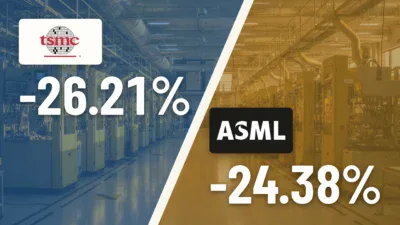
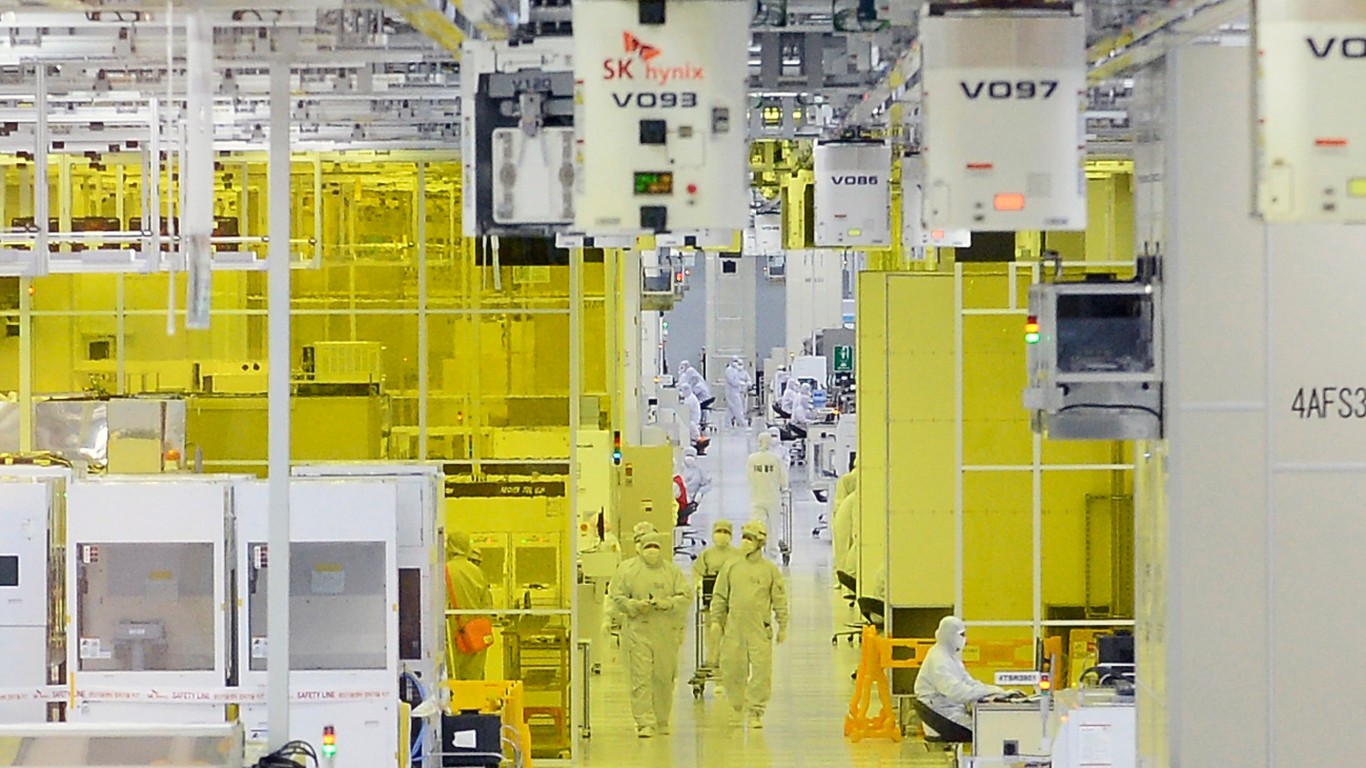
ASML (NASDAQ:ASML | ASML Price Prediction) and Taiwan Semiconductor Manufacturing (NYSE:TSM) reported third-quarter results on October 14 and October 15. Both said AI demand still exceeds supply. ASML builds the lithography machines, and TSMC runs them to make advanced chips. Both stocks fell sharply this past month, so it makes sense to ask which business deserves the core spot.
AI Wafers Fill TSMC’s Fabs While Upgrades Fatten ASML’s Margins
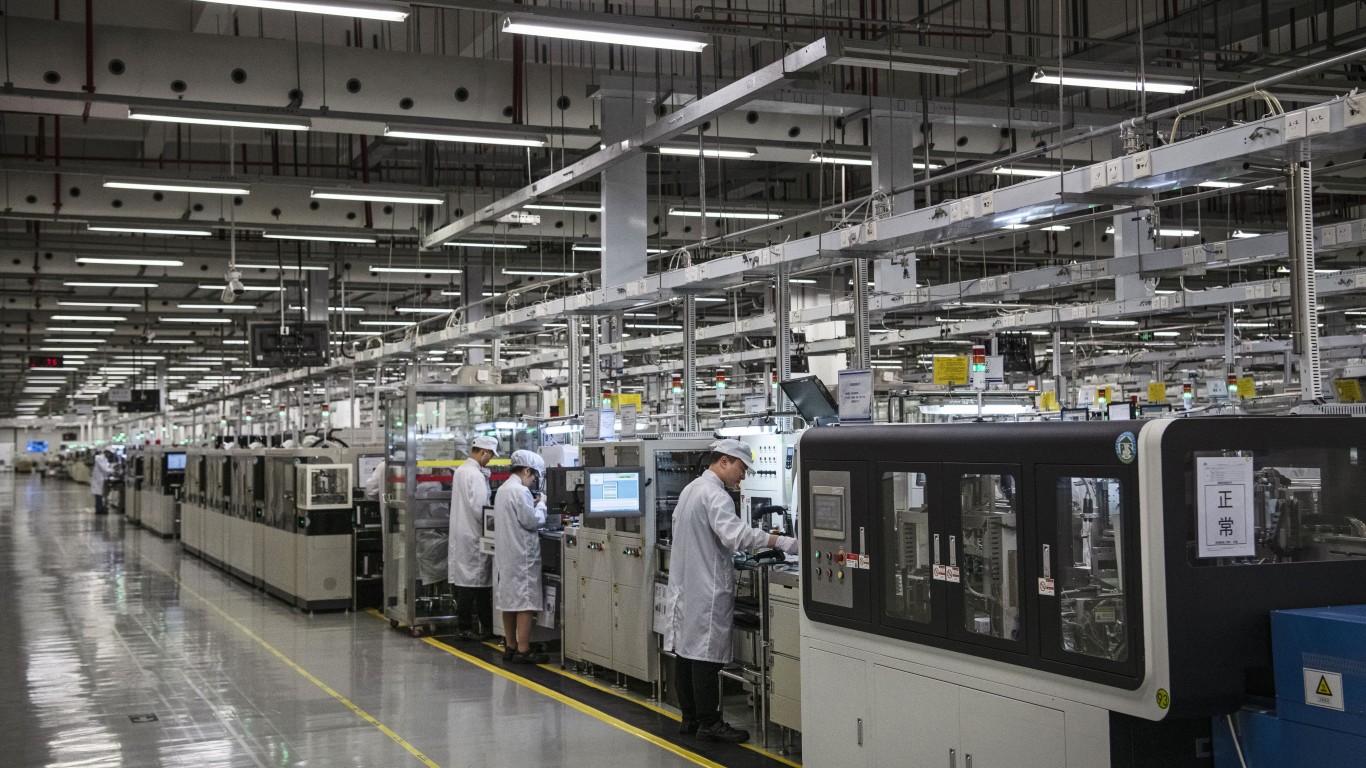
TSMC posted revenue of $46.72 billion[1], up 41.2% year over year. GAAP EPS of $4.60[1] beat the $4.46 consensus. HPC revenue grew 22%[2] sequentially to 68% of the total, which shows AI accelerators now set the agenda. The 2nm ramp cut gross margin by 1.3 points to 66.4%[2]. That is a reasonable cost for leading-edge growth. Chairman and CEO C.C. Wei said: “We did not see any sign of a slowdown.”[2]
ASML posted record net sales of €11.7 billion[3]. EPS of $14.48[4] exceeded the $10.66 consensus, although a $570.65 million investment gain made the beat look bigger. Installed Base Management gave the cleaner signal. It reached €3.3 billion[3], nearly €400 million above guidance, because chipmakers paid for upgrades that get more wafers out of tools they already own. Gross margin reached 57.5%[4].
| Business Driver | TSMC | ASML |
|---|---|---|
| Main Engine | HPC and AI wafers | EUV systems and upgrades |
| Margin Drag | 2nm ramp, overseas fabs | Capacity ramp costs |
| Forward P/E | 14 | 20 |
One Builds Fabs Everywhere. One Rewrites Its Price List.
TSMC has nearly 20 fabs[2] under way worldwide. Overseas fabs cut gross margin by about 2%[2] today, and management expects that to reach 3% to 4% in the next few years. Wei accepts the cost: “We have no intention of leaving food on the table for others.”[2]
ASML holds the scarcer asset. CEO Christophe Fouquet said planned supply for 2027 and 2028 “will not fully meet the demand,”[4] and some customers want to order for 2029 and even 2030[3]. Value-based price increases begin to show in 2027[3], with the full effect from 2028. Among the risks, China should make up about 20%[3] of 2026 sales, which leaves ASML exposed to export rules. TSMC also plans to adopt High NA EUV in 2030[3], later than Samsung’s 2028 target.
Q4 Guidance and 2nm Margins Set the Next Test
The key question for TSMC is whether it hits its Q4 revenue guidance of $52.3 billion to $54.3 billion[1] while keeping gross margin near 66%[2] as N2 capacity more than doubles in 2027. For ASML, track Q4 sales against its €14.2 billion to €15.2 billion[3] guidance and early 2027 shipments of the NXE:3800F, rated at 260 wafers per hour.
Why I Lean Toward TSMC as My AI Anchor
For me, TSMC offers more AI exposure per dollar. It trades at 14 times forward earnings, compared with 20 for ASML. It also serves 534 customers, so it grows with nearly every accelerator design that ships. Taiwan risk is real and remains the key exposure in the investment case.
ASML offers a structural compounding profile whose pricing power fully arrives from 2028. Over the past month TSMC fell 26.21% and ASML fell 24.38%, which lowers valuations for both. I would revisit my view if overseas dilution goes above 4% or if ASML turns its 2029 interest into binding orders.
Contact [email protected] for any questions or corrections.
Alex Sirois is a financial writer with experience spanning both retail and institutional investing. He has written for InvestorPlace and held roles at BNY Mellon and Bernstein, giving him a perspective that bridges Main Street portfolios and Wall Street analysis.
Alex holds an MBA from George Washington University and has built his career across multiple industries, including e-commerce, education, and translation — a breadth of experience that informs how he breaks down complex financial topics for everyday investors. His writing is conversational, actionable, and grounded in long-term, buy-and-hold investing principles.
At 247 Wall St., Alex focuses on delivering analysis that is both accessible and useful, with a clear emphasis on helping readers make more informed decisions with their money.