Michael Burry and Elon Musk Disagree on NVIDIA. It’s Up 32% Today, so What’s Next for NVDA Stock?

This post may contain links from our sponsors and affiliates, and Flywheel Publishing may receive compensation for actions taken through them.

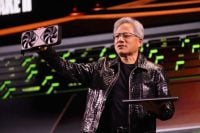
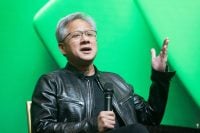
A boardroom reversal at NVIDIA (NASDAQ:NVDA | NVDA Price Prediction) has the chipmaker on pace for one of the largest single-day gains in its history. NVIDIA stock is at $165.83, up 32% as the session extends into the afternoon. The company said on November 23 that Jensen Huang has been reinstated as president and CEO, effective immediately, after the board voted without dissent.
Huang’s return reverses what NVIDIA disclosed on its November 17[1] earnings call, when the company stated he had voluntarily quit and that its board didn’t intend to reinstate him. Colette Kress, NVIDIA’s longtime chief financial officer, had been serving as interim CEO.
Musk and Burry Split on NVIDIA’s Reversal

Tesla (NASDAQ:TSLA) CEO Elon Musk cheered the decision on X, writing, “The mistake has been corrected.” Michael Burry took the opposite view in his own post on X. Burry called NVIDIA “weaker, more craven than even I thought” and pressed regulators to keep looking into.
That split shows up in how Burry is trading. In his Cassandra Unchained newsletter, he revealed that by November 20 he had taken profits on half his NVIDIA puts and half his puts on a semiconductor exchange-traded fund, while keeping his April 2027 NASDAQ 100 puts. He also holds NVIDIA calls as a hedge, mentioning, “Paired to my remaining puts it amounts to a straddle.”
A straddle pays off when a stock makes a large move in either direction, so Burry is positioned for both a further rebound and a fresh slide in NVIDIA. “History says there will be big rallies. I plan to take advantage,” Burry wrote. By Michael Burry’s estimate, bear-market rallies in the 1930s and 2000s averaged 22%[2].
Wall Street Lines Up Behind NVIDIA’s Bull Case
BMO Capital reiterated its Outperform rating on NVIDIA with a $240[3] price target. Melius Research upgraded NVIDIA to Buy with a $220[3] target, and Mizuho reiterated its Buy rating with a $220 target. The Wall Street analysts’ consensus price target for NVIDIA stands at $244.18.

Gene Munster of Deepwater Asset Management observed of Huang, “He got a second life, got his baby back and most importantly has something to prove.” U.S. restrictions on China could trim NVIDIA’s revenue by 2% to 5%[3] next year, according to Gene Munster, who still sees the company growing more than 60% in calendar 2027. NVIDIA’s own outlook calls for Q4 FY2027 revenue of $130 billion, plus or minus 3%.

Micron and AMD Join NVIDIA’s Rally
Mizuho noted Huang’s return could lift memory, optical and analog chip suppliers, and the broader chip group is rising alongside NVIDIA. Micron Technology (NASDAQ:MU) stock is at $704.52, up 19%. That’s a strong advance for the memory maker, though it still trails NVIDIA’s move.
Advanced Micro Devices (NASDAQ:AMD) stock is at $457.01, up 8%. AMD’s gain is the smallest of the three, even as the company competes head-to-head with NVIDIA in AI accelerators.
How NVIDIA’s Business Differs From Its Chip Peers
NVIDIA designs AI graphics processing units (GPUs) and wraps them in its own software and networking stack, including CUDA, NVLink and Spectrum-X. Competing Instinct GPUs come from AMD, along with Helios rack-scale systems and EPYC server processors backed by its open ROCm software, which lacks CUDA’s entrenched developer base.
Both chip designers rely on Taiwan Semiconductor Manufacturing (NYSE:TSM), the contract foundry that fabricates leading-edge silicon for NVIDIA, AMD and others. Micron manufactures the high-bandwidth memory (HBM) and other memory chips that sit inside AI accelerators. That makes Micron a key NVIDIA supplier, while Taiwan Semiconductor gains from orders placed by either designer.
Washington’s Questions Hang Over NVIDIA’s Rebound
The bears have fresh material from Capitol Hill. Rep. Raja Krishnamoorthi called the reinstatement “outrageous” and wants Huang to testify publicly, while Sen. Elizabeth Warren maintained his return doesn’t resolve Congress’s questions. Governance, export controls and national security oversight at NVIDIA remain unresolved, and the company flagged an ongoing independent board committee investigation[4] in its Q3 FY2027 results.
NVIDIA stock is still down 11% year to date. Now the question is whether the gains hold, matching Burry’s “big rallies” playbook against Wall Street’s bullish targets. Traders can watch for Washington’s response and the Personal Consumption Expenditures (PCE) inflation report due November 25, ahead of the Thanksgiving market closure on November 26. A conservative investment approach could be warranted until the Burry and Musk split on NVIDIA resolves.
Contact [email protected] for any questions or corrections.
David Moadel is financial writer specializing in stocks, ETFs, options, precious metals, and Bitcoin. David has written well over 1,000 articles for leading online publications, helping investors understand markets, income strategies, and risk. His work has appeared in 24/7 Wall St., The Motley Fool, InvestorPlace, U.S. News & World Report, TipRanks, ValueWalk, Benzinga, Market Realist, MarketScreener, TalkMarkets, Finmasters, and others. With a master’s degree in education, David has taught at the elementary, high school, and college levels. That teaching background shapes his writing style: clear, educational, and practical. David has also built a loyal social-media audience by providing trustworthy financial content on YouTube, X/Twitter, and StockTwits.