Anthropic’s Frenemy Squeeze: Pledging Up to $49B to Microsoft While Building Its Own Landlord Escape Hatch

This post may contain links from our sponsors and affiliates, and Flywheel Publishing may receive compensation for actions taken through them.
Microsoft (NASDAQ:MSFT | MSFT Price Prediction) and Amazon (NASDAQ:AMZN) both reported faster cloud growth in late October. Anthropic (NASDAQ: ANT) sits awkwardly between them. The Claude developer reportedly pledged up to $49B in Azure compute, while Amazon remains its primary investor and chip landlord. Anthropic’s IPO filing now describes a third path: its own data centers.
Azure Rode Token Pricing While AWS Rode Its Own Chips
Azure grew 48% to $33.17B[1]. That pace shows demand still running ahead of supply. CFO Amy Hood credited “higher token pricing than we expected in the quarter,”[2] a tailwind that depends on which models customers choose. Satya Nadella treats Anthropic as one similar supplier: “If you’re a coding agent user, you want Anthropic and OpenAI, by the way, to compete for your workload, not once a quarter, but for every task.”[2] OpenAI alone made up 11% of Microsoft revenue, a concentrated exposure to a single customer.
AWS revenue rose 39% to $45.98B[3], its fastest growth in nearly five years. Andy Jassy said most Bedrock work loads now run on Trainium, and customers using Amazon’s custom chips saved more than $2 billion in Q3 alone[4]. Microsoft is still scaling that kind of cost advantage with its Maia chips.
| Lens | Microsoft | Amazon |
|---|---|---|
| Contracted backlog | $677B commercial RPO[2] | $578B AWS backlog[4] |
| Silicon | NVIDIA (NASDAQ:NVDA) GB300s dominate, plus Maia | Trainium runs most Bedrock work |
| Capex plan | ~$170B calendar year[2] | ~$220B in 2026[4] |
| Anthropic role | Azure customer, routed model | Investor and chip landlord |
Anthropic’s Escape Hatch Squeezes Microsoft Harder
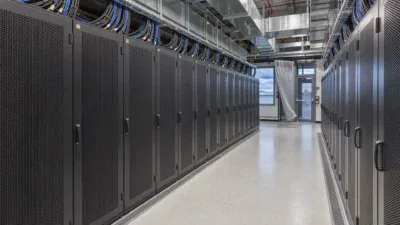
Anthropic’s S-1 describes “Anthropic Direct,” a setup in which the company buys accelerators directly and runs them in dedicated rented facilities. Its first data center facility became operational this year, and Anthropic expects Direct to represent “a growing share of our compute investments over time.” Most of that committed spending lands between 2031 and 2045.
Microsoft’s weighted average RPO duration is 2.3 years[2], so near-term Anthropic revenue looks locked in. The risk shows up when contracts come up for renewal and Anthropic owns its own racks. Microsoft also leans on third-party GPU suppliers, and Jassy said neoclouds run about 3,500 basis points worse in operating margin[4] than long-leased sites.
Amazon faces the same escape but holds a stronger hook. It plans to sell Trainium outside AWS late in 2027[4], so Anthropic’s own data centers could still run Amazon chips. That remains unproven.
Q2 Azure Margins and Trainium’s Outside Debut Come Next
Microsoft guided Q2 Azure growth of 49% to 50% in constant currency[2], with Microsoft Cloud gross margin near 65%. My focus is on whether that margin keeps sliding as Azure becomes a bigger part of sales. With Amazon, you should track the $42.4B TTM free cash outflow[3].
Why Amazon Fits My Read of This Squeeze Better
Microsoft is the more profitable business, with a 46.8% operating margin against Amazon’s 11.2%. Still, much of its AI growth comes from renting capacity to model labs that are building their own way out. Amazon owns both the chip and a stake in Anthropic. That gives Amazon a structural edge in this power play, alongside a 36 P/E compared with Microsoft’s 27. The market already tends this way: Amazon is up 10.64% this year, while Microsoft is up 2.69%. I would change my view if Microsoft’s own MAI models close the gap with frontier labs.
Contact [email protected] for any questions or corrections.
Alex Sirois is a financial writer with experience spanning both retail and institutional investing. He has written for InvestorPlace and held roles at BNY Mellon and Bernstein, giving him a perspective that bridges Main Street portfolios and Wall Street analysis.
Alex holds an MBA from George Washington University and has built his career across multiple industries, including e-commerce, education, and translation — a breadth of experience that informs how he breaks down complex financial topics for everyday investors. His writing is conversational, actionable, and grounded in long-term, buy-and-hold investing principles.
At 247 Wall St., Alex focuses on delivering analysis that is both accessible and useful, with a clear emphasis on helping readers make more informed decisions with their money.