Jensen Huang Is Back at Nvidia, but Wall Street Is Already Getting Nervous Again

This post may contain links from our sponsors and affiliates, and Flywheel Publishing may receive compensation for actions taken through them.
Wall Street’s enthusiasm for artificial intelligence (AI) has rarely been more apparent than during Monday’s trading session. After seven consecutive losing sessions, the S&P 500 surged 4.73%, while the Nasdaq Composite gained 6.51%. Investors had rediscovered their appetite for technology stocks almost overnight.
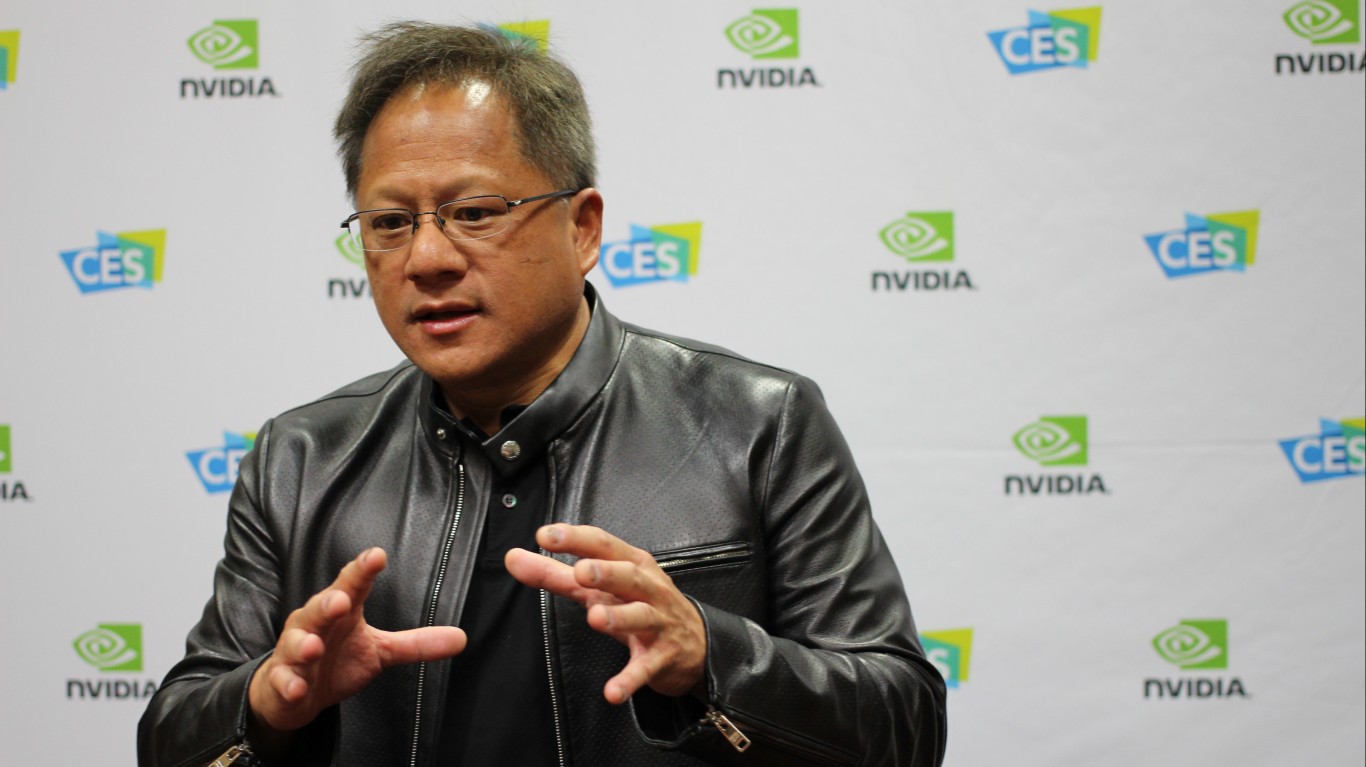
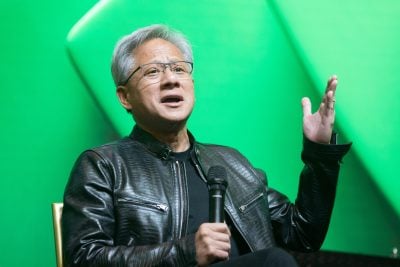
The catalyst was the return of Jensen Huang as CEO of Nvidia (NASDAQ:NVDA | NVDA Price Prediction), whose stock gained 31.48% on Monday alone.
Yet restoring Huang to the corner office doesn’t resolve the economic and financial challenges facing the AI industry. Investors may have removed one enormous source of uncertainty, but several others remain — and they extend well beyond the chipmaker.
Indeed, the early enthusiasm is already fading. The Associated Press reported Tuesday morning that the S&P 500 was down 1.1%, the Nasdaq was down 1.6%, and Nvidia shares had fallen 5.9% during regular trading.
A $952 Billion Vote of Confidence
Monday’s Nvidia-led stock market rally was unlike anything Wall Street had previously experienced from an individual stock.
Nvidia added $952 billion to its market capitalization, according to Opening Bell Daily, more than doubling the previous single-day record of $450 billion established by Microsoft (NASDAQ:MSFT) in July. Nvidia is once again worth nearly $4 trillion.
Huang’s reinstatement just 11 days after his resignation restores continuity to the world’s leading AI chipmaker. Customers, suppliers, and shareholders have greater certainty about its strategic direction.
However, Nvidia’s board expressing confidence in Huang doesn’t end the government’s scrutiny. Reuters reports the CEO is scheduled to begin testifying before Congress on Dec. 3, while tighter restrictions on semiconductor exports to China remain a possibility.
More importantly for investors, neither Nvidia’s leadership crisis nor its resolution changes the financial challenges facing the businesses buying its chips.
The Financial Risks Haven’t Gone Away
The Federal Reserve’s November Financial Stability Report estimates major AI companies have accumulated more than $3 trillion in off-balance-sheet financial obligations, including data center leases, energy contracts, and financing guarantees.
That’s in addition to more than $800 billion in conventional debt expected among seven major AI companies by year-end.
The economics of AI infrastructure are considerably different depending on which side of the transaction you’re on. Nvidia collects money selling chips, while its customers must generate enough revenue using those chips to justify their purchases.
Microsoft can draw upon profits from established software businesses to finance expansion. Conversely, CoreWeave (NASDAQ:CRWV) generated $21.3 billion in net financing cash inflows during the first nine months of 2026, according to its third-quarter SEC filing.
For businesses dependent on borrowed money, the prospect of rising interest rates makes profitability harder to achieve. Even if Nvidia continues reporting record revenue, deteriorating financial conditions among its customers could eventually translate into slower chip sales.
Wall Street’s Problems Extend Beyond Nvidia
The Federal Reserve’s benchmark interest rate currently stands between 3.75% and 4%, with traders anticipating another quarter-point increase on Dec. 9.
Meanwhile, New York Fed President John Williams said Monday that inflation remains around 3.5%, well above the central bank’s 2% target, and further monetary tightening remains possible.
Higher interest rates make future corporate profits less valuable in today’s dollars, putting pressure on the premium valuations investors pay for growth stocks.
Nor is financing the only obstacle. The Trump administration is threatening to impose new taxes on companies building data centers overseas, while voters supported domestic data center restrictions in 52 of 53 ballot measures earlier this month, according to Ballotpedia.
AI developers are potentially facing higher construction costs, more expensive financing, and fewer places to expand simultaneously. Huang’s return doesn’t remove any of those obstacles.
Key Takeaway
Nvidia remains one of the most important businesses in the global economy, and Huang’s reinstatement removes a meaningful risk for shareholders. Yet Monday’s rally demonstrates how dependent Wall Street has become on a single company and a single investment theme.
Investors shouldn’t abandon AI stocks, but they should distinguish between companies generating cash from AI today and those borrowing against profits they hope to earn tomorrow.
The durability of Wall Street’s recovery ultimately depends less on who’s running Nvidia than on whether its customers can turn their enormous investments into sustainable profits.
Contact [email protected] for any questions or corrections.
After two decades of patrolling the dark corners of suburbia as a police officer, Rich Duprey hung up his badge and gun to begin writing full time about stocks and investing. For the past 20 years, he’s been cruising the markets looking for companies to lock up as long-term holdings in a portfolio while writing extensively on the broad sectors of consumer goods, technology, and industrials. Because his experience isn’t from the typical financial analyst track, Rich is able to break down complex topics into understandable and useful action points for the average investor. His writings have appeared on The Motley Fool, InvestorPlace, Yahoo! Finance, Money Morning, and, of course, 24/7 Wall St. He has been featured in both U.S. and international publications, including MarketWatch, Financial Times, Forbes, Fast Company, and USA Today.