Firefly Aerospace Just Sank 11% in a Week. Can FLY Stock Get Back to Needham’s $35 Price Target?

This post may contain links from our sponsors and affiliates, and Flywheel Publishing may receive compensation for actions taken through them.
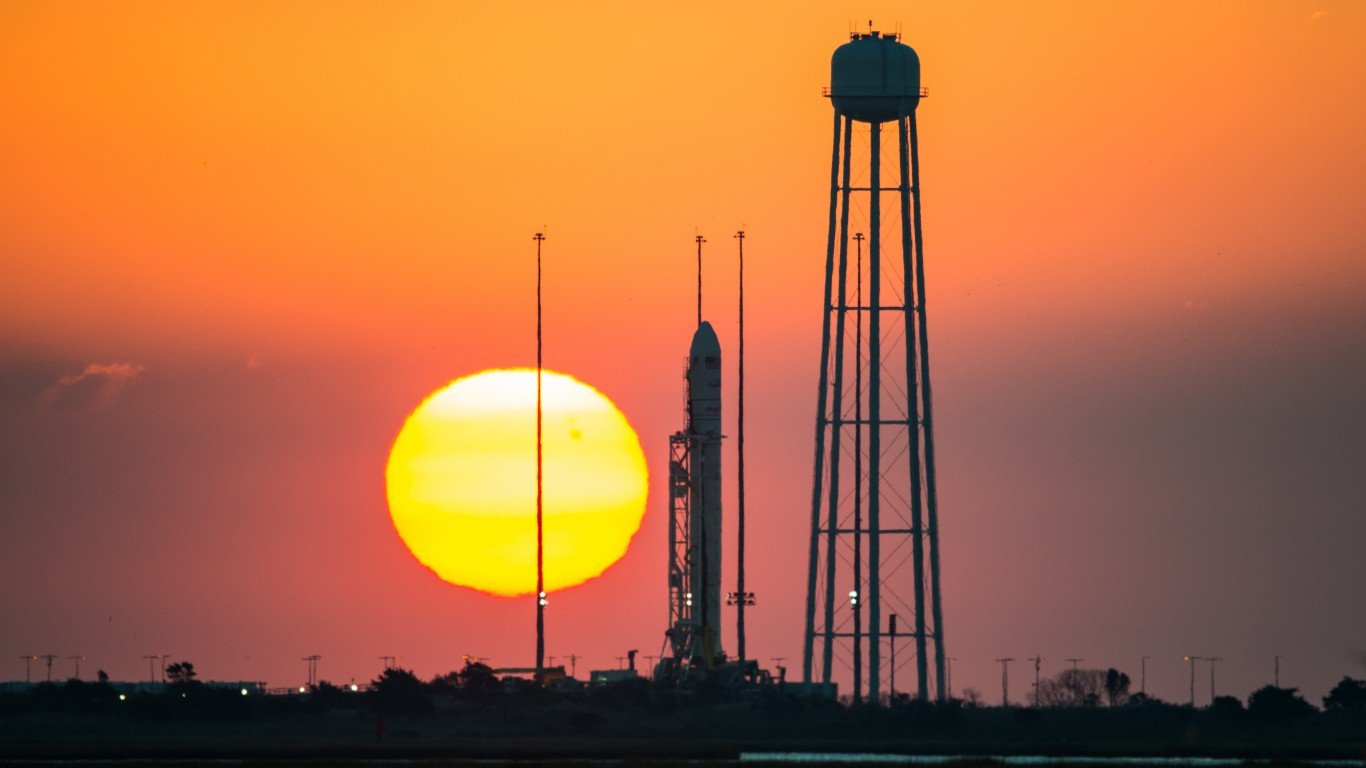
Space stocks slipped as a group over the past five trading days, and Firefly Aerospace (NASDAQ:FLY | FLY Price Prediction) took its share of the hit just as a new analyst turned bullish. Firefly stock is down 11% over that stretch to $18.14 as of Wednesday’s close. Over the past month, the stock is down just 0.6%, so nearly all of the damage landed in the past week.
Year to date, Firefly stock is down 19% through Wednesday’s close. Needham’s new $35[1] price target is a level Firefly stock cleared easily after its debut, when it closed at $60.35 on August 7, 2025. Getting back there from Wednesday’s close would take a gain of 92.9%.
Needham Sees Supply Gaps Firefly Can Fill
On November 25[1], Needham initiated coverage of Firefly stock with a Buy rating. The firm called Firefly a “rapidly maturing” space ecosystem company that’s well positioned to fill “large supply gaps” in the launch market. That view rests on proven success in small- and medium-lift launches and lunar landers, along with what Needham sees as an attractive valuation.
According to Koyfin, 8[1] of the 12 analysts covering Firefly rate the stock a Buy, and four rate it a Hold. Koyfin’s consensus 12-month price target is $36.08[1].

What Firefly’s Backlog Gives the Bulls
The bulls’ biggest talking point is the deal with AST SpaceMobile (NASDAQ:ASTS), which Firefly detailed with its Q3 2026 results on November 10[2]. Contracts to license intellectual property and deliver engines to AST SpaceMobile are worth more than $1.3 billion[3] to Firefly. Under the agreement, Firefly is set to supply 36[1] engines for AST SpaceMobile’s Blacklift rocket.
Firefly’s quarter-end backlog reached a record $1.7 billion[4]. According to its quarterly filing, Q3 revenue rose 259.6%[2] year over year to $110.68 million, and management narrowed its full-year 2026 revenue outlook to $440 million to $450 million.
The launch business adds depth. Synspective, a Japanese satellite company, signed on for up to 10[1] Alpha launches through 2030, Firefly said. Lockheed Martin (NYSE:LMT) extended its agreement with Firefly to cover up to 25[1] Alpha launches through 2031.
Eclipse, the reusable medium-lift rocket Firefly is developing with Northrop Grumman, has its first launch planned for 2027. Beyond launch, Firefly counts five[1] lunar missions in its pipeline, and NASA added the company to its $10 billion[2] Commercial Lunar Payload Services 2 program.
Rocket Lab and SpaceX Slid Right Alongside Firefly
Firefly had plenty of company in the selloff. Shares of Rocket Lab (NASDAQ:RKLB) are down 11% over the past week to $47.02 as of Wednesday’s close. In the past month, Rocket Lab stock is down 13%.
SpaceX (NASDAQ:SPCX) stock is down 11% over the past five trading days to $127.44 as of Wednesday’s close. Over the past month, SpaceX stock is down 13%.
Like Firefly, Rocket Lab pairs an operational small-lift rocket, Electron, with spacecraft manufacturing and a medium-lift vehicle still in development. At the other end of the scale, SpaceX runs heavy-lift launch, the Starlink network and an artificial intelligence business, while Firefly stands out with its SciTec national-security software unit and Blue Ghost lunar landers.
The near-identical moves point to sector-wide selling as the main force behind Firefly’s slide. Meanwhile, the macro background is mixed. The Federal Reserve’s latest Beige Book described a hot U.S. economy with modest price growth and rising wage pressure.
What It Would Take for Firefly to Reach Needham’s $35
Firefly’s path back to Needham’s target runs through three things: Alpha’s launch schedule, Eclipse’s progress and conversion of the backlog into revenue. Alpha’s Block II debut is targeted for Q1 2027[5] after a national-security customer required a manifest change.

Still, the bears have real argument, too. On the November 10 call, Firefly CFO Darren Ma said cash burn could “tick up through next year”[5] as the company commits to support the AST SpaceMobile deal. Any slip in the Block II debut, Miranda engine qualification or AST SpaceMobile deliveries could weigh on the stock.
The bull case rests on a record backlog and multiyear launch contracts that could convert faster once Block II ramps. Now Firefly has to deliver. The same AI-driven data-center and defense demand powering those contracts is why we pulled together a free report on seven suppliers behind the AI expansion, here. A conservative investment approach could make sense until the Alpha Block II debut.
Contact [email protected] for any questions or corrections.
David Moadel is financial writer specializing in stocks, ETFs, options, precious metals, and Bitcoin. David has written well over 1,000 articles for leading online publications, helping investors understand markets, income strategies, and risk. His work has appeared in 24/7 Wall St., The Motley Fool, InvestorPlace, U.S. News & World Report, TipRanks, ValueWalk, Benzinga, Market Realist, MarketScreener, TalkMarkets, Finmasters, and others. With a master’s degree in education, David has taught at the elementary, high school, and college levels. That teaching background shapes his writing style: clear, educational, and practical. David has also built a loyal social-media audience by providing trustworthy financial content on YouTube, X/Twitter, and StockTwits.