Ripple and SBI Launch RLUSD in Japan After JFSA Approval
Japan keeps a short list of foreign dollar stablecoins allowed to operate inside its borders. Its regulators are demanding, and only a couple have ever made the cut, but Ripple’s RLUSD has become the newest name on that list. The…

This post may contain links from our sponsors and affiliates, and Flywheel Publishing may receive compensation for actions taken through them.

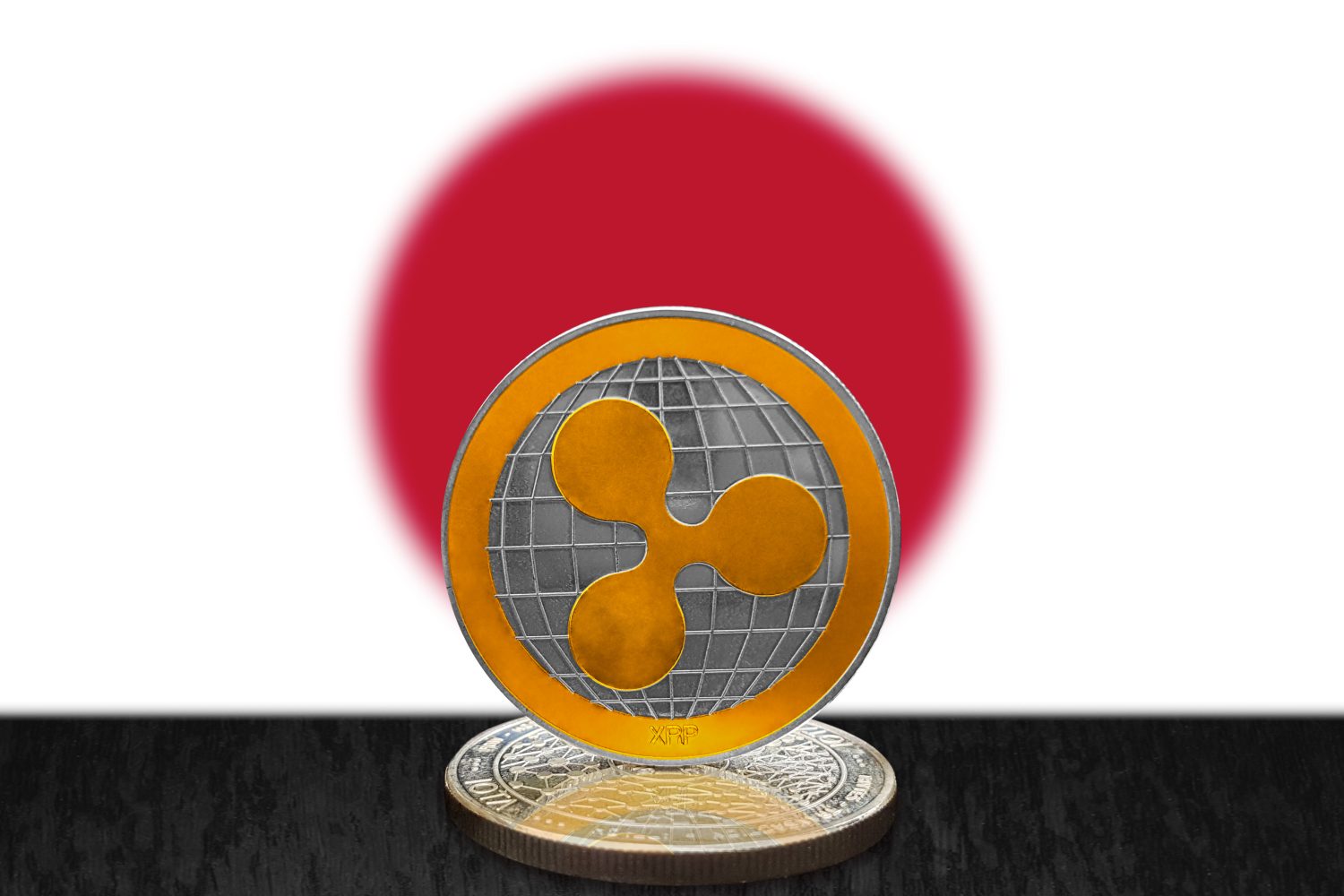
Japan keeps a short list of foreign dollar stablecoins allowed to operate inside its borders. Its regulators are demanding, and only a couple have ever made the cut, but Ripple’s RLUSD has become the newest name on that list.
The approval came from the Japan Financial Services Agency (JFSA)—the country’s top financial regulator—and RLUSD is being distributed by SBI Group. Ripple (CRYPTO:XRP) called it a significant milestone for regulated stablecoins across Asia, and on paper it looks like one. You’ve got a $1.7 billion stablecoin clearing one of the world’s strictest markets, built on a partnership that goes back about a decade.
However, the approval comes wrapped in fine print, and the way RLUSD launched is more modest than the announcement suggests.
What RLUSD’s JFSA Approval Unlocks in Japan

RLUSD cleared Japan’s regulators as the country’s first “Type 4” electronic payment instrument—a new catch-all category for fiat-backed tokens that don’t fit the buckets Japan already had. Getting that far is the hard part, since most dollar tokens that want into Japan never clear the framework at all.
The stablecoin earned that label with the structure the JFSA looks for. RLUSD is issued by Standard Custody & Trust Company, a New York-chartered Ripple subsidiary, and each token is backed by U.S. dollar deposits and short-term Treasuries, with an outside firm publishing monthly reports that verify the reserves are there. In a market that places “a premium on compliance,” as Presto Research’s Rick Maeda put it, that paper trail counts for a lot.
More than the label, the approval widens who can buy and hold RLUSD. It’s now officially available to both institutions and everyday users through SBI VC Trade—the regulated exchange arm of SBI Group. SBI had already started distributing the token back in March, so this isn’t RLUSD’s first day in Japan—June 24 is just the day it crossed from a limited rollout into full, approved availability.
The Fine Print Behind RLUSD’s Japan Launch

For a Ripple product, RLUSD launched in Japan on a surprising blockchain. It wasn’t the XRP Ledger that Ripple built, but Ethereum—its biggest rival. And it’s Ethereum only, so RLUSD on any other chain, including Ripple’s own XRP Ledger, won’t be accepted for deposit. The reason is that most RLUSD already lives on Ethereum, where liquidity and the user base run deeper, so listing there was the fastest route to approval.
Moreover, there’s the size of each transaction to also weigh. RLUSD in Japan is capped at one million yen—roughly $6,200—per transaction. It’s a retail-sized ceiling, and it’s hard to square with how Ripple pitches RLUSD. The company sells it as plumbing for payments, tokenization, and collateral management, which is a type of institutional work that routinely moves far more than $6,200 at a time.
The cap stands out even more when you realize that on the same day—on the same SBI VC Trade platform—SBI rolled out its own yen stablecoin, JPYSC. And that one came with no transaction cap at all, aimed openly at institutions and enterprise settlement. So, the homegrown yen coin got the institutional treatment, while Ripple’s dollar coin got the retail-sized limits.
Why Demand Is the Main Hurdle for RLUSD in Japan
Clearing the regulator was one battle, but getting Japanese institutions to actually use a dollar stablecoin is the bigger one—and there’s fresh data on where they lean. A Nomura and Laser Digital survey of 518 Japanese investment professionals, published in April, found plenty of appetite, with 63% seeing practical uses for stablecoins, from treasury management to cross-border payments.
Meanwhile, the same survey came with a catch for Ripple. Across yen, dollar, and euro, those investors trusted stablecoins from major financial institutions the most. RLUSD doesn’t come from a bank—it comes from Ripple, a crypto company—which puts it on the wrong side of the one thing Japanese institutions said they value most.
On top of that, RLUSD is walking into a crowded room, as USDC already reached Japan first in March 2025, and Tether’s USDT still isn’t approved. JPYSC just went live too, and Japan’s three biggest banks are building a shared yen stablecoin they want running by 2027. For many enterprises, a yen coin from a bank they already trust is the easier pick.
That doesn’t mean RLUSD has no opening, as a regulated dollar coin could do useful work in Japan—settling tokenized securities while that market grows, or moving money through SBI’s live remittance corridors into Southeast Asia. But that work runs well above the per-transaction cap, which is exactly where the limit bites. And at around $1.7 billion against USDT’s $186 billion, RLUSD is still a small player.
One thing that does work in RLUSD’s favor is that the yen recently slid to around 161 per dollar—close to its weakest in nearly 40 years—and when a currency drops like that, holding dollars seems like a no-brainer. That gives RLUSD a reason to exist in Japan beyond novelty, but what’s worth watching is whether any of this turns into actual usage.
RLUSD’s Japan Launch Is a Win, but a Modest One
The approval proves RLUSD can meet Japan’s high bar, which is no small thing. It doesn’t prove there’s much demand, though, and demand is what turns an approval into a business. For now, RLUSD has earned the right to compete in Japan without proving it can win there.
That said, the bottleneck in Japan was never approval, but distribution, and SBI controls it. The same group putting RLUSD in front of users also launched its own yen coin and is helping fund a rival dollar one. So, Ripple’s stablecoin has a foot in the door, though it’s sharing that door with the very partner that opened it. Getting approved was step one, but the main headache—whether anyone in Japan actually reaches for RLUSD—is still wide open.
Contact [email protected] for any questions or corrections.
Sam Daodu is a crypto analyst and the editor of 24/7 Wall St.'s Crypto Desk, where he covers Bitcoin, XRP, Ethereum, Solana and the altcoins investors search for most. His work focuses on price levels, spot ETF flows, on-chain data and the regulatory decisions that move crypto markets, written so a first-time buyer and a seasoned trader can both use it.
Sam has written about crypto professionally since 2019 and has published more than 2,000 articles. Before joining 24/7 Wall St., he wrote for crypto media outlets and Web3 companies and ghostwrote for crypto founders and token launches. His analysis is syndicated on Yahoo Finance, MSN and AOL and has been cited by other crypto news sites. He also founded MacLabs Marketing, a content and personal branding agency for crypto founders and executives.
When he isn't reading charts, Sam is usually at the gym or watching One Piece, a series he maintains has better tokenomics than most altcoins.