XRP Is Down 14% in 2026 While Stellar Is Up 8%. Which Is the Better Buy Now?
XRP and Stellar both serve cross-border payments, but their 2026 price gap tells a story that goes beyond simple performance numbers. The real question is whether that gap reflects a shift in investor confidence or just a quirk of where…

This post may contain links from our sponsors and affiliates, and Flywheel Publishing may receive compensation for actions taken through them.
In 2026, XRP (CRYPTO:XRP) has declined 14%, while Stellar (CRYPTO:XLM) has increased 8%. However, over the past year, both cryptocurrencies have seen similar drops: 44% for XRP and 40% for Stellar. This means that the current year-to-date performance doesn’t tell the whole story of the XRP vs. Stellar comparison.
Both cryptocurrencies had a strong week recently, with XRP gaining 22% from September 16 to September 23, 2026, to $1.58, while Stellar rose 18% to $0.22. The pressing question is: which is worth your investment right now? The answer depends on what each coin offers, why their 2026 performance differs, and what price points they need to clear.
XRP Serves Banks and Stellar Serves Remittance Firms

XRP functions as the settlement asset on the XRP Ledger, a public blockchain platform that Ripple, a private company, markets to banks, payment firms, and corporate treasury operations. Ripple’s On-Demand Liquidity service uses XRP as a bridge to transfer funds between currencies, allowing institutions to send money abroad without first holding cash in foreign accounts.
In contrast, Stellar operates on a different blockchain designed for smaller transactions. The Stellar Development Foundation, a nonprofit organization, oversees this network. Stellar primarily serves remittance companies, aid organizations, and fintech applications in developing markets. For example, MoneyGram has utilized Stellar to facilitate cash transfers and connections to the USDC stablecoin.
Both blockchains facilitate cross-border money movement, but their target customers differ. XRP focuses on large financial institutions, while Stellar caters to those making numerous smaller transactions.
Stellar’s 2026 Lead Comes From Where Each Coin Started the Year
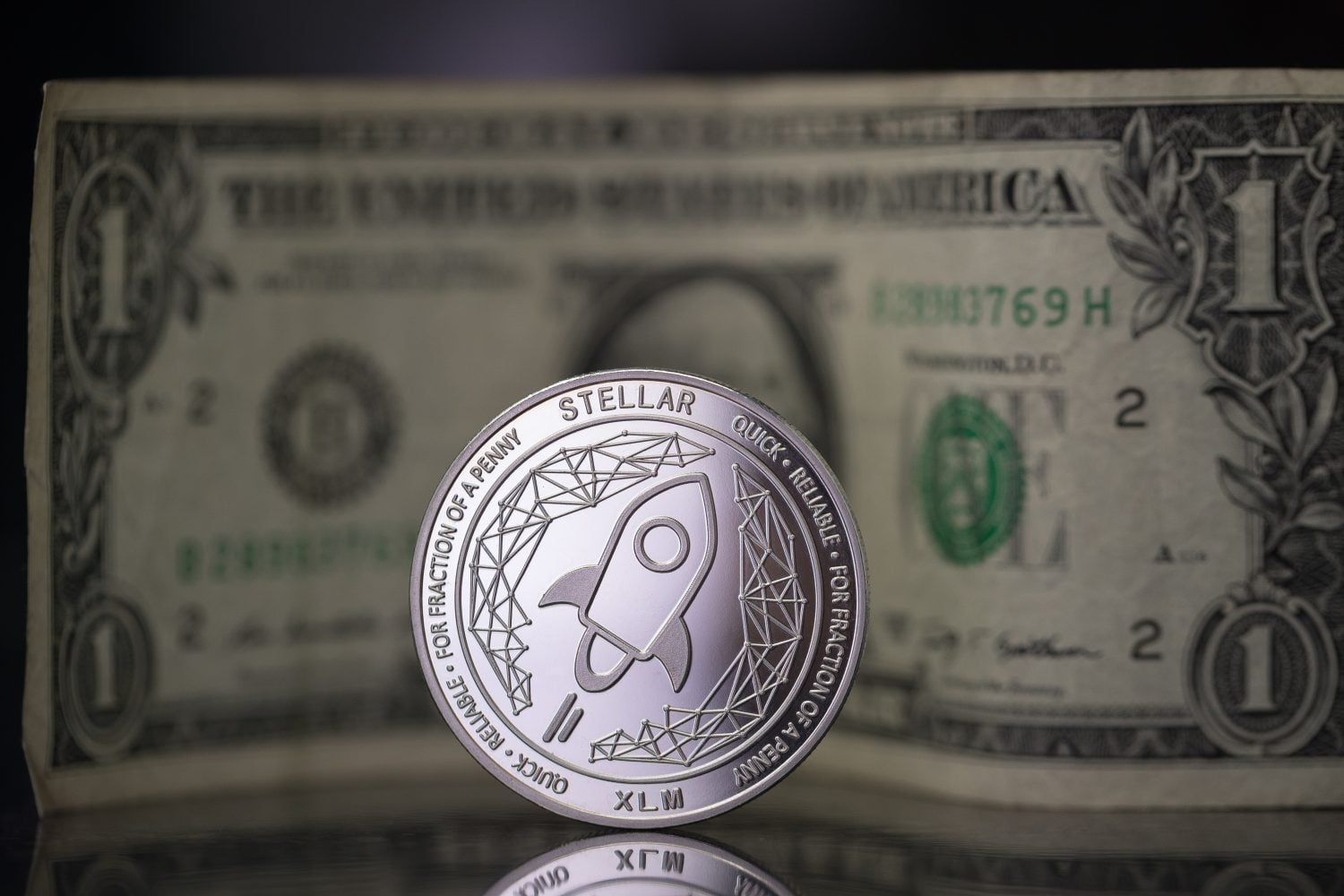
Each coin’s starting price on January 1, 2026, largely explains its performance this year. XRP opened the year at $1.84, still adjusting from a July 2025 high of $3.65. It continued to decline, reaching a low of $0.99 in August. In contrast, Stellar began 2026 at $0.20, near the bottom of its own downward trend after a July 2025 peak of $0.52. It hit $0.14 in February before beginning its recovery.
At the start of the year, XRP was relatively high on its downward path, while Stellar was near its low point. This dynamic benefits Stellar’s performance in 2026, suggesting the gap is more about timing than the strength of their networks. The annual statistics reflect that both coins have dropped similarly over the past year.
XRP has bounced back more quickly from its summer lows, climbing from a close of $1.00 on August 18 to $1.46 by August 22—a 46% increase in just four days. Since then, it has recovered from a dip following the Senate vote on the CLARITY Act on September 15. Measured from August 23 onward, XRP’s rise has been slightly slower, gaining 7% compared to Stellar’s 12%, suggesting both cryptocurrencies have been moving closely together since.
XRP Needs a Close Above $1.61, and Stellar Needs One Above $0.223
For XRP, it needs to maintain a close above $1.61, which it reached as an intraday high on September 22, and is now trading at $1.58—about 2% below that level. If XRP can close above $1.61, it could establish a new upward trend. On the downside, if it falls back below $1.25, its low on September 16, it could negate the recent rally.
Stellar is similarly in a crucial position. It must close above $0.223, an intraday high from August 22, but currently trades at $0.217, roughly 3% below that mark. Until it passes this level, Stellar’s 2026 gains can still be viewed as part of a recovery from February’s low of $0.14. A drop back below $0.183, the closing price from September 17, could erase some of its recent gains.
Is XRP or Stellar the Better Buy Now?
In our view, XRP represents the more compelling investment opportunity. Both cryptocurrencies have fallen similarly over the past year, so Stellar’s lead in 2026 likely reflects its starting point rather than a stronger year overall. XRP also has more institutional backing and has successfully attracted $1.71 billion in spot XRP investments since those funds launched.
The call to act on XRP hinges on two price levels: closing above $1.61 to confirm the upward trend, or dropping below $1.25 to indicate a reversal. If XRP breaks through $1.61 before Stellar surpasses $0.223, it would indicate solid support from the funds and institutions behind XRP. Conversely, if Stellar breaks out first while XRP struggles below $1.61, it might suggest that buyer interest is shifting toward Stellar’s focus on smaller transactions as we head into the fourth quarter.
Contact [email protected] for any questions or corrections.
Sam Daodu is a crypto analyst who's spent nearly a decade making blockchain understandable—no easy task when most whitepapers read like fever dreams. He writes for 24/7 Wall St., covering Bitcoin, altcoins, and crypto market analysis for investors. Before crypto, he was a tech writer (back when explaining "the cloud" was peak innovation). Since 2018, he's written for CoinTelegraph, Yahoo Finance, The Block, Cryptonews, Zypto, Rain, and more—basically anywhere people want crypto news without the headache. Sam runs MacLabs Marketing, a content agency for crypto brands tired of sounding like AI wrote their website. He also publishes free crypto education on his site for Web3 enthusiasts who think "gas fees" is a typo. When he's not writing or staring at charts, Sam's either: - Watching anime (currently convinced One Piece has better tokenomics than most altcoins) - At the gym sculpting himself into a Greek god - Listening to the music your mum warned you only bad boys listen to Connect: LinkedIn | Email | MacLabs Marketing