Tether Brings Its $184 Billion Stablecoin Back to Bitcoin: Will BTC Regain Its Role as a Payments Network?
Tether is bringing its $184 billion stablecoin back to Bitcoin for the first time in over a decade, but the technology powering this comeback raises serious questions about whether Bitcoin holders and miners stand to gain anything at all.

This post may contain links from our sponsors and affiliates, and Flywheel Publishing may receive compensation for actions taken through them.
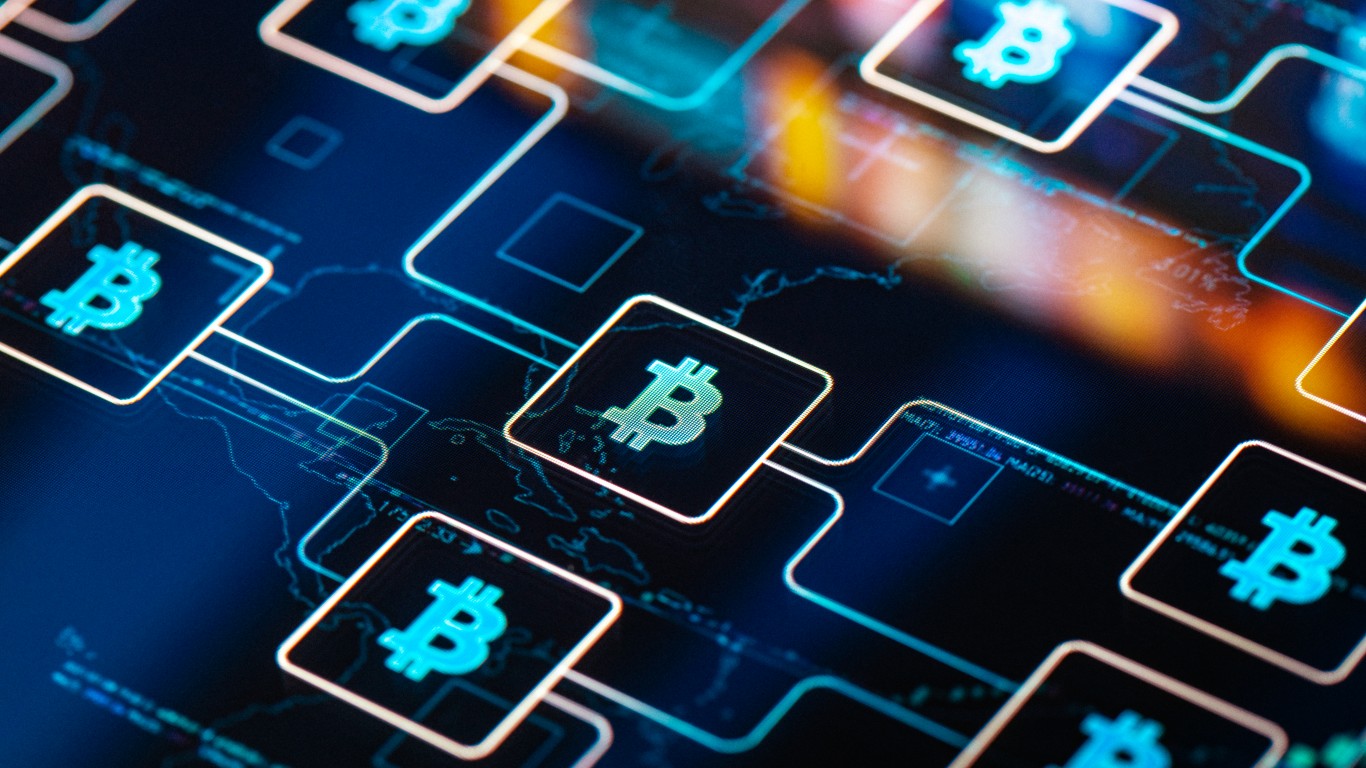
Tether is set to relaunch its USDT (CRYPTO: USDT) stablecoin on the Bitcoin (CRYPTO: BTC) network in October 2026, marking a return 12 years after its initial launch. This new integration will connect Bitcoin, the oldest blockchain, directly with USDT, the largest stablecoin valued at around $184 billion, designed to maintain a value of $1.
In previous years, USDT shifted away from Bitcoin to take advantage of faster and cheaper networks, predominantly operating on platforms like Tron and Ethereum. Tether CEO Paolo Ardoino captured the sentiment of this return with the phrase, “It’s coming home.” But does this move mean that Bitcoin will become a payments network again?
Tether Is Returning USDT to Bitcoin Through Utexo and RGB
Tether originally launched USDT on Bitcoin in 2014 using the Omni protocol, which recorded tokens on the Bitcoin blockchain. This time, Utexo—a company backed by Tether with a license to distribute USDT under Tether’s brand through exchanges, wallets, and payment providers —will issue USDT.
Utexo builds on the RGB protocol, which enables tokens to operate on Bitcoin while keeping most transaction details private off the public ledger. This design enables private transfers, direct exchanges between BTC and USDT, and Bitcoin-backed loans without creating additional tokens. Utexo also plans to integrate USDT into the Lightning Network, Bitcoin’s faster payment layer.
USDT on Bitcoin Leaves BTC’s Supply Unchanged and Adds Few Miner Fees
Bitcoin holders might find the launch less beneficial than it appears at first glance. A USDT balance on Bitcoin represents a dollar claim on Tether, meaning it offers no exposure to Bitcoin’s price fluctuations, and the limits and rules governing Bitcoin’s 21 million coins remain unchanged. As with XRP, increased network activity does not automatically increase demand for BTC.
Miners may also earn less than expected. They generate new coins alongside transaction fees for recording each transaction. However, as the reward for mining new coins halves roughly every four years, fees need to pay for Bitcoin’s security over time. The RGB protocol keeps most transfer data off Bitcoin’s main chain, resulting in significantly lower fee revenue from USDT transactions than from full on-chain transfers.
The privacy aspect could spark more interest than potential fees. Researchers have already suggested integrating shielded Bitcoin using Zcash’s privacy technology, and private dollar transfers on Bitcoin could appeal to businesses that don’t want every transaction visible on a public ledger.
Tron and Ethereum Carry Most USDT, and Bitcoin Payments Have Struggled
Competition poses a significant obstacle to Bitcoin’s resurgence as a payments network. For years, exchanges, wallets, and payment apps have handled USDT deposits and withdrawals primarily on Tron and Ethereum, where transfers are faster and cheaper. So far, Tether has not disclosed any exchanges or payment companies that plan to support the Bitcoin version.
Furthermore, Bitcoin’s inherent design can hinder heavy payment traffic. It adds a new block about every 10 minutes, which simplifies verification but limits the number of transactions it can process—leading to higher fees and longer wait times during periods of high demand. The Lightning Network was created to address this issue, so Utexo’s plan to add USDT to the Lightning Network will be crucial to its success.
El Salvador illustrates the struggle Bitcoin has faced as a payment method. Although the country adopted Bitcoin as legal tender in 2021, a University of Central America survey revealed that 92% of Salvadorans reported not using it in 2024. Recently, on September 29, the government announced plans for a stablecoin platform called Sivar on Coinbase’s Base network, rather than building it on Bitcoin.
Can USDT on Bitcoin Make BTC a Payments Network Again?
Not with this launch alone. While USDT on Bitcoin offers a dollar-backed token for payments, private transfers, and swaps, Tron and Ethereum still hold most USDT. Additionally, El Salvador has opted for another blockchain for its stablecoin initiatives. As a result, this relaunch primarily benefits Tether by reaching new users, while Bitcoin holders see minimal short-term change in BTC price or miner income.
Tether provides regular updates on how much USDT it has issued on each network, making it easy to track progress. If major exchanges begin to support Bitcoin-based USDT and its supply increases steadily through March 2027, particularly with Lightning support in place, Bitcoin could reclaim a portion of the payments landscape.
On the other hand, if USDT’s supply on Bitcoin remains relatively small compared to Tron and Ethereum, this relaunch might simply add another token to the mix without significantly increasing payment activity on Bitcoin.
Contact [email protected] for any questions or corrections.
Sam Daodu is a crypto analyst who's spent nearly a decade making blockchain understandable—no easy task when most whitepapers read like fever dreams. He writes for 24/7 Wall St., covering Bitcoin, altcoins, and crypto market analysis for investors. Before crypto, he was a tech writer (back when explaining "the cloud" was peak innovation). Since 2018, he's written for CoinTelegraph, Yahoo Finance, The Block, Cryptonews, Zypto, Rain, and more—basically anywhere people want crypto news without the headache. Sam runs MacLabs Marketing, a content agency for crypto brands tired of sounding like AI wrote their website. He also publishes free crypto education on his site for Web3 enthusiasts who think "gas fees" is a typo. When he's not writing or staring at charts, Sam's either: - Watching anime (currently convinced One Piece has better tokenomics than most altcoins) - At the gym sculpting himself into a Greek god - Listening to the music your mum warned you only bad boys listen to Connect: LinkedIn | Email | MacLabs Marketing