Restaurant Dividends Flashing Warning Signs Income Investors Should Not Ignore
A high yield on a restaurant stock can mean a bargain or a trap, and the difference comes down to numbers most investors never check before buying.

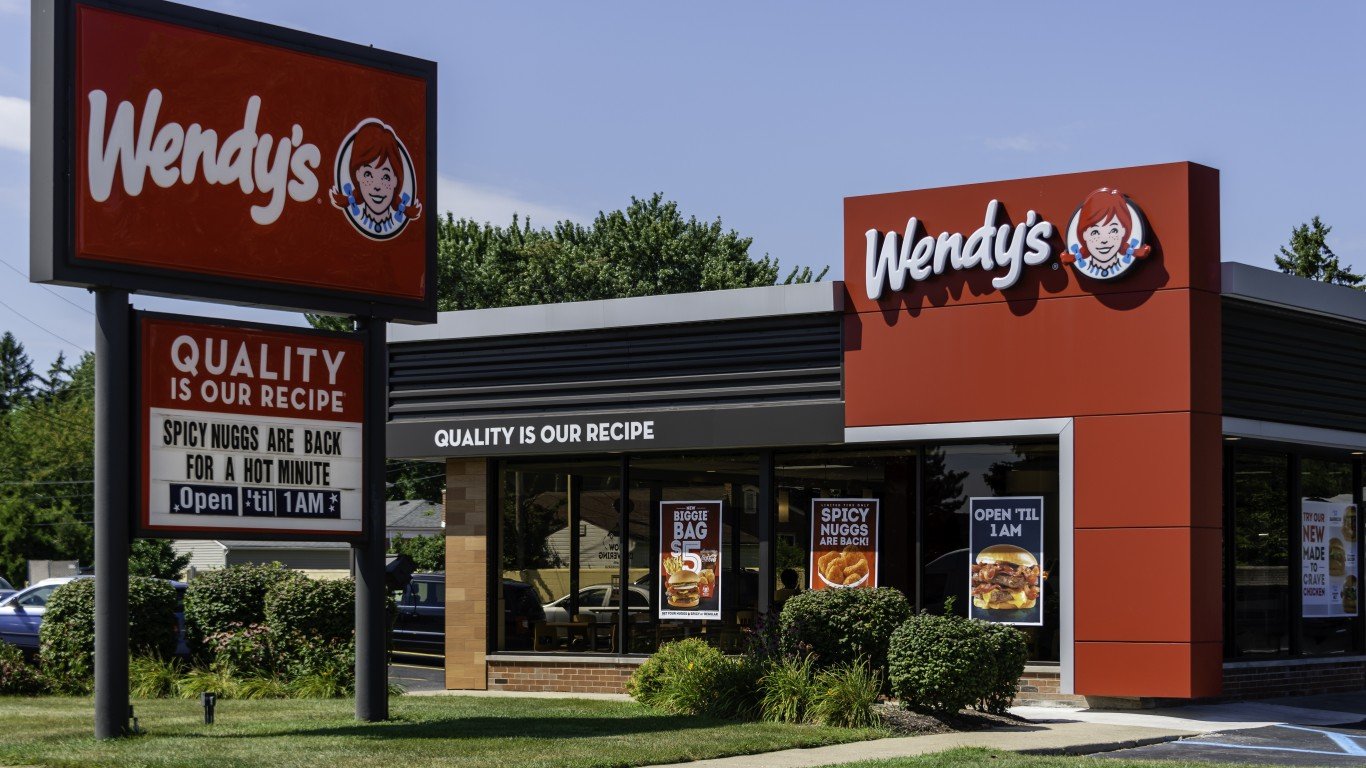
Restaurant chains have spent 2026 finding out that weak traffic eventually hits the dividend. Wendy’s (NASDAQ:WEN | WEN Price Prediction) shares have fallen 65.14% over five years, and its board has cut the quarterly payout twice since early 2025. A high yield only matters if the company can keep paying it. Three well-known restaurant names show how fast that ability can wear down, and how to tell real stress from a stock that has simply fallen out of favor.
How a Falling Stock Makes a Yield Look Better
Dividend yield is the annual payout divided by the stock’s price. If the price falls and the payout remains the same, the yield goes up on its own, even though shareholders get nothing extra. A struggling company can end up looking generous. A dividend becomes unsustainable when earnings, free cash flow or the company’s financial position can no longer comfortably pay for it. Check all three before you trust any yield.
Wendy’s (WEN): Two Cuts and a Turnaround Plan Still to Come
Wendy’s now pays $0.07 per quarter, or $0.28 a year. At a share price of $6.12, that works out to a yield of about 4.58%. That is a high yield from a brand everyone knows. Be careful with stock screens that use the past 12 months of payments ($0.49). They show a bigger number than a new buyer will actually collect.
Here, the warning signs turned out to be real. The quarterly dividend went from $0.25 to $0.14 in 2025, then to $0.07 when the company reported results on Aug. 7, 2026. In the second quarter, U.S. same-restaurant sales fell 7% as traffic dropped 12.5%. Net income fell 40.8%, and management withdrew its full-year guidance. On the earnings call, CEO Bob Wright said: “Traffic is down, our value proposition has slipped, and franchisee economics are under pressure.” Net debt is 5.0 times earnings before interest, taxes, depreciation and amortization (EBITDA). The company also needs to refinance about $430 million of debt due in March 2028.
There is a case for the smaller payout. It equals about 42% of trailing diluted earnings per share (EPS) of $0.66, and first-half free cash flow rose to $120.3 million. Still, the chief financial officer said the new rate runs “slightly above” the company’s usual payout of 50% to 60% of adjusted net income. Things to watch: traffic, and the turnaround plan due with the next quarterly report.
Dine Brands Global (DIN): Profits No Longer Cover the Dividend
Dine Brands Global (NYSE:DIN), which has Applebee’s and IHOP, pays $0.19 a quarter, or $0.76 a year. At $29.95, that is a yield of about 2.54%. The low yield is itself the warning. The payout was $0.51 until the company cut it, starting with the December 2025 payment. That was a 62.7% reduction. The stock is down 57.33% over five years.
Even after the cut, the dividend is hard to cover. It equals about 123% of trailing GAAP EPS of $0.62, meaning the company pays out more than it makes. Second-quarter net income fell to $4.3 million from $13.8 million. Adjusted free cash flow for the first half was just $3.7 million, compared with $48.7 million a year earlier. Capital spending rose to $23.2 million from $9.3 million. Shareholders’ equity is negative $292 million. Net interest costs rose to $22.0 million, and cash fell 49.8% to $97.5 million. On top of that, the board approved a new $100 million buyback, which competes with the dividend for very little spare cash.
Adjusted EPS was $1.16 in the second quarter, and management expects remodel spending to “ease as the program advances.” For coverage to recover, Applebee’s same-restaurant sales (down 1.8%) need to turn positive, and the company-owned restaurants need to reach break-even.
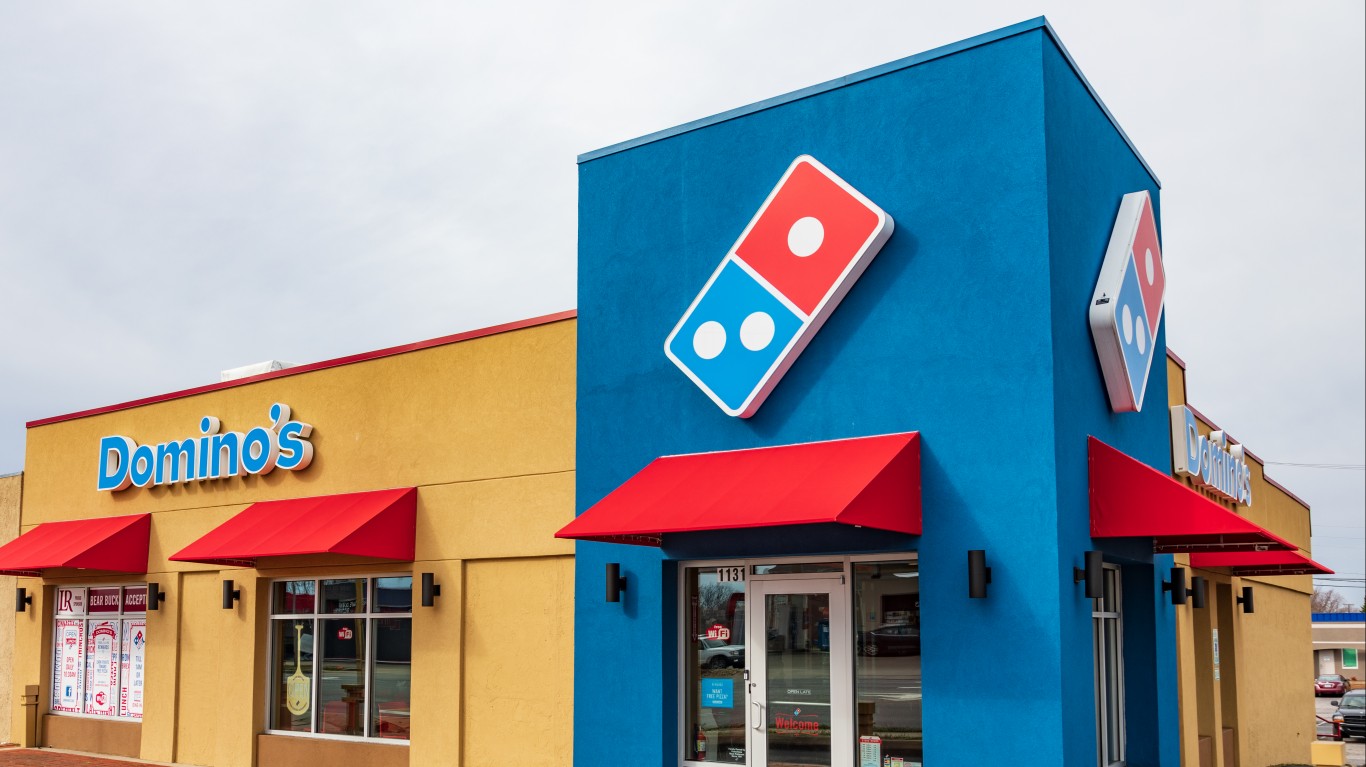
Domino’s Pizza (DPZ): A Fallen Stock With a Dividend That Still Holds Up
Domino’s Pizza (NASDAQ:DPZ) pays $1.99 a quarter, or $7.96 a year. At $297.62, that is a yield of about 2.67%. The stock is down 29.48% over the past year, which drove the yield up. That makes it a useful test case: trap, or a strong company that investors have soured on?
The numbers say the dividend looks sound. It equals about 45% of trailing EPS of $17.65. In 2025, free cash flow came to $671.5 million, which covered $236.9 million in dividends about 2.8 times. The quarterly payout has gone up every year, from $1.21 in 2023 to $1.99 now.
The risks are real but further down the road. Second-quarter U.S. same-store sales rose just 0.1%, and EPS of $4.07 missed expectations of $4.17. Shareholders’ equity is negative $3.98 billion, with $4.77 billion in securitized notes (debt backed by the company’s franchise fees). Domino’s also spent $156.2 million on buybacks in the second quarter, so it has room to scale those back before the dividend comes into question. The thing to watch is whether flat sales growth holds up long enough to strain the debt.
How to Tell a Yield Opportunity From a Yield Warning
A dividend cut usually pulls the stock down too, so a high yield is never a reason to buy on its own. A yield that signals opportunity is covered by earnings and free cash flow with room to spare, on a stock that fell because sentiment turned while the business remains healthy. A yield that signals stress comes with a payout above earnings, cash used up by capital spending or buybacks, and debt rising while traffic falls (we counted seven of these warning signs and put all of them in a free report: Dividend Traps).
Contact [email protected] for any questions or corrections.
Chris Lange is a financial and geopolitical writer with more than a decade of experience covering a myriad of topics. He has published thousands of articles for 24/7 Wall St., with past coverage focused heavily on stocks, IPOs, healthcare, defense, global affairs, and technology.
His work has been quoted, or referenced by a number of outlets including Business Insider, USA Today, Yahoo Finance, MSN, The Motley Fool, and many other publications. A graduate of Southwestern University, he studied business with a focus on investments and has previous experience in banking and startups.
When not reading or writing the news, he is following his passion for Lacrosse, playing chess, or building solar projects with his dad.