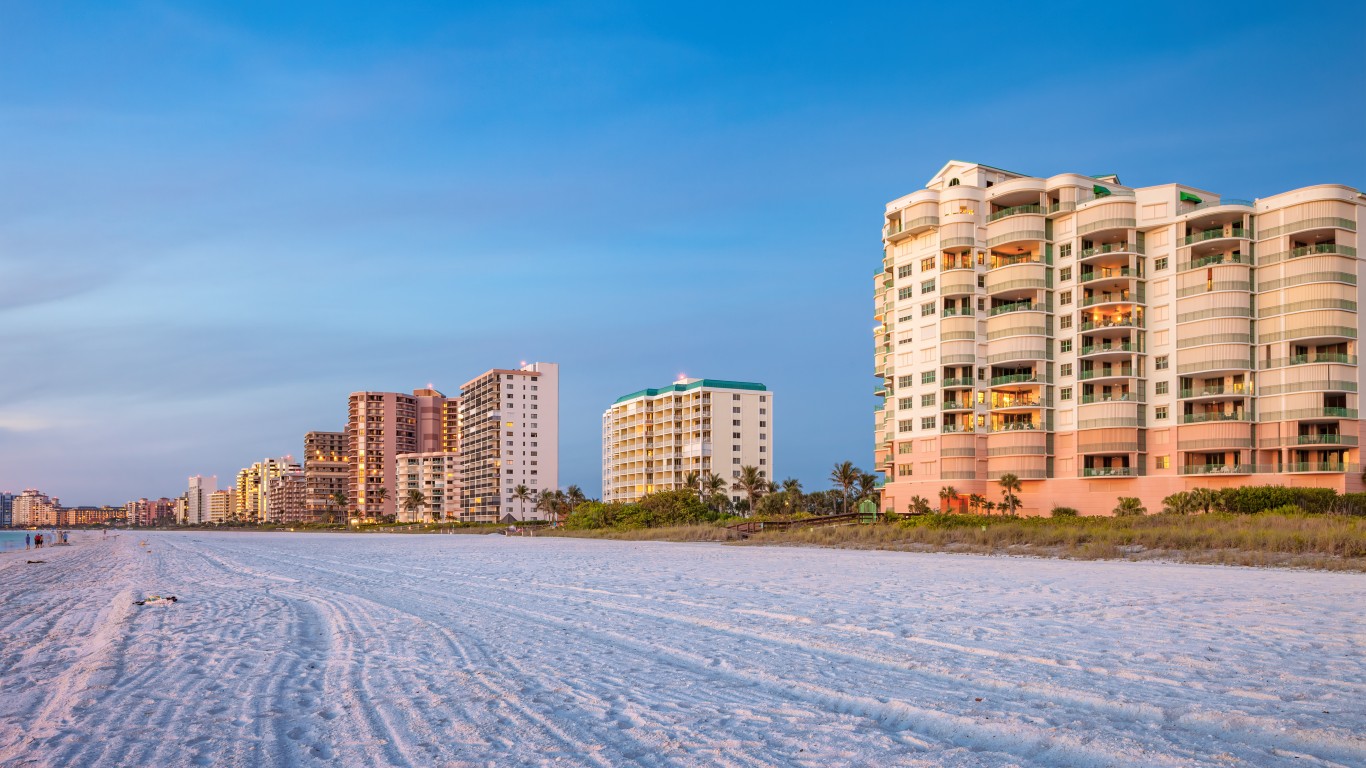
One Spouse Wants Florida and One Wants to Stay Near the Kids. Couples Who Compromised Say It Cost Them Most
Keeping one home near the grandkids and buying a second one in Florida sounds like the perfect retirement compromise, but couples who have tried it say the financial penalty is far steeper than either spouse expected.

This post may contain links from our sponsors and affiliates, and Flywheel Publishing may receive compensation for actions taken through them.
As retirement approaches, couples often face a tough choice about where to live. One spouse has spent years dreaming about winters in Florida. The other wants to stay close to the grandkids, so they try to split the difference by keeping the house up north, buying a place in Florida, and spending part of the year in each. This sounds like a reasonable compromise, but maintaining two homes can make it the most expensive option, and the added cost can change how much you need in your retirement portfolio.
A recent Wall Street Journal feature on retirees who moved to low-tax states found that many of them spend about what they did before, and some spend more. One Lakewood Ranch retiree saw his property taxes rise by more than $2,200 a year, and his HOA dues rose by more than $700 a month. Those surprises cost more for a couple that owns two homes.
Three Budgets for the Same Couple
Picture a 67-year-old couple who own their home outright near the kids. Each claims Social Security at the SSA’s typical retiree benefit of $2,084.40 a month, totaling about $50,000 a year for the two of them. Medicare Part B runs $202.90 a month per person, or $4,870 annually. The healthcare line below adds Medigap and Part D on top of that.
| Line item | Stay near kids | Move to Florida | Split the year |
|---|---|---|---|
| Food, utilities, transport, travel | $60,000 | $60,000 | $60,000 |
| Healthcare | $14,000 | $14,000 | $14,000 |
| Northern home running costs | $16,000 | None | $16,000 |
| Florida home (tax, insurance, HOA, maintenance) | None | $20,000 | $25,000 |
| Travel between family and home | None | $6,000 | $4,000 |
| Reserves, vehicles, gifts, income taxes | $15,000 | $13,000 | $20,000 |
| Total | $105,000 | $113,000 | $139,000 |
Florida’s biggest drawback is insurance, as the average homeowners insurance premium is holding at $8,471 annually, the highest in the country. But there are also some meaningful savings on the other side. Florida has no individual income tax, ranking Number 1 in the Tax Foundation’s index, and a 2023 Vanguard study found that retirees who move to cheaper areas can free up about $100,000 in home
How Much More Portfolio the Compromise Requires
Subtract Social Security from each budget and divide what’s left by 4%. That rate matches a horizon of 25 to 30 years that starts at 67. Staying put takes about $1.375 million. Moving to Florida takes about $1.575 million. Splitting the year takes about $2.225 million, which is $850,000 more than staying near the kids.
Waiting to claim helps because every year of delay past the standard retirement age adds 8% to the benefit, per the SSA. Waiting until 70 raises combined benefits to roughly $62,000. That cuts the split-year target to about $1.925 million. It remains the most expensive option.
Homestead Rules Punish the Two-Home Couple
Many two-home budgets overlook that Florida’s homestead protections apply only to a permanent residence. That includes an exemption of up to $51,411 for the 2026 tax year and a 3% annual cap on assessment increases. Staying domiciled up north leaves their Florida house classified as non-homestead property. Its assessment cap is 10%, so in practice the assessed value tracks the market.
Take a $500,000 house that grows 6% a year. After ten years, the homestead assessment would be about $672,000. The non-homestead assessment would be about $895,000. At 18 mills, that difference adds about $4,000 to the yearly tax bill by year ten.
Losing the exemption adds roughly $925 more. Changing legal residence to Florida would fix the property tax, but invites a residency audit from the home state. The usual result is the couple pays both their home state’s income tax and Florida’s non-homestead property tax.
Distance gets harder to manage, and by the early 80s two houses can become a burden. Wes Moss’s happy-retiree research, published in his book You Can Retire Sooner Than You Think, found friends and community predict satisfaction better than the house or the view. Splitting the year can weaken community ties in both places.
What It Takes to Make Either Answer Work
A couple drawing typical Social Security can fund either single-home choice with about $1.4 million to $1.6 million, withdrawn at 4% from a diversified portfolio. The two-home version needs about $2.2 million, or about $1.9 million if both spouses delay claiming until 70. If the portfolio falls short, renting in Florida for the winter keeps most of the lifestyle without the insurance, maintenance, and non-homestead taxes. Whatever the couple picks, owning homes in two states usually means paying the full cost of both while getting the tax breaks of neither.
Contact [email protected] for any questions or corrections.
David Beren has been a Flywheel Publishing contributor since 2022. Writing for 24/7 Wall St. since 2023, David loves to write about topics of all shapes and sizes. As a technology expert, David focuses heavily on consumer electronics brands, automobiles, and general technology. He has previously written for LifeWire, formerly About.com. As a part-time freelance writer, David’s “day job” has been working on and leading social media for multiple Fortune 100 brands. David loves the flexibility of this field and its ability to reach customers exactly where they like to spend their time. Additionally, David previously published his own blog, TmoNews.com, which reached 3 million readers in its first year. In addition to freelance and social media work, David loves to spend time with his family and children and relive the glory days of video game consoles by playing any retro game console he can get his hands on.