The CFTC Lists XRP and Stellar as Digital Commodities Alongside Bitcoin and Ethereum. Is XRP Officially Not a Security?
The CFTC just named XRP a digital commodity alongside Bitcoin and Ethereum, but that label carries a catch that every XRP holder needs to understand before assuming the security debate is finally settled.

This post may contain links from our sponsors and affiliates, and Flywheel Publishing may receive compensation for actions taken through them.
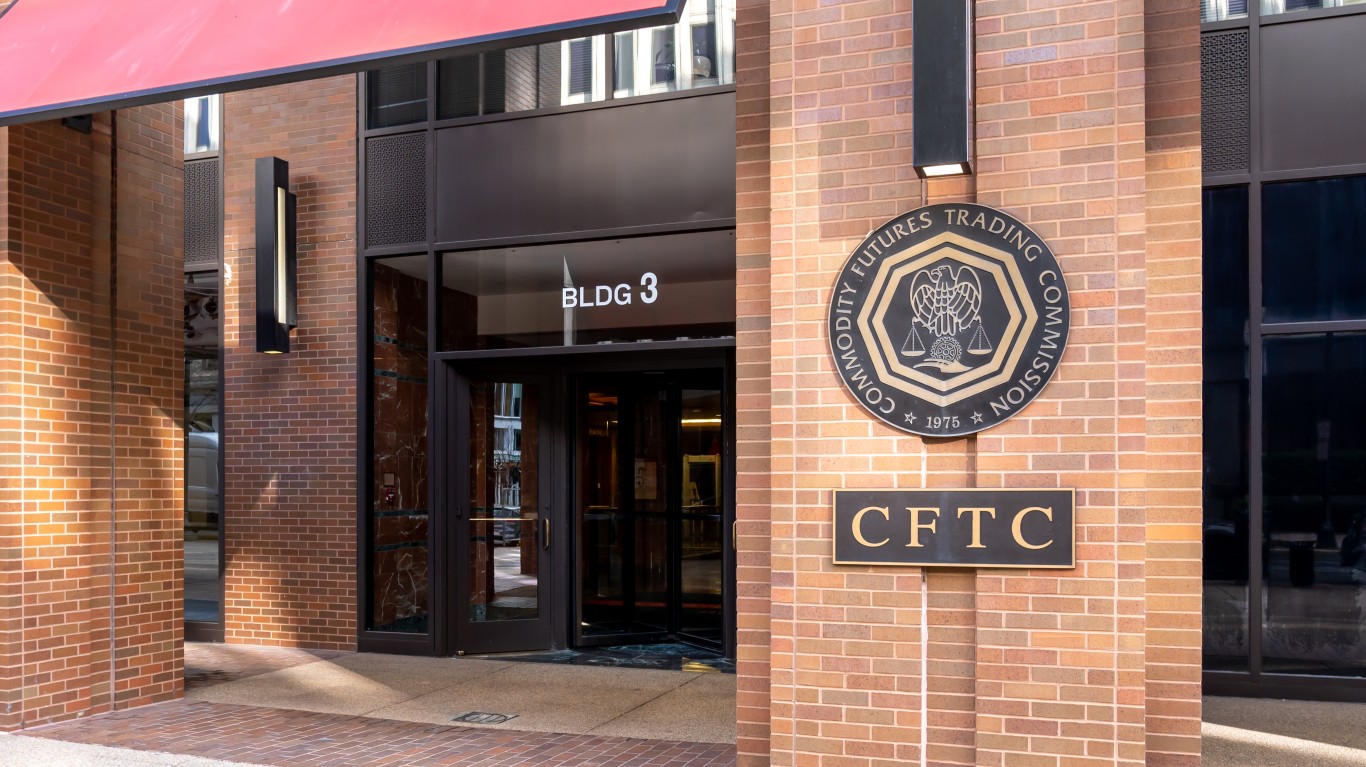
The Commodity Futures Trading Commission (CFTC) has proposed new regulations that list XRP (CRYPTO:XRP) as a “digital commodity,” placing it alongside Bitcoin (CRYPTO:BTC), Ethereum (CRYPTO:ETH), and Solana (CRYPTO:SOL). This announcement, reported on October 5, 2026, also includes Stellar (CRYPTO:XLM) and Tezos (CRYPTO:XTZ), reigniting the ongoing debate among XRP holders about whether XRP should be considered a security.
Since the Securities and Exchange Commission (SEC) filed a lawsuit against Ripple in December 2020, XRP holders have been questioning the asset’s status. So, does inclusion on the CFTC’s list mean XRP is officially not classified as a security?
How the CFTC’s Proposals Would Change XRP Trading

In the United States, two federal agencies oversee cryptocurrency: the SEC, which regulates securities, and the CFTC, which oversees commodities. The SEC requires issuers to register securities and provide ongoing information, while the CFTC focuses on regulations governing how commodities are bought and sold.
The CFTC’s new proposals would bring both the spot market (where buyers purchase coins directly) and the derivatives market (which includes futures and other contracts that track a coin’s value) under its regulatory framework. This means that exchanges trading XRP would be regulated by one agency instead of two.
The CFTC has split its proposals into two parts. The first covers leveraged trading in the retail crypto market through licensed brokers, while the second allows crypto exchanges to register as designated contract markets, which is the CFTC’s term for licensed trading platforms.
As of now, these proposals are still drafts. The public will have a chance to comment once the CFTC publishes them in the Federal Register, the government’s official record of regulations. These proposals will only gain legal standing once the CFTC adopts a final version.
The SEC and CFTC Already Named XRP a Digital Commodity in March
The October proposal builds on an earlier announcement made on March 17, when the SEC and CFTC issued a joint statement recognizing 16 tokens, including XRP, as digital commodities. Other cryptocurrencies on that list include Stellar, Tezos, Cardano, Chainlink, Dogecoin, Avalanche, and Litecoin.
Therefore, the CFTC’s new proposals do not change XRP’s commodity status; instead, they aim to add specific trading rules to a designation both agencies established earlier this year. The CFTC also considers this October list as examples rather than a comprehensive inventory, meaning more coins could potentially be classified in the future.
At the same time, Congress has not yet passed any comprehensive legislation for cryptocurrency market structure. The Senate fell short of the necessary votes to advance the CLARITY Act on September 15, leaving agency regulations as the most significant governing framework for now.
Some XRP Sales Could Still Fall Under Securities Law
While labeling XRP as a commodity details what the asset is, it doesn’t cover every scenario involving sales. An issuer can still sell a commodity as part of an investment contract, where buyers invest money with the expectation of making a profit from others’ efforts. Regulators assess these contracts based on how each sale was structured and marketed.
This distinction is reflected in Ripple’s lawsuit with the SEC. In July 2023, a federal judge ruled that Ripple’s direct sales of XRP to institutional investors qualified as investment contracts, while sales to the general public on exchanges did not. This ruling focused on Ripple’s selling methods, not the nature of XRP itself, and Ripple has continued to develop the XRP Ledger since then.
As a result, XRP can maintain its status as a digital commodity, but a future sale that is presented as an investment may still attract scrutiny under securities regulations.
Is XRP Officially Not a Security?
As an asset, both the SEC and CFTC currently treat XRP as a digital commodity rather than a security, a classification established on March 17. The CFTC’s October proposals would extend this classification to include trading rules, but they remain in draft form, and public comments could ultimately change the list or definitions.
This classification does come with some limitations for XRP holders. While the label classifies the coin, a sale framed as an investment—such as a direct sale with promises of growth—could still be subject to securities regulation. If the final CFTC rules maintain XRP’s designation, its status as a commodity for trading will be solidified. If XRP is excluded from that final list, holders would have to rely on the March classification alone.
Contact [email protected] for any questions or corrections.
Sam Daodu is a crypto analyst who's spent nearly a decade making blockchain understandable—no easy task when most whitepapers read like fever dreams. He writes for 24/7 Wall St., covering Bitcoin, altcoins, and crypto market analysis for investors. Before crypto, he was a tech writer (back when explaining "the cloud" was peak innovation). Since 2018, he's written for CoinTelegraph, Yahoo Finance, The Block, Cryptonews, Zypto, Rain, and more—basically anywhere people want crypto news without the headache. Sam runs MacLabs Marketing, a content agency for crypto brands tired of sounding like AI wrote their website. He also publishes free crypto education on his site for Web3 enthusiasts who think "gas fees" is a typo. When he's not writing or staring at charts, Sam's either: - Watching anime (currently convinced One Piece has better tokenomics than most altcoins) - At the gym sculpting himself into a Greek god - Listening to the music your mum warned you only bad boys listen to Connect: LinkedIn | Email | MacLabs Marketing