SGOV vs. BIL: Where Should You Actually Park Your Cash?
If you have cash sitting in a brokerage account earning nothing, the iShares 0-3 Month Treasury Bond ETF (NYSEARCA:SGOV) and the SPDR Bloomberg 1-3 Month T-Bill ETF (NYSEARCA:BIL) both look like the obvious fix. They hold the same collateral, distribute…

This post may contain links from our sponsors and affiliates, and Flywheel Publishing may receive compensation for actions taken through them.

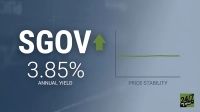
If you have cash sitting in a brokerage account earning nothing, the iShares 0-3 Month Treasury Bond ETF (NYSEARCA:SGOV) and the SPDR Bloomberg 1-3 Month T-Bill ETF (NYSEARCA:BIL) both look like the obvious fix. They hold the same collateral, distribute monthly, and move in near lockstep. But they represent different trades. SGOV is a fee-minimization bet with a shorter duration lever. BIL is a liquidity and track-record bet with a longer operating history. Over the past year, that difference produced 3.95% for SGOV versus 3.87% for BIL, and understanding why matters more than the eight basis points suggests.
What each fund is actually betting on
SGOV holds Treasury bills maturing in 0 to 3 months, which lets it include paper about to mature within days. That shorter effective duration reduces price drift between distribution dates and keeps the fund closer to the very front of the curve, where yields today sit at 3.65% on 4-week bills.
BIL restricts itself to the 1 to 3 month band, skipping the shortest maturities. That sliver of extra duration captures slightly higher yields on 13-week paper, currently around 3.78%. In a stable or falling rate environment, that extra reach helps. In a rising rate environment, it hurts, because the fund is locked into slightly older, lower-coupon bills for a few more weeks.
The implicit bet is opposite in direction. SGOV assumes you want the freshest yield the Treasury curve is offering. BIL assumes you are willing to sit a rung further out for a marginally higher carry.
Where the difference shows up
The Fed has cut its target rate 75 basis points over the past year, from 4.50% down to 3.75%, and has held there for seven months. In a cutting cycle, BIL’s slightly longer duration should have been a modest tailwind, yet the effect was marginal. Over the trailing year, SGOV still edged BIL by roughly eight basis points, and over five years the gap widens to 19.35% versus 18.65%. The single biggest reason is fees.
The practical comparison
| Factor | SGOV | BIL |
|---|---|---|
| Maturity band | 0 to 3 months | 1 to 3 months |
| Expense ratio | 0.09% | Approximately 0.1359% |
| YTD 2026 return | 1.83% | 1.82% |
| 1-year return | 3.95% | 3.87% |
| Trading history | Launched 2020 | Launched 2007, deeper liquidity |
Both funds pass Treasury interest through to holders, which is exempt from state and local income tax. That treatment matters most for investors in high-tax states, where the effective yield beats an FDIC savings product and dwarfs the 1.65% national average 12-month CD rate.
BIL’s older vintage means tighter bid-ask spreads and larger institutional adoption. For a treasurer moving nine-figure blocks, that liquidity matters. For a retail investor moving four or five figures, it does not.
The verdict
For the retail investor parking cash, SGOV is the stronger choice. The lower expense ratio compounds every month, the shorter duration reduces intra-month NAV drift, and the yield capture is closer to what the Treasury curve is actually paying at the front end. BIL makes sense for institutional users who need the deepest possible order book, or for investors who already hold it and see no reason to trigger a taxable event to switch. The calculus flips only if the Fed reverses course and begins hiking again, in which case BIL’s slightly longer duration becomes a modest drag and SGOV’s edge widens further.
Contact [email protected] for any questions or corrections.
After 15 years on Wall Street with 7 of them as Director of Corporate and Municipal Bond Trading for a NYSE member firm, I started my own project and corporate finance consultancy. Much of the work involves writing business plans, presentations, white papers and marketing materials for companies seeking budgetary allocations for spinoffs and new initiatives or for raising capital for expansion or startup companies and entrepreneurs. On financial topics, I have been published under my own byline at The Motley Fool, 247wallst.com, DealFlow Events’ Healthcare Services Investment Newsletter and The Microcap Newsletter, among others. Additionally, I have done freelance ghostwriting writing and editing for several financial websites, such as Seeking Alpha and Shmoop Financial. I have also written and been published on a variety of other topics from music, audiophile sound and film to musical instrument history, martial arts, and current events. Publications include Copper Magazine, Fidelity (Germany), Blasting News, Inside Kung-Fu, and other periodicals.