This Boring Pipeline Dividend MLP Returned 2X the QQQ’s Gains
Pipeline partnerships exist to collect tolls and bore you into a steady income, yet one midstream MLP has quietly stacked up returns that would embarrass most growth funds. Before you assume the easy money is already gone, the tax traps…


Pipeline partnerships get filed under “boring” for a reason. They collect tolls on hydrocarbons and mail out K-1s at tax time. So it is genuinely strange that MPLX LP (NYSE:MPLX | MPLX Price Prediction) has returned 225% over the past five years with distributions reinvested, versus about 97% for the Invesco QQQ Trust (NASDAQ:QQQ). If you are deciding where MPLX belongs in a portfolio, that gap is both the argument for owning it and, if you squint, the warning label.
What You Are Actually Buying
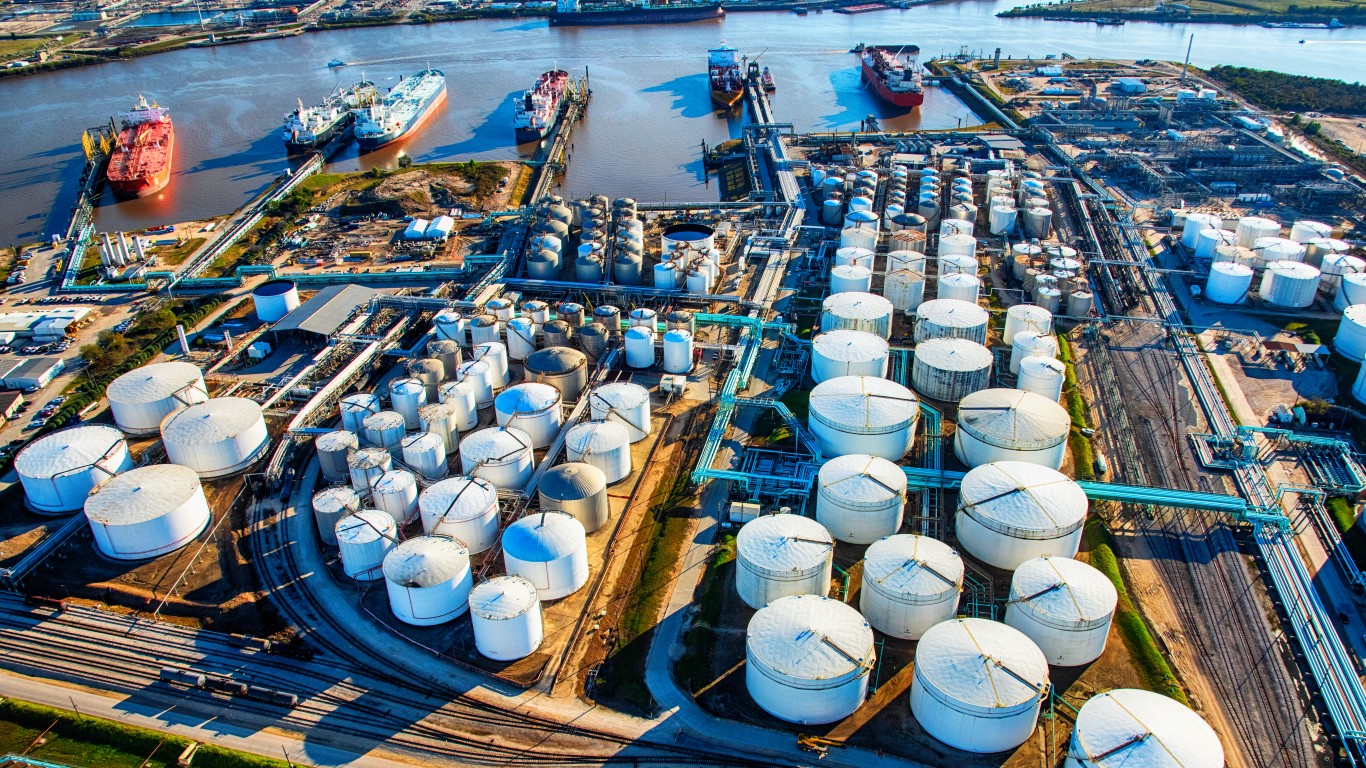
MPLX is a midstream master limited partnership owning pipelines, gathering systems, processing plants, and export terminals anchored in the Permian and Marcellus basins, majority-owned by Marathon Petroleum, which holds about 64% of the units. Cash flows are largely fee-based, driven by the volume of hydrocarbons moving through the system rather than the price of the barrel itself. David Heppner, MPLX’s SVP of Natural Gas and NGLs, told analysts on the Q1 call, “Generally, MPLX is a fee-based business, and we’re not taking on the commodity risks within the natural gas markets in the U.S. Gulf Coast.”
That distinction matters. Drillers get hammered when crude breaks. Refiners get squeezed when cracks compress. MPLX gets paid when molecules move, and molecules keep moving even in ugly commodity tapes. The structural steadiness funds a $1.08 quarterly distribution, an annualized $4.31 per unit, working out to a yield of roughly 7.4% on a unit trading near $57. Management has publicly committed to 12.5% annual distribution growth through 2027, with CEO Maryann Mannen adding a 1.3x distribution coverage floor as the guardrail.
Does The Math Actually Work
That 225% five-year return is real, and cyclically flattered. MPLX started the five-year window in July 2021 near $18, still in the shadow of the 2020 energy collapse. Buying midstream when the sector was hated and holding through a fee-based cash flow recovery plus two consecutive 12.5% distribution hikes is roughly the ideal setup for an MLP. QQQ, meanwhile, was already trading at $357 in mid-2021, at the tail end of its pandemic-era melt-up.
Zoom out to ten years, and the picture flips. MPLX returned 323% versus QQQ’s 527%. The real lesson is that midstream is cyclical enough that entry point does a lot of the work, and the past five years handed MPLX holders a very good one.
The Tradeoffs You Sign Up For
Owning an MLP comes with real friction. The K-1 tax form arrives late, complicates state filings, and can generate unrelated business taxable income if the units are held in an IRA above the $1,000 threshold. Holding MPLX in a Roth to shelter a 7% yield can feel clever until your custodian sends a tax bill. Concentration risk is also baked in: Marathon Petroleum is both majority owner and MPLX’s largest customer, so the partnership’s fortunes track a single refiner’s turnaround schedule. Q1 2026 crude pipeline throughput fell 4% year over year largely for that reason.
Leverage has also drifted higher. Debt-to-EBITDA sits at 3.7x, up from 3.1x as management funded the $2.38 billion Northwind deal and other bolt-ons, pushing quarterly interest expense to $291 million from $229 million a year earlier. The 4.0x ceiling gives running room, though not much.
Who This Fits
MPLX belongs in a taxable account, owned by an investor who wants a real 7%-plus distribution, a management team publicly committed to double-digit distribution growth for the next two years, and who accepts they are buying a levered energy infrastructure toll operator. Investors chasing the last five years of price appreciation inside a tax-deferred account may prefer the Alerian MLP ETF (NYSEARCA:AMLP), which delivers similar exposure via a 1099 and skips the K-1 mess. Anyone who thinks a 225% run means MPLX has stopped being cyclical should reread the ten-year chart.
Contact [email protected] for any questions or corrections.
Omor Ibne Ehsan is a writer at 24/7 Wall St. He is a self-taught investor with a focus on growth, cyclical, and dividend equities that have strong fundamentals, value, and long-term potential. He also has an interest in high-risk, high-reward investments such as penny stocks.