




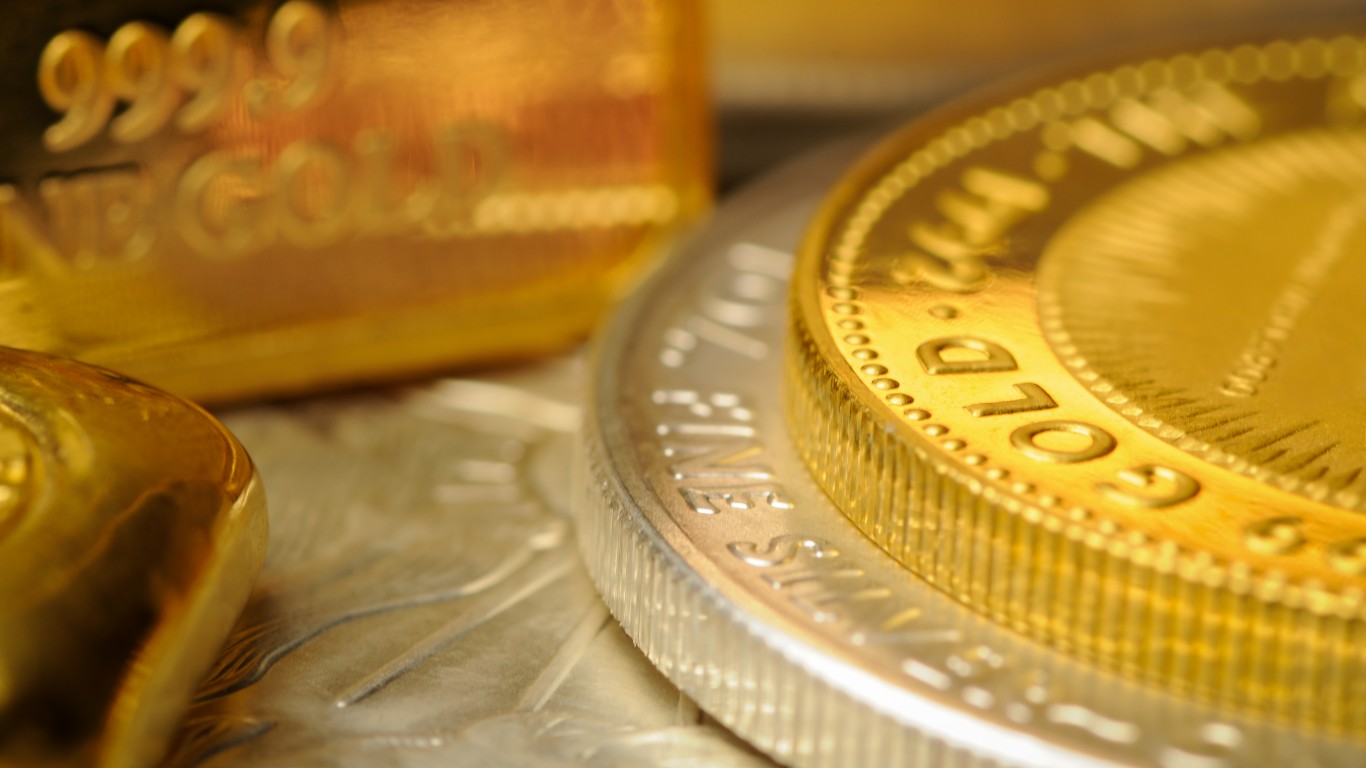
Gold’s second quarter of 2026 was ugly enough to make anyone question the trade. The SPDR Gold MiniShares Trust (NYSEARCA:GLDM) fell 16% between April 1 and June 30, its worst quarterly move in more than a decade.
For context, the reference sibling SPDR Gold Shares (NYSEARCA:GLD) went from about $424 at the end of April to about $368 at the end of June, a slide comparable in scale to the infamous Q2 2013 collapse from about $143 to about $119. Rising real yields, a firmer dollar, and rotation back into AI-flavored equities did the damage. Yet the structural bid that pushed GLDM to its January highs never actually left the building.
Reason One. The Price-Insensitive Buyer Is Still There
Central banks do not trade gold the way you and I do. They accumulate it as a reserve asset at a pace with little modern precedent. Official-sector purchases have averaged roughly 1,000 tonnes annually since 2022, absorbing a meaningful share of mine supply and setting a demand floor underneath the market.
A record share of surveyed central banks say they plan to add more. That behavior is driven by reserve diversification away from dollar assets, not by whether spot printed a lower low last Tuesday. The buyer that helped drive the last leg higher does not care about the last leg lower.
Institutional retail followed the same script early in the year. Gold and precious metals ETFs pulled in $4.39 billion of inflows in January 2026, with gold miner funds attracting $3.62 billion, the highest reading since at least 2009.
Reason Two. The Sell-Side Trimmed Targets While Keeping the Thesis
Through the selloff, the major desks cut price targets while keeping them above spot and reiterated the structural case. JPMorgan Chase and Deutsche Bank both maintained bullish long-term outlooks even as they flagged near-term pressure from the strong dollar and rising Treasury yields.
J.P. Morgan and UBS Global Wealth Management remain constructive. The narrative has shifted from “gold at fair value” to “gold on sale,” which is a constructive stance.
Reason Three. Why GLDM Instead of the Famous One
GLDM exists for one specific reason. It is a low-cost wrapper around physical bullion. The expense ratio is 0.10%, versus 0.40% for GLD, a fee gap that compounds meaningfully over a multi-year hold. When the underlying asset is identical, paying more for brand recognition is a choice you are actively making. Todd Rosenbluth of VettaFi flagged exactly this point in March, highlighting cost efficiency in a commodity ETF where the exposure is uniform.
The long-term math has cooperated. GLDM is up 20% over the past year and 124% over five years, even after the recent damage. Year to date, it sits down 6%, near $80 a share.
The Bear Case Deserves Real Weight
Calling this dip a buy would be a recommendation rather than an observation. Gold has repeatedly failed at technical support during this correction, and there is nothing structural preventing another leg down if real yields grind higher or the dollar keeps firming.
Recent ETF flows have turned to redemptions rather than inflows in parts of the complex, which signals no capitulation. Bullion also pays you zero while you wait, which matters more when short Treasuries yield real money. If the Fed stays hawkish longer than consensus assumes, holding GLDM means watching opportunity cost accumulate.
Who This Fits
GLDM makes sense as a 5% to 10% strategic sleeve for investors who want direct bullion exposure at the lowest fee in the category and can tolerate multi-quarter drawdowns without flinching. Anyone treating gold as a trade for the next Fed meeting should look elsewhere. The structural story that drove the record was not built in a quarter, and it will not be resolved in one either.
Contact [email protected] for any questions or corrections.












 Top Gaining Stocks
 Top Losing Stocks