VTV’s 0.03% Fee Hides the Real Cost: $250,000 Trails the S&P 500 by $229,000 Over a Decade
Vanguard's VTV carries one of the lowest expense ratios in the ETF universe, yet a quarter-million dollar investment has quietly fallen far behind a basic S&P 500 fund over the past decade for a reason the fee disclosure never mentions.

This post may contain links from our sponsors and affiliates, and Flywheel Publishing may receive compensation for actions taken through them.
The 0.03% expense ratio on the Vanguard Value ETF (NYSEARCA:VTV) works out to roughly $3 per $10,000 per year. That sounds like nothing. But investors who bought VTV a decade ago instead of a plain S&P 500 fund have paid a much larger, quieter cost the fact sheet never labels: the value tilt itself.
What You’re Actually Paying
Let’s start with the sticker fee. Vanguard’s April 13, 2026 fact sheet lists both gross and net expense ratios at 0.03%. On $10,000, that is about $3 a year. On $250,000, roughly $75. Compounded across a decade against a similar-priced S&P 500 tracker, the fee difference rounds to zero. The fee barely registers.
Now, look at the performance gap. Over the ten years ending August 19, 2026, VTV returned 231.26% on a total-return basis. The SPDR S&P 500 ETF Trust (NYSEARCA:SPY), the largest S&P 500 tracker, returned 251.91% on price alone over the same window. A hypothetical $250,000 investment in VTV therefore grew to roughly $828,150, while SPY’s price appreciation alone would have increased the same investment to about $879,775.
That represents a gap of roughly $51,625, and the difference would be larger after including SPY’s reinvested dividends. The comparison is not perfectly equivalent because VTV’s figure includes distributions while SPY’s does not, but that only reinforces the broader point: VTV’s 0.03% expense ratio has not been the meaningful cost. The larger opportunity cost has been a decade in which large-cap value substantially lagged the broader S&P 500.
Where the Real Cost Hides
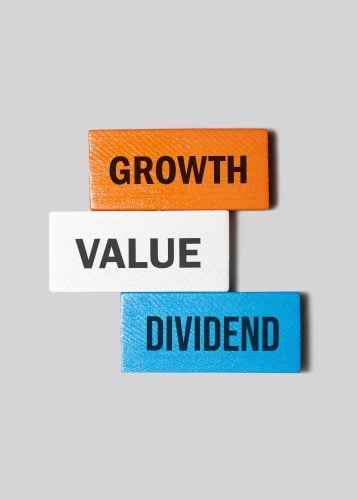
VTV is not an S&P 500 fund and never claimed to be. Its stated benchmark is the CRSP US Large Cap Value Index, a screened slice of U.S. large caps tilted toward book value, earnings, and dividends. That screen mechanically down-weights the megacap growth names that drove the past decade’s index returns. The tilt is the main product. It is also the drag, and it does not appear anywhere in the expense ratio because it is not a fee. Instead, it is a structural opportunity cost.
Distributions add a second layer to this. VTV paid $4.0905 per share in trailing twelve-month dividends through the June 26, 2026 ex-date. Those quarterly payouts hit taxable accounts as dividend income every three months. A growth-heavier index throws off less. In a brokerage account, that difference quietly widens the after-tax gap between VTV and a broad-market fund each year.
A Cheaper Mirror
For readers who assumed VTV meant “the U.S. market,” the fix is straightforward. Vanguard’s own Vanguard S&P 500 ETF (NYSEARCA:VOO) charges the same headline expense ratio and owns the full S&P 500, growth names included. Fee parity, broader exposure, no value screen. VTV is already among the cheapest large-cap value ETFs on the market, so the alternative here is a different bet entirely: it is the market, rather than a slice of it.
What This Means for You
The real question is whether you meant to bet against growth for a decade. The fee of 0.03% is plainly cheap; however, the tilt is what matters.
If that was your bet, VTV delivered exactly what it advertised. If you did not mean to limit growth, the label on the ETF has been costing you more than the fee ever could, and it will keep doing so as long as growth keeps leading. Check what benchmark your “S&P 500 fund” actually tracks before the next ten years compound on top of the last.
Contact [email protected] for any questions or corrections.
Ryne Mauck is an investment writer covering exchange-traded funds, retirement planning, and portfolio strategy. Through his work at 24/7 Wall St. and other investment platforms, including Seeking Alpha, he aims to provide clear, research-driven insights that help investors make more informed decisions while maintaining a long-term approach to investing.
Ryne holds a B.Sc. in Finance and an M.A. in Political Science. He is a formerly registered Municipal Advisor Representative and has passed the Series 50, Series 63, and Series 65 exams. His articles are not intended to be, nor should they be interpreted as, financial advice.