Why Leave Cash in a Money Market Fund When SGOV Pays About the Same and Skips State Income Tax?
Money market funds and short-term Treasury ETFs look nearly identical on the surface, but one structural difference quietly erodes the yield on your cash every April without most investors ever noticing.

This post may contain links from our sponsors and affiliates, and Flywheel Publishing may receive compensation for actions taken through them.
If you park cash in a money market fund earning around 4%, you already know most of what iShares 0-3 Month Treasury Bond ETF (NYSEARCA:SGOV) and iShares 0-1 Year Treasury Bond ETF (NYSEARCA:SHV) can offer. What most cash holders miss is that both iShares funds strip out state and local income tax on their Treasury interest, something a prime money market fund cannot do. The real question is which of the two BlackRock ETFs deserves the cash, and the answer hinges on how much duration you are willing to accept for a modest yield pickup.
What Each Fund Is Actually Betting On
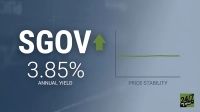
SGOV holds Treasury bills maturing inside three months. That is as close to a synthetic money market fund as an ETF can get. Its share price hugs the low $100 range and resets each month after distributions, so NAV drift is minimal even when the Federal Reserve moves. The implicit bet is boring by design: whatever the front end of the curve pays, holders capture almost all of it after a 0.09% expense ratio.
SHV stretches maturities out toward one year. That extra rung on the curve currently matters. Treasury bill yields on September 14, 2026 ran from 3.86% at 4 weeks to 4.35% at 52 weeks, so SHV is quietly betting that locking in the belly of the T-bill curve beats rolling the shortest paper. It works when the curve stays positively sloped and the Fed holds or cuts slowly. It hurts when the Fed hikes faster than SHV can roll its longer bills.
Where the Difference Shows Up
With the fed funds upper bound sitting at 3.75% since early 2026, both funds have delivered similar total returns. SGOV posted a 2.56% year-to-date gain and a 3.77% one-year return. SHV returned 2.41% year to date and 3.62% over one year. SGOV nudged ahead because the Fed cut through late 2025, and shorter bills captured the higher pre-cut coupon before rolling into the new regime.
Distributions tell the same story. SGOV paid $3.71 per share over the trailing twelve months on a share price near $100.54. SHV paid $4.07 per share at a price of $110.15. Both dwarf the FDIC national average 12-month CD APY of 1.71%, and both throw off cash that is exempt from state income tax.
Practical Comparison
| Feature | SGOV | SHV |
|---|---|---|
| Maturity band | 0 to 3 months | 0 to 12 months |
| Expense ratio | 0.09% | 0.15% |
| YTD total return | 2.56% | 2.41% |
| Trailing 12-mo distribution | $3.71 | $4.07 |
| State tax on interest | Exempt | Exempt |
| Distribution schedule | Monthly | Monthly |
Verdict
SGOV wins for pure cash parking. The lower fee, tighter NAV, and closer tracking of the overnight rate make it the cleaner money market substitute, especially for investors in high-tax states who lose real yield to state income tax on prime funds. SHV fits the investor who wants a small yield pickup from the six to twelve month portion of the curve and is comfortable that price will wiggle a few cents when rate expectations shift. If the Fed resumes cutting into 2027, SGOV will reprice down faster, and SHV’s slightly longer bills will hold their coupon a bit longer. That is the one condition that flips the call.
Contact [email protected] for any questions or corrections.
Jake has been been working in financial media for almost 15 years. He focuses on all things personal finance for 24/7 Wall St. with high hopes to educate and entertain. Most recently, Jake spent 12 years working various roles at The Motley Fool. He started copy editing fool.com content, worked on premium and marketing campaigns, and helped launch The Ascent, a personal finance brand.
His work has been featured on platforms like MSN, Yahoo Finance, USA Today, and more. He's written about credit cards, social security, ETFs, savings accounts, and just about anything else you can imagine when thinking about money. Jake love to cook, play golf, and tell people he's never had a cavity. (It's true!)