$250,000 Sitting in SPAXX Pays State Tax on Most of Its Interest While FDLXX Holders Pay Almost None
Your money market fund has "government" right in the name, yet your state is quietly taxing a surprising chunk of the interest it generates every year. The reason comes down to a single line in a PDF almost nobody opens.

Park $250,000 in the Fidelity Government Money Market Fund (NASDAQ:SPAXX) at today’s roughly 3.5% yield, and you collect about $8,750 in interest a year. Your state wants a cut of nearly half of it. Move the same cash into Fidelity’s Treasury-only sibling and your state gets almost nothing in tax. Same issuer. Same expense ratio. Very different tax bill.
Hidden Cost You’re Actually Paying
SPAXX is a government money market fund, but “government” carries significant weight in that name. Only a portion of its income comes from direct U.S. Treasury debt. The rest comes from repurchase agreements (short-term loans backed by Treasuries) and agency securities (debt issued by government-sponsored entities). Repo income is not treated as interest on a direct U.S. obligation, so most states tax it as ordinary income.
For the 2024 tax year, Fidelity’s supplemental letter reported that roughly 55% of SPAXX’s income came from U.S. government securities eligible for the state-tax exemption. That leaves about 45% of the interest income fully exposed to state income tax. On $8,750 of interest, that is roughly $3,938 of state-taxable income from SPAXX every year. At a 5% state rate, that is about $197 lost to the state annually, attributable solely to the repo portion.
Now run the same math on Fidelity Treasury Only Money Market Fund (NASDAQ:FDLXX), where the 2024 letter listed 97.00% as U.S. government securities income. Only about $263 of the same $8,750 would be state-taxable, or roughly $13 in state tax at that same 5% rate. The gap is close to $184 a year on a $250,000 balance. Compound that over 20 years and, before accounting for reinvestment, a SPAXX holder in a taxing state has quietly paid the state about $3,700 more than an FDLXX holder for the same underlying gross yield on their cash.
What the Factsheet Won’t Flag
Here is the part worth noting: SPAXX and FDLXX carry the same expense ratio. Fidelity’s June 2026 prospectuses list both at 0.42% (gross and net). You are paying the same manager the same fee, and the only meaningful difference affecting your bottom line is state tax treatment.
The marketing on SPAXX leans on the word “government” and rarely walks a retail investor through the repo mechanics. There is no line on the summary page that says “about 45% of your interest will be state-taxable this year.” That figure appears only in a supplemental PDF that Fidelity posts each February. Most investors holding cash in sweep accounts never open it.
Rates make the drag heavier. The federal funds upper bound sits at 3.75% as of September 15, 2026, with 4-week Treasury bill yields averaging 3.86%. Higher money market yields mean the state-taxable portion of SPAXX income is a larger dollar amount than it was during the near-zero-rate years when few investors bothered to check.
Cheaper Mirror in Plain Sight
Two obvious alternatives exist within the same fund family. FDLXX targets direct Treasury debt, so almost all of its distributions qualify for the state-obligation exemption in most states. A few states (California, New York, Connecticut) impose a minimum Treasury-holdings threshold before allowing the exemption, and FDLXX has historically met that threshold in years when SPAXX has not. The trade-off is a slightly lower 7-day yield in some periods, since Treasury-only funds forgo the additional yield from repo agreements.
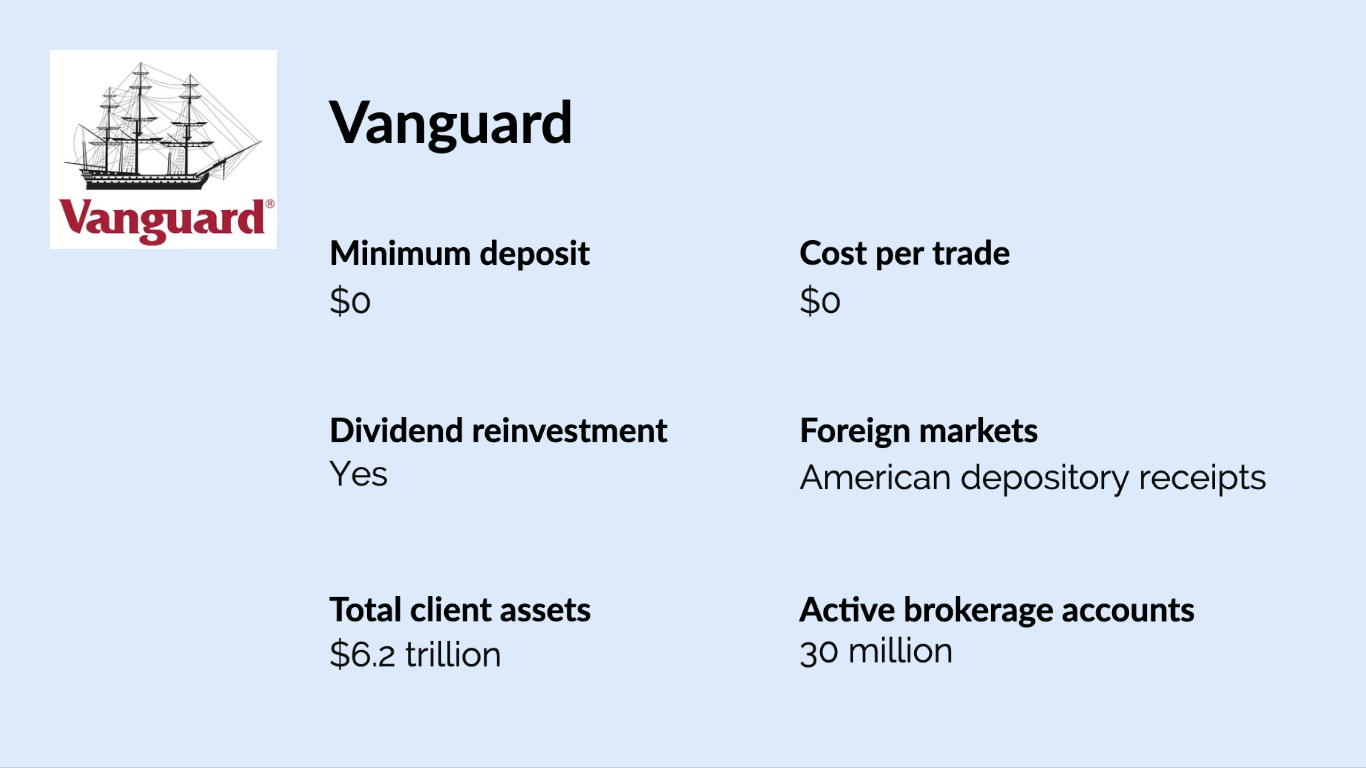
The second mirror is Vanguard Federal Money Market Fund (NASDAQ:VMFXX), whose prospectus lists a net expense ratio of 0.11%. On $250,000, that fee gap alone saves about $775 a year versus SPAXX. VMFXX reported 59.87% U.S. government obligations income for 2024, higher than SPAXX’s but well short of FDLXX’s. VMFXX’s advantage is the cheaper fee rather than a cleaner state-tax profile.
What This Means for You
If your cash lives in SPAXX and you file in a state with an income tax, the question to ask your accountant is simple: How much of last year’s SPAXX distribution actually qualified for the U.S. government interest exemption in your state, and what would that number have looked like inside FDLXX or VMFXX instead? You will find that the “government money market” fund has been quietly costing you more than you realized.
Contact [email protected] for any questions or corrections.
Ryne Mauck is an investment writer covering exchange-traded funds, retirement planning, and portfolio strategy. Through his work at 24/7 Wall St. and other investment platforms, including Seeking Alpha, he aims to provide clear, research-driven insights that help investors make more informed decisions while maintaining a long-term approach to investing.
Ryne holds a B.Sc. in Finance and an M.A. in Political Science. He is a formerly registered Municipal Advisor Representative and has passed the Series 50, Series 63, and Series 65 exams. His articles are not intended to be, nor should they be interpreted as, financial advice.