Forget Waiting Three Months for SPY’s Dividend. Invesco’s High-Dividend Fund Pays Every Month
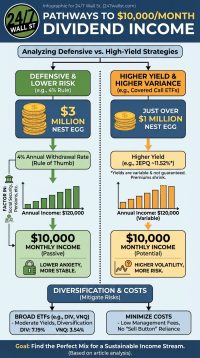
Monthly bills don't care about quarterly dividend schedules, and one S&P 500 ETF built its entire identity around solving that mismatch. But the convenience of a monthly paycheck comes with a cost that decade-long performance data makes impossible to ignore.

This post may contain links from our sponsors and affiliates, and Flywheel Publishing may receive compensation for actions taken through them.

The SPDR S&P 500 ETF (NYSEARCA:SPY) is the default core holding for millions of investors, and for good reason. One ticker buys the entire S&P 500 with deep liquidity and a long record of price growth. This limitation matters most for one specific reader: the retiree matching portfolio income against monthly bills, because SPY pays only four times a year. The Invesco S&P 500 High Dividend Low Volatility ETF (NYSEARCA:SPHD) pays every month. For that reader, the timing is the product. It has also come at the cost of a great deal of price growth, and anyone weighing the move needs to see both sides.
Quarterly Checks Versus a Deposit Every Month
SPY’s most recent quarterly distribution was $1.888834 per share. Shares went ex-dividend on September 18, 2026, yet the cash lands on October 30, 2026. SPY is structured as a unit investment trust, which holds the dividends its companies pay until the quarterly distribution.
SPHD’s most recent monthly distribution was $0.20156 per share, with an ex-dividend date of September 21, 2026. Another follows next month. For someone drawing a paycheck from a portfolio, that rhythm decides whether income lines up with rent, utilities, and insurance premiums or gets spread across a quarter. Wes Moss, speaking on Clark Howard’s Ask An Advisor program in January 2026, put it simply: “When it comes to creating income into retirement, I’m just a huge believer in doing that through dividends.”
A Full Year of Distributions, Share by Share
Over the trailing twelve months, SPHD distributed $2.46659 per share, and SPY distributed $7.582717. SPHD’s forward annualized run rate is now $2.41872, slightly below its trailing figure, and its latest check came in under the prior month’s $0.21963. Monthly amounts vary, so budgeting requires a buffer.
How SPHD Builds a Larger Payout
SPHD tracks the S&P 500 Low Volatility High Dividend Index and holds roughly 50 stocks. It screens the S&P 500 for its highest-yielding members and weights toward them, shifting the portfolio toward utilities, real estate, consumer staples, and other slower-growing sectors.
SPY weights by company size, so the largest growth names dominate. As of its March 17, 2026 fact sheet, its largest disclosed holding was NVIDIA (NASDAQ:NVDA | NVDA Price Prediction) at 7.58% of net assets. SPHD’s larger payout comes from owning very different companies, with slower growth and greater sensitivity to interest rates.
What the Monthly Check Has Cost in Price Growth
As of September 28, 2026, SPHD fell 2.71% over one week and 8.33% over one month. SPY gained 0.59% and 0.01% across the same windows. The slide coincided with the 10-year Treasury yield reaching 5.18% on September 24, its high of the past year. Rising rates give income seekers a competing option and tend to weigh on utilities and real estate.
| Window | SPHD | SPY |
|---|---|---|
| One week | -2.71% | 0.59% |
| One month | -8.33% | 0.01% |
| Five years | 39.58% | 72.6% |
| Ten years | 90.46% | 255.43% |
One note on basis. SPY’s figures are unadjusted and exclude distributions, while SPHD’s are adjusted and include reinvested distributions. That difference favors SPHD, and SPY still leads in every window, so treat the comparison as directional. An investor who chose the monthly timing and larger payout gave up a great deal of price growth for it. SPHD’s stated expense ratio is 0.30%.
Switching Without a Tax Surprise
For an IRA or 401(k), a swap triggers no immediate tax consequence. With a taxable account, selling long-held SPY shares can realize large capital gains and a tax bill that outweighs the convenience of monthly deposits. Two easier paths exist. Direct new contributions and SPY’s quarterly distributions into SPHD, or carve out only the slice reserved for monthly spending while SPY remains the growth core.
Who Should Take the Monthly Check and Who Should Pass
Retirees who need a deposit every month and treat price appreciation as secondary have a real case for SPHD, ideally as an income bucket beside a broad core. Investors still building wealth have a weaker case. Over ten years, SPY’s price growth far outpaced SPHD’s even with the measurement basis shifting toward SPHD, and compounding matters more than timing for anyone years from retirement. Falling interest rates or a rotation into defensive sectors would help SPHD’s price, while a shrinking run rate would erode its central appeal. Weigh the choice against your own tax situation, timeline, and spending needs.
Contact [email protected] for any questions or corrections.
Ryne Mauck is an investment writer covering exchange-traded funds, retirement planning, and portfolio strategy. Through his work at 24/7 Wall St. and other investment platforms, including Seeking Alpha, he aims to provide clear, research-driven insights that help investors make more informed decisions while maintaining a long-term approach to investing.
Ryne holds a B.Sc. in Finance and an M.A. in Political Science. He is a formerly registered Municipal Advisor Representative and has passed the Series 50, Series 63, and Series 65 exams. His articles are not intended to be, nor should they be interpreted as, financial advice.